
Close Menu
    Facebook X (Twitter) Instagram
    SciTechDaily
    • Biology
    • Chemistry
    • Earth
    • Health
    • Physics
    • Science
    • Space
    • Technology
    Facebook X (Twitter) Pinterest YouTube RSS
    SciTechDaily
    Home»Chemistry»Using Fish Scales to Make Wearable Electronics More Sustainable
    Chemistry

    Using Fish Scales to Make Wearable Electronics More Sustainable

    By American Chemical SocietyMarch 18, 2020No Comments3 Mins Read
    Facebook Twitter Pinterest Telegram LinkedIn WhatsApp Email Reddit
    Share
    Facebook Twitter LinkedIn Pinterest Telegram Email Reddit
    Fish Scales Sustainable Wearable Electronics
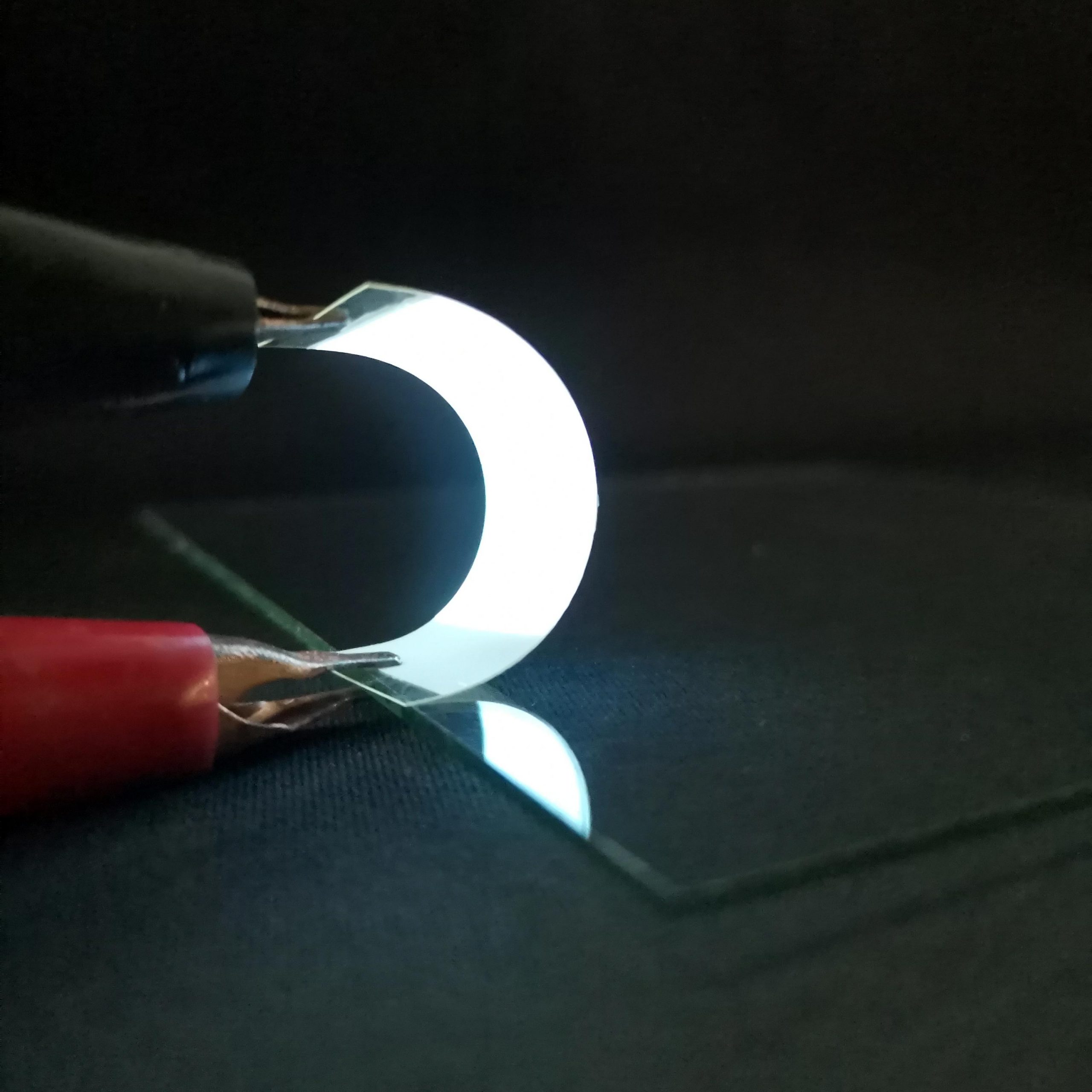
    This film derived from fish scales could someday be used in flexible electronic devices. Credit: Adapted from ACS Nano 2020, DOI: 10.1021/acsnano.9b09880

    Flexible temporary electronic displays may one day make it possible to sport a glowing tattoo or check a reading, like that of a stopwatch, directly on the skin. In its current form, however, this technology generally depends on plastic. New research in ACS Nano describes a way to make these displays, which would likely be discarded after a single use, more environmentally friendly using a plentiful and biodegradable resource: fish scales.

    Within such displays, electricity-conducting and light-emitting components are layered onto a transparent film. To make them flexible enough to withstand the bending required to stay on skin or other soft surfaces, researchers have so far relied on films made of plastic — a substance derived from fossil fuels, a limited resource and a source of pollution. Hai-Dong Yu, Juqing Liu, Wei Huang, and colleagues wanted to find a more sustainable and environmentally friendly material for the film. They settled on gelatin derived from collagen in fish scales, which are usually thrown away.

    After preparing a gelatin solution from the fish scales, they poured it into a petri dish that acted as a mold for the film as it dried. In tests, they found the film had the attributes, including flexibility and transparency, needed for use in wearable devices. The film also appeared unlikely to linger in landfills: It dissolved within seconds in hot water and could then be recycled into a new film. When buried in soil, it degraded within 24 days. The team used the film to build a working alternating current electroluminescent device that continued to glow even after being bent and relaxed 1,000 times. Films derived from fish scales are a promising alternative for more sustainable flexible electronics, including wearables and folding displays, the researchers conclude.

    Reference: “Sustainable and Transparent Fish Gelatin Films for Flexible Electroluminescent Devices” by Xiaopan Zhang, Tengyang Ye, Xianghao Meng, Zhihui Tian, Lihua Pang, Yaojie Han, Hai Li, Gang Lu, Fei Xiu, Hai-Dong Yu, Juqing Liu and Wei Huang, 18 March 2020, ACS Nano.
    DOI: 10.1021/acsnano.9b09880

    The authors acknowledge funding from the National Key R&D Program of China, the National Natural Science Foundation of China, the China-Sweden Joint Mobility Project, the Ministry of Science and Technology of the People’s Republic of China funding for Fundamental Studies of Perovskite Solar Cells, the Fundamental Research Funds for the Central Universities and the Natural Science Foundation of Jiangsu Province for Distinguished Young Scholars.

    Never miss a breakthrough: Join the SciTechDaily newsletter.
    Follow us on Google and Google News.

    American Chemical Society Biotechnology Fish Nanotechnology
    Share. Facebook Twitter Pinterest LinkedIn Email Reddit

    Related Articles

    Handheld “MasSpec Pen” Reveals Meat and Fish Fraud in Seconds

    Researchers Have Developed a Fully Automated Analyzer That Could Help Detect Signs of Extraterrestrial Life

    COVID-19 Coronavirus Breathalyzer Test Developed

    Machinery of Photosynthesis Supercharges Solar Energy to Hydrogen Fuel Conversion

    Remarkable New Fabric Efficiently Transfers Heat – Could Help Keep You Cool Even Without A/C

    Scientists Rewire Photosynthesis to Fuel Our Future

    Diagnostic Biosensor Detects SARS-CoV-2 From Nasopharyngeal Swab in Less Than a Minute

    Human Cells Made Magnetic With Engineered Protein Crystals

    Super Durable, Flexible, Water-Repelling Material Inspired by Porcupinefish

    Leave A Reply Cancel Reply

    • Facebook
    • Twitter
    • Pinterest
    • YouTube

    Don't Miss a Discovery

    Subscribe for the Latest in Science & Tech!

    Trending News

    AI Could Detect Early Signs of Alzheimer’s in Under a Minute – Far Before Traditional Tests

    What if Dark Matter Has Two Forms? Bold New Hypothesis Could Explain a Cosmic Mystery

    This Metal Melts in Your Hand – and Scientists Just Discovered Something Strange

    Beef vs. Chicken: Surprising Results From New Prediabetes Study

    Alzheimer’s Breakthrough: Scientists Discover Key Protein May Prevent Toxic Protein Clumps in the Brain

    Quantum Reality Gets Stranger: Physicists Put a Lump of Metal in Two Places at Once

    Scientists May Have Found the Key to Jupiter and Saturn’s Moon Mystery

    Scientists Uncover Brain Changes That Link Pain to Depression

    Follow SciTechDaily
    • Facebook
    • Twitter
    • YouTube
    • Pinterest
    • Newsletter
    • RSS
    SciTech News
    • Biology News
    • Chemistry News
    • Earth News
    • Health News
    • Physics News
    • Science News
    • Space News
    • Technology News
    Recent Posts
    • What if Your Memories Never Happened? Physicists Take a New Look at the Boltzmann Brain Paradox
    • Students Found an Ancient Star That Shouldn’t Be in the Milky Way
    • Astronomers Solve 50-Year Mystery and Reveal Hidden Culprit Behind Strange X-Ray Emissions
    • One of the Universe’s Largest Stars May Be Getting Ready To Explode
    • Scientists Discover Enzyme That Could Supercharge Ozempic-Like Weight Loss Drugs
    Copyright © 1998 - 2026 SciTechDaily. All Rights Reserved.
    • Science News
    • About
    • Contact
    • Editorial Board
    • Privacy Policy
    • Terms of Use

    Type above and press Enter to search. Press Esc to cancel.