
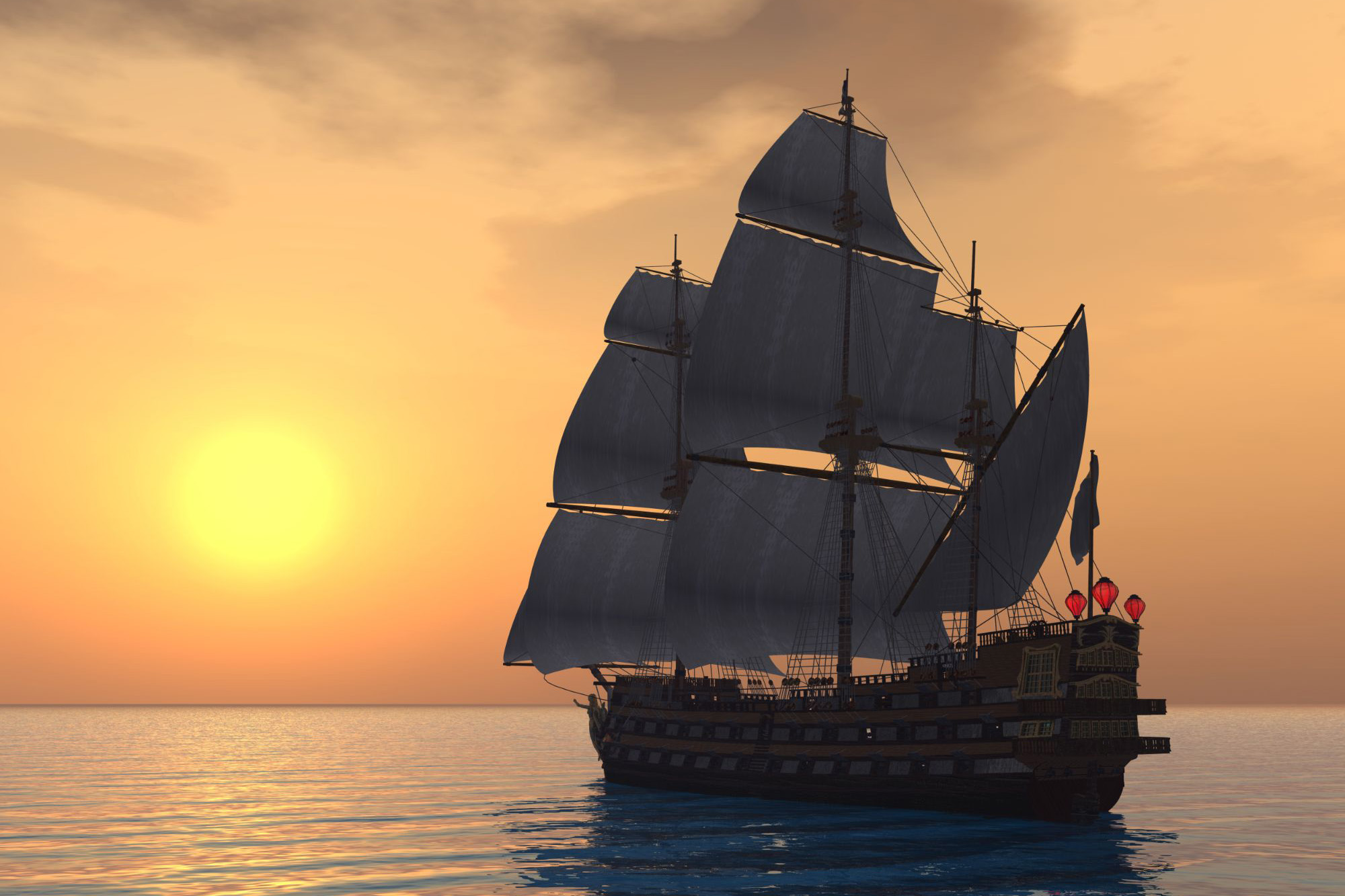
Julia Windmiller’s study suggests the doldrums are caused by sinking, not rising, air, overturning long-standing theories and possibly improving climate models.
In the Age of Sail, sailors riding the trade winds past the equator feared being trapped in the doldrums, a meteorologically distinct region in the deep tropics known for its low wind speeds. For over a century, scientists believed the doldrums’ lack of wind was caused by converging and rising air masses. However, a new study published in the AGU journal Geophysical Research Letters suggests the opposite may be true.
“The idea of what causes the doldrums came from a time where we didn’t know a lot about how air actually moves in the tropics,” said Julia Windmiller, an atmospheric scientist at the Max Planck Institute for Meteorology and the study’s author. “We have forgotten about the doldrums to such a degree that nobody has taken the trouble of thinking through this original argument again.”

On the contrary, Windmiller proposes that low wind speeds throughout the doldrums are created by large areas of sinking air that diverge at the surface, creating clear and windless days. Her explanation challenges the conventional explanation for the tropical, oceanic phenomenon that has stranded sailors, inspired poets, and largely slipped out of scientific literature.
Historical Context and New Insights
Traditionally, areas of low to no wind around the equator have been explained by converging and rising air masses. While those air masses create low-pressure, slow-wind areas at the surface, that idea can only explain the doldrums’ extended regions of low winds when many areas of convergence are averaged together over days or weeks. On shorter timescales, converging air masses do not cover enough area to create large windless regions that can last for days — the doldrums.
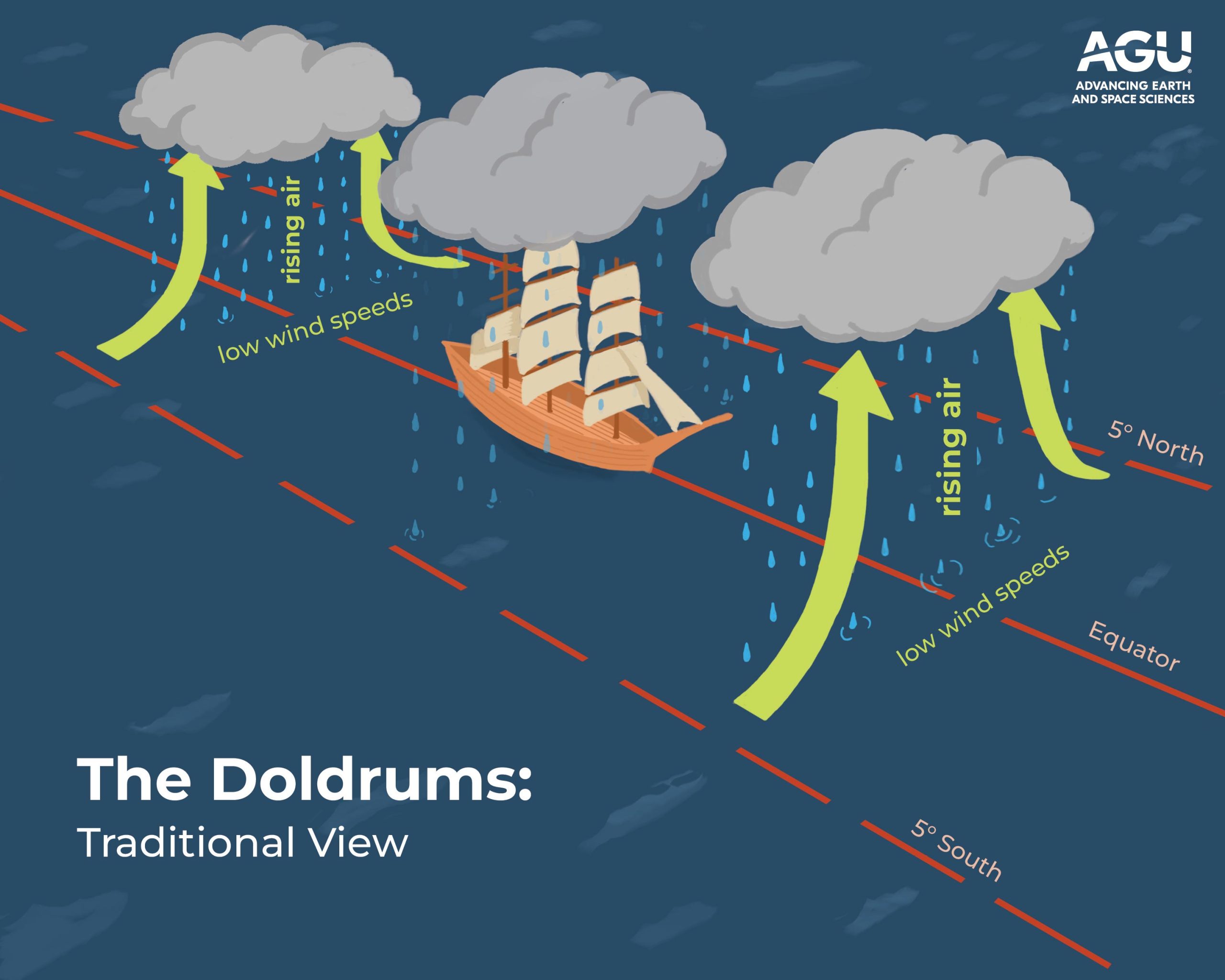
The doldrums, also known as the Intertropical Convergence Zone, was named by early 19th-century sailors marooned at sea by bouts of little or no wind. The term, originally defined as a period of despondency or depression, has come to describe the sometimes stormy, sometimes calm equatorial region. The oceanic area was even referenced in Samuel Taylor Coleridge’s 1834 poem, “The Rime of the Ancient Mariner”:
Day after day, day after day,
We stuck, nor breath nor motion;
As idle as a painted ship
Upon a painted ocean.
The Intertropical Convergence Zone is usually characterized as a region of converging trade winds and rising air masses near the equator. The air masses, warmed by equatorial heat, float up like balloons, form clouds and whip up storms over the equator. They then sink back down at approximately 30 degrees North and South of the equator, completing what is known as Hadley Cell circulation. This pattern of converging and rising air near the equator has traditionally been accepted as the cause for the doldrums, as pockets of low to no winds are generally created under rising air masses.
Challenging Traditional Views
However, little modern research has focused on proving the root cause of the doldrums. According to Windmiller, the accepted explanation for the doldrums could not be completely correct, unless the regions of uplifting air were averaged over time.
“There’s this fascinating break in reasoning because this upward circulation of air doesn’t work for short time scales and large areas of still wind,” said Windmiller. “To some degree, because we’ve historically forgotten about the doldrums, this flaw in the logic never really came up.”
Windmiller analyzed Intertropical Convergence Zone meteorological data for the Atlantic Ocean between 2001 and 2021 and buoy data ranging from 1998 to 2018 to define the edges of the Intertropical Convergence Zone and investigate low wind speed events in the region. Low wind speed events are characterized by winds blowing slower than three meters per second, or five knots, for at least six hours. Windmiller examined the data on multi-day, hourly, and minute-by-minute timescales, and considered how the low wind speed events evolved.
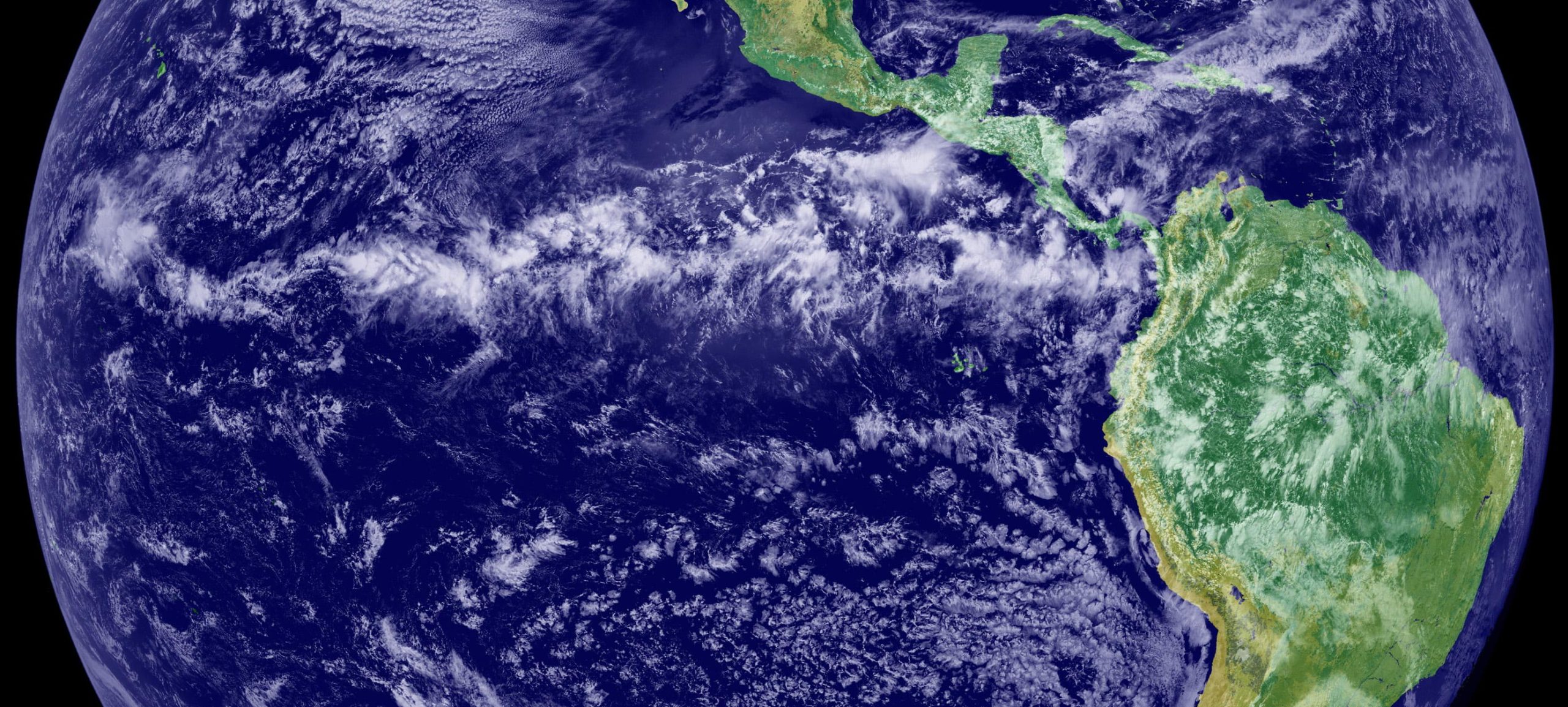
She found that low wind speed events coincided with clear weather conditions, lowered air temperatures, and a lack of precipitation: conditions that point to sinking air masses diverging at the surface rather than rising air masses. Windmiller also found that low wind speed events mainly happen in the inner regions of the Intertropical Convergence Zone and that they only occur on average in about 5% of the region at any given time (but can occur as often as 21% of the time in the eastern Atlantic during the Northern Hemisphere’s summer). Low wind speed locations also varied based on the season and region of the Atlantic Ocean.
“Most of the air inside the Intertropical Convergence Zone is actually going down rather than up,” said Windmiller. “It’s not just on average that we have low wind speeds in this region, but that we have these moments in time when the wind has just gone away over very large areas.”
Her idea is supported not just by scientific evidence, but by the next verse in Coleridge’s poem, which famously describes a ship’s stranding in a windless, rainless region within the doldrums:
Water, water, every where,
And all the boards did shrink;
Water, water, every where,
Nor any drop to drink.
Implications and Remaining Questions
For years, Windmiller has queried other atmospheric scientists about the doldrums: What really causes the wind to occasionally disappear around the equator?
“They would start to explain this upward circulation of air, but as they were explaining it, they often realized it didn’t actually make sense,” said Windmiller. “I was always surprised. It’s such a basic phenomenon, so why wouldn’t we have a theory for it?”
Some questions do remain. Windmiller is not certain what causes the Intertropical Convergence Zone’s large regions of sinking air. While most of the air in the tropics is slowly sinking, that effect alone may not be strong enough to cause the doldrums. Other possible causes include large convective systems that leave downdrafts in their wakes, or humidity gradients that cause local air to cool and sink, she said.
And while modern mariners are unlikely to be stranded in the doldrums thanks to diesel engines, understanding the doldrums’ true cause could still have present-day impacts. New, high-resolution climate models struggle to simulate regions of low wind speeds, so better understanding the doldrums could improve model predictions of precipitation and wind patterns.
“We can no longer explain these low wind speed events in the way we’ve done before,” said Windmiller. “I hope that this is something that people will see and read, and realize that the explanation is really upside down from what we’ve had.”
Reference: “The Calm and Variable Inner Life of the Atlantic Intertropical Convergence Zone: The Relationship Between the Doldrums and Surface Convergence” by J. M. Windmiller, 27 August 2024, Geophysical Research Letters.
DOI: 10.1029/2024GL109460
Never miss a breakthrough: Join the SciTechDaily newsletter.
Follow us on Google and Google News.
2 Comments
This research provides additional evidence of the convection driven wind/biotic pump theory of A. Makarieva & V. Gorshkov
Having circumnavigated myself I found the biggest concern is not for too much wind but rather for not enough. I had enough fuel to motor 1500 miles so it was not an issue but most small craft sailors don’t have that luxury, so crossing the doldrums (regardless what causes them) AT THE SHORTEST DISTANCE is important.