
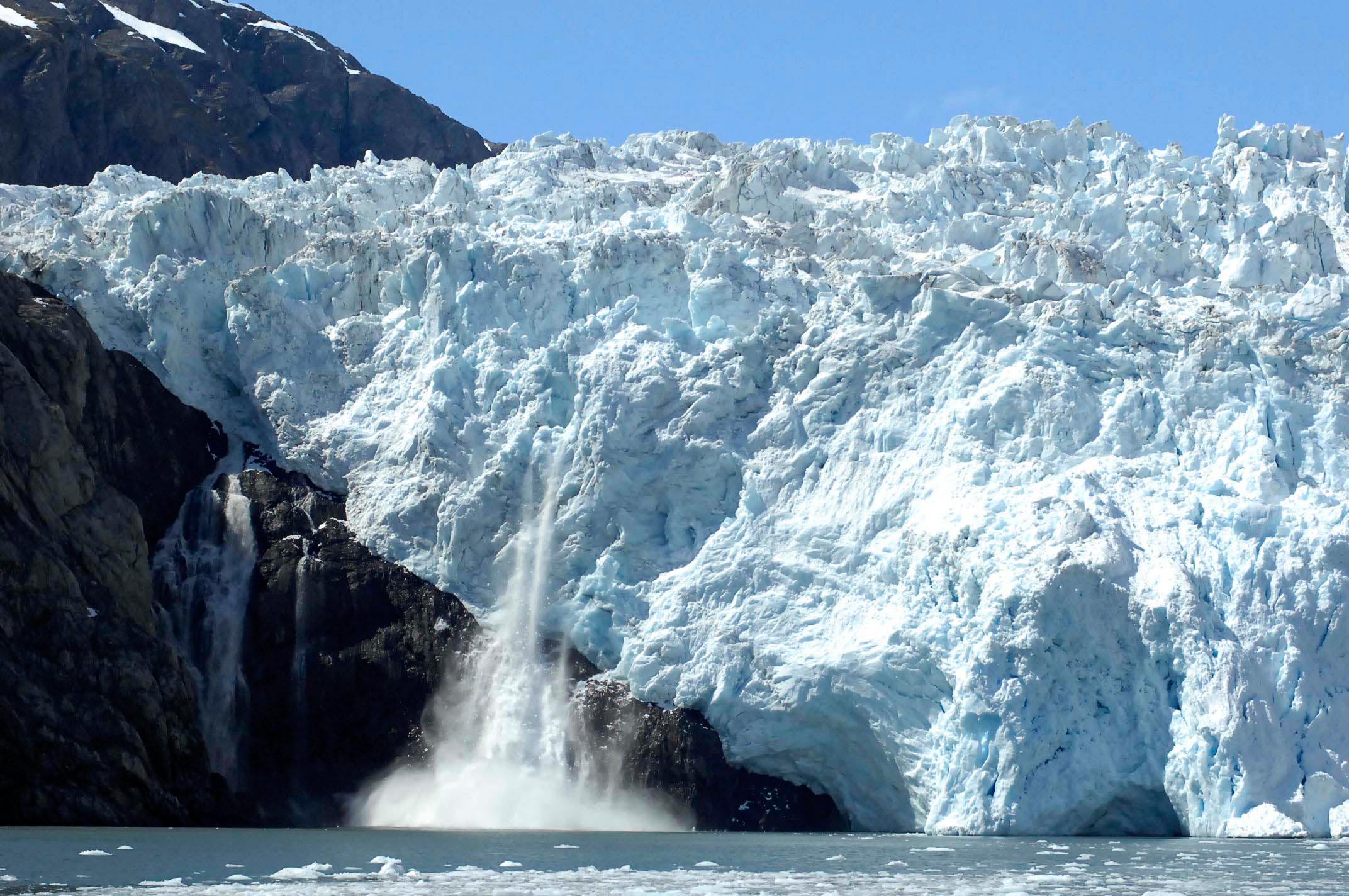
Research in Kenai Fjords National Park reveals that while most glaciers are retreating due to climate change, Holgate Glacier has advanced.
As glaciers around the world retreat due to climate change, managers of national parks need to know what’s on the horizon to prepare for the future. A new study measures 38 years of change for glaciers in Kenai Fjords National Park, a stunning jewel about two hours south of Anchorage.
The study finds that 13 of the 19 glaciers show substantial retreat, four are relatively stable, and two have advanced. Findings also include trends in which glacier types are disappearing fastest. The nearly 670,000-acre (2,700 square kilometers) national park hosts various glaciers: some terminate in the ocean, others in lakes or on land. The research, from the University of Washington (UW) and the National Park Service, is published today (August 5) in The Journal of Glaciology.
“These glaciers are a big draw for tourism in the park — they’re one of the main things that people come to see,” said lead author Taryn Black, a UW doctoral student in Earth and space sciences. “Park managers had some information from satellite images, aerial photos, and repeat photography but they wanted a more complete understanding of changes over time.”

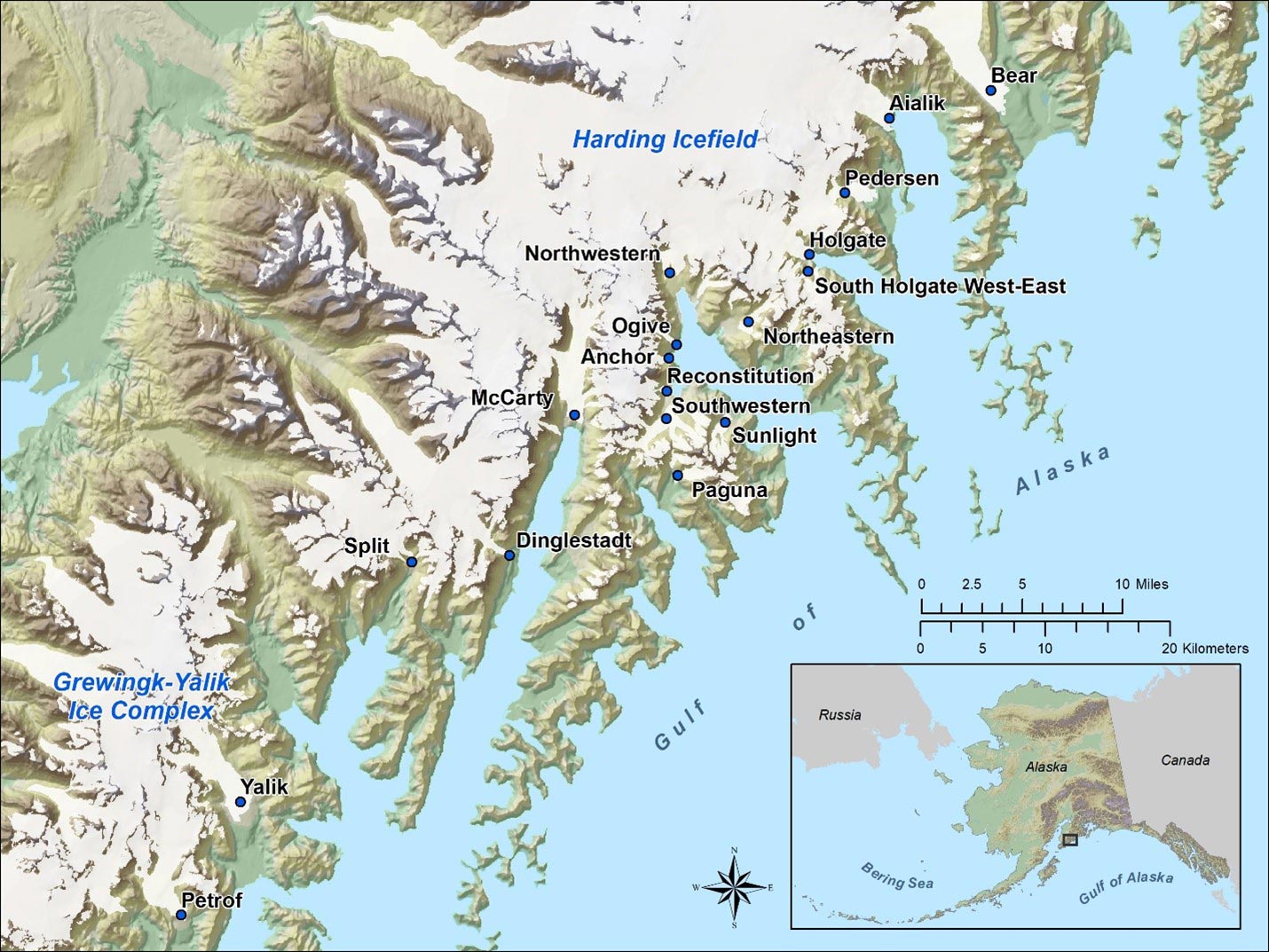
The data show that lake-terminating glaciers are retreating fastest. This type of glacier includes the popular Bear Glacier and Pedersen Glacier. Bear Glacier retreated by 5 kilometers (3 miles) between 1984 to 2021, and Pedersen Glacier retreated by 3.2 kilometers (2 miles) during that same period.
“In Alaska, much glacier retreat is being driven by climate change,” said Black. “These glaciers are at really low elevation. It’s possibly causing them to get more rain in the winter rather than snow in addition to warming temperatures, which is consistent with other climate studies in this region.”
One surprising finding was that Holgate Glacier, which as a tidewater glacier terminates at the ocean, has advanced in recent years. Local boat operators had reported seeing newly exposed land near the glacier’s edge in 2020. But the new analysis shows that the overall glacier has been advancing for about 5 years, and appears to go through regular cycles of advance and retreat. The edges of most of the other tidewater glaciers were relatively stable over the study period.
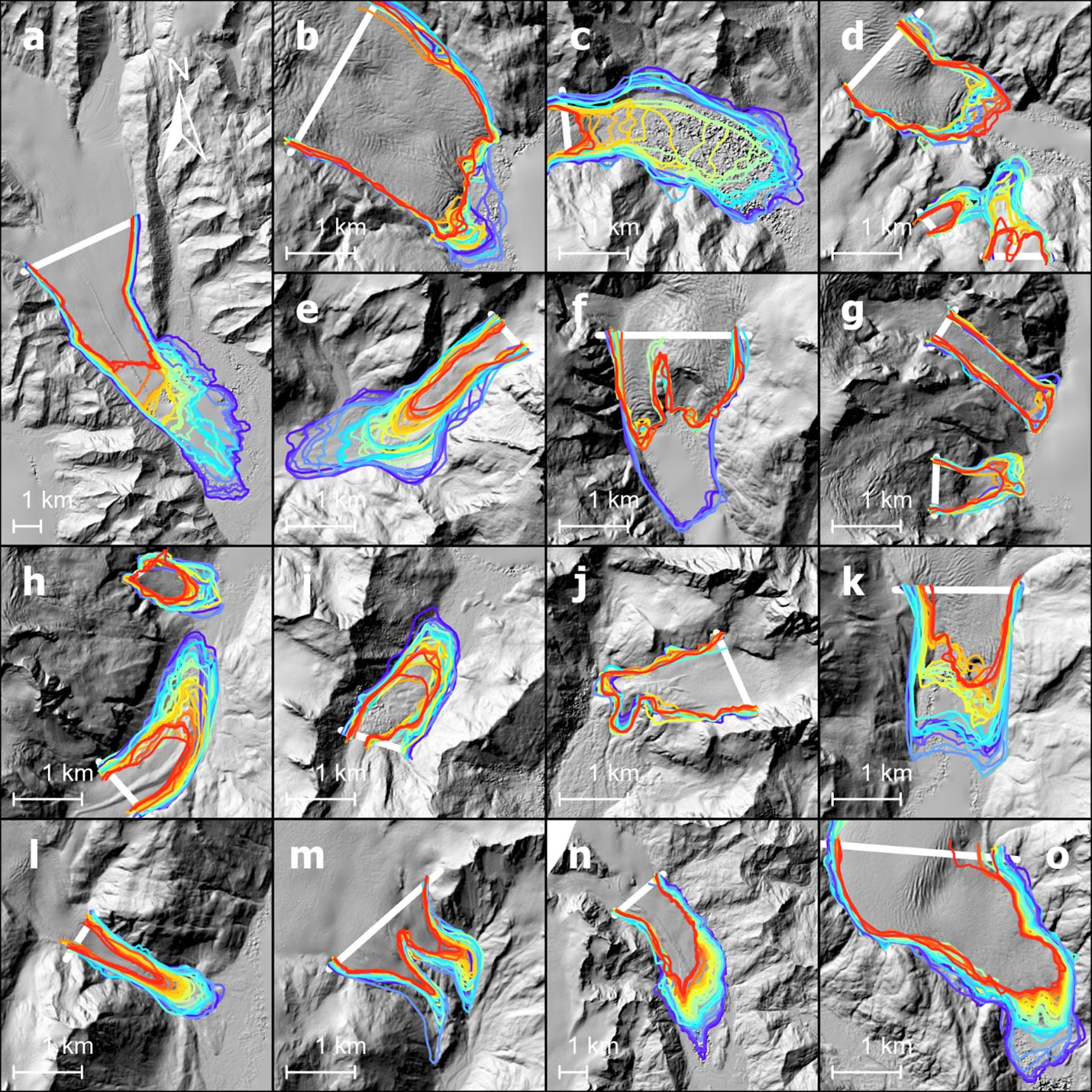
The six land-terminating glaciers all showed intermediate response, with most retreating, especially in summer months, but at a slower rate than the lake-terminating glaciers. The only other glacier that advanced during the study period was land-terminating Paguna Glacier, which is covered in rock debris from a landslide caused by the 1964 Alaska earthquake. This debris insulates the glacier surface from melting.
To make the calculations, Black used 38 years of images captured by satellites in fall and spring to trace outlines for each of the 19 glaciers — a total of about 600 outlines. She visually inspected each image to map the position of the glacier’s edge. Black used a similar approach in recent research to calculate the rate of retreat of marine-terminating glaciers in west Greenland.
The new data for Alaska provide a baseline to study how climate change — including warmer air temperatures, as well as changes in both the types and amount of precipitation — will continue to affect these glaciers. All the glaciers in the study are considered maritime glaciers because they are subject to the warm, wet maritime climate.
Results from the study have immediate application for park managers. These numbers help to quantify the changes that have been occurring and will continue for the glaciers and their immediate environments.
“We can’t manage our lands well if we don’t understand the habitats and processes occurring on them,” said co-author Deborah Kurtz at the U.S. National Park Service in Seward, Alaska.
As the park’s Physical Science Program Manager, Kurtz is also interested in the changes to the surrounding river, lake, and landscape ecosystems, and how to communicate those changes to the public.
“Interpretation and education are also an important part of the National Park Service mission,” Kurtz said. “These data will allow us to provide scientists and visitors with more details of the changes occurring at each specific glacier, helping everyone to better understand and appreciate the rate of landscape change we are experiencing in this region.”
Reference: “Maritime glacier retreat and terminus area change in Kenai Fjords National Park, Alaska, between 1984 and 2021” by Taryn Black and Deborah Kurtz, 5 August 2022, Journal of Glaciology.
DOI: 10.1017/jog.2022.55
This study was done as part of an internship originally intended to take place at Kenai Fjords National Park. Black instead did the research remotely from Seattle and visited local glaciers at Mount Rainier. Part of this research was funded by the National Park Service’s Future Park Leaders program, a partnership between the Ecological Society of America and the U.S. National Park Service.
Never miss a breakthrough: Join the SciTechDaily newsletter.
Follow us on Google and Google News.
2 Comments
“We can’t manage our lands well if we don’t understand the habitats and processes occurring on them,”
Can they explain why some glaciers are advancing while most are retreating?
Basically, the day of the Lord has begun. It is not a 24 hour day, as we humans would think, it is an era or certain time period and it is characterized by the following:
But the heavens and the earth, which are now, by the same word are kept in store, reserved unto fire against the day of judgment and perdition of ungodly men.
But, beloved, be not ignorant of this one thing, that one day is with the Lord as a thousand years, and a thousand years as one day.
But the day of the Lord will come as a thief in the night; in the which the heavens shall pass away with a great noise, and the elements shall melt with fervent heat, the earth also and the works that are therein shall be burned up.
Seeing then that all these things shall be dissolved, what manner of persons ought ye to be in all holy conversation and godliness,
Looking for and hasting unto the coming of the day of God, wherein the heavens being on fire shall be dissolved, and the elements shall melt with fervent heat?
There is no getting around. The melting will continue and intensify as time goes on. Hopefully, we will not have to wait much longer. And no more flood or sea rising.