

Close Menu
    Facebook X (Twitter) Instagram
    SciTechDaily
    • Biology
    • Chemistry
    • Earth
    • Health
    • Physics
    • Science
    • Space
    • Technology
    Facebook X (Twitter) Pinterest YouTube RSS
    SciTechDaily
    Home»Chemistry»Revolutionary ‘Green’ Bricks Made From Recycled Plastic and Organic Waste
    Chemistry

    Revolutionary ‘Green’ Bricks Made From Recycled Plastic and Organic Waste

    By Flinders UniversityJune 7, 2020No Comments4 Mins Read
    Facebook Twitter Pinterest Telegram LinkedIn WhatsApp Email Reddit
    Share
    Facebook Twitter LinkedIn Pinterest Telegram Email Reddit
    Green Construction Concept
    Australian scientists have discovered a new kind of rubber polymer that could create eco-friendly construction materials, such as bricks made from recycled PVC, plant fibers, or sand.

    New binding solution targets construction uses.

    Revolutionary ‘green’ types of bricks and construction materials could be made from recycled PVC, waste plant fibers or sand with the help of a remarkable new kind of rubber polymer discovered by Australian scientists.

    The rubber polymer, itself made from sulfur and canola oil, can be compressed and heated with fillers to create construction materials of the future, say researchers in the Young Chemist issue of Chemistry – A European Journal.

    “This method could produce materials that may one day replace non-recyclable construction materials, bricks, and even concrete replacement,” says Flinders University organic chemist Associate Professor Justin Chalker.
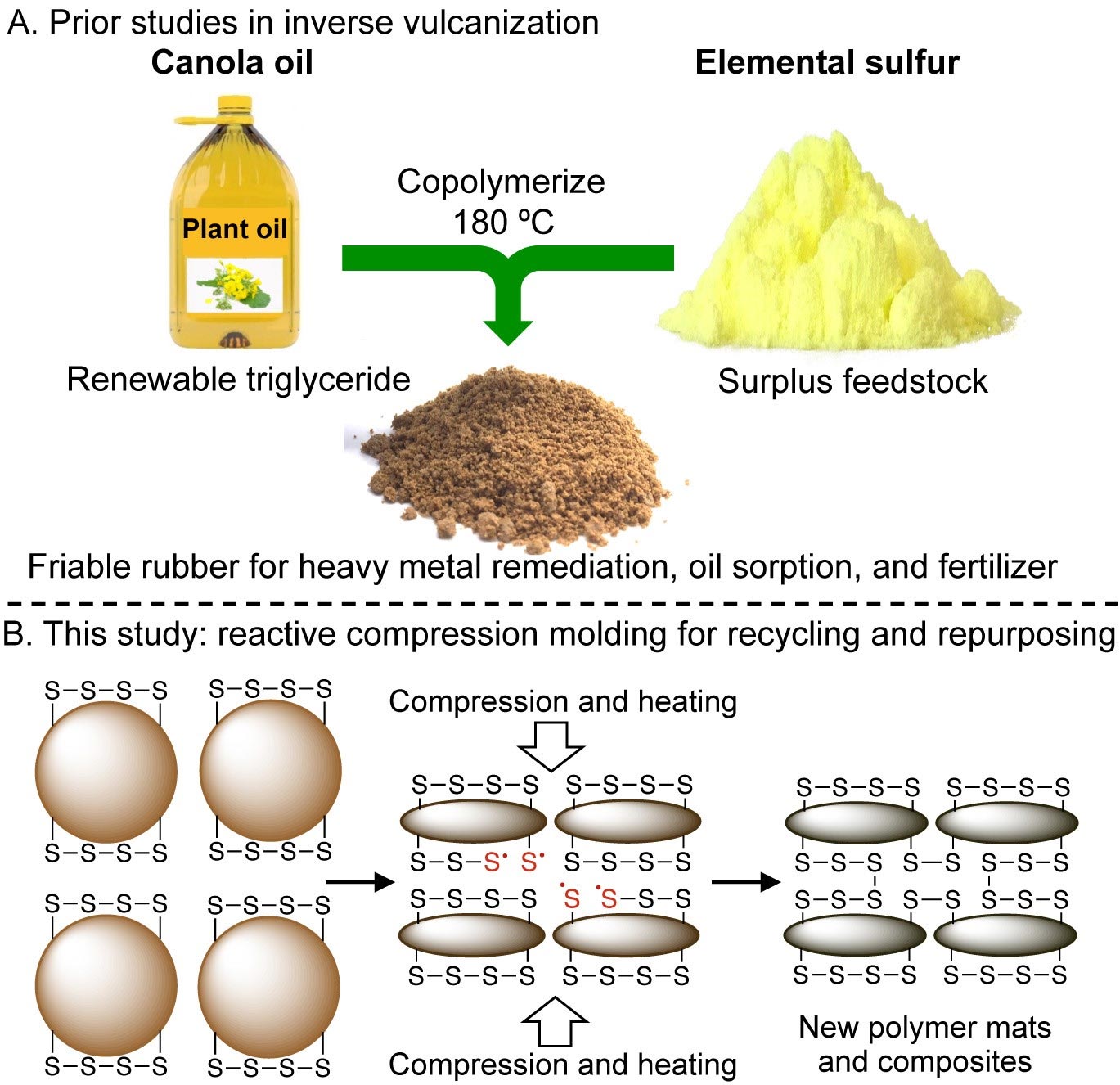
    Unique Chemical Structure Recylcable Rubber
    The unique chemical structure of the sulfur backbone in the novel rubber allows for multiple pieces of the rubber to bond together. Credit: Flinders University

    The powdered rubber can potentially be used as tubing, rubber coatings, or bumpers, or compressed, heated then mixed with other fillers to form entirely new composites, including more sustainable building blocks, concrete replacement, or insulation.

    Cement is a finite resource and heavily polluting in its production, with concrete production estimated to contribute more than 8% of global greenhouse gas emissions, and the construction industry worldwide accounting for about 18%.

    “This is also important because there are currently few methods to recycle PVC or carbon fiber,” says Associate Professor Chalker and collaborator Dr. Louisa Esdaile, with support from other Flinders, Deakin University, and University of Western Australia researchers.
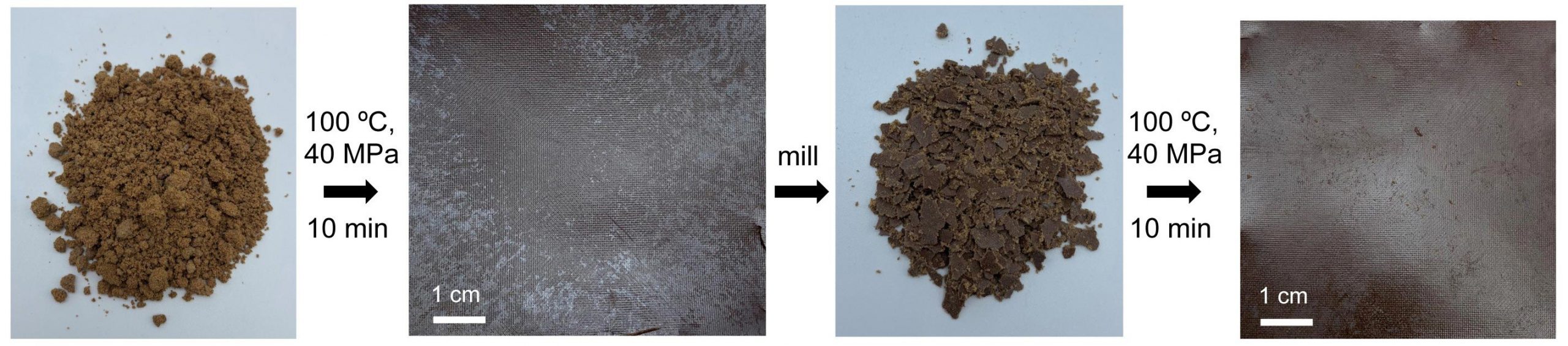
    Unique Chemical Structure Novel Rubber
    The unique chemical structure of the sulfur backbone in the novel rubber allows for multiple pieces of the rubber to bond together. Credit: Flinders University

    “This new recycling method and new composites are an important step forward in making sustainable construction materials, and the rubber material can be repeatedly ground up and recycled,” says lead author Flinders Ph.D. Nic Lundquist. “The rubber particles also can be first used to purify water and then repurposed into a rubber mat or tubing.”

    Co-author and research collaborator Dr. Louisa Esdaile says the important research looks at ways to repurpose and recycle materials, so that these materials are multi-use by design.

    “Such technology is important in a circular economy,” says Dr. Esdaile, a special contributor to this month’s Young Chemist issue of Chemistry – A European Journal (ChemEurJ).

    Recyclable Rubber
    The new manufacturing and recycling technique, labeled ‘reactive compression molding,’ applies to rubber material that can be compressed and stretched, but one that doesn’t melt. Credit: Flinders University

    The new manufacturing and recycling technique, labeled ‘reactive compression molding,’ applies to rubber material that can be compressed and stretched, but one that doesn’t melt. The unique chemical structure of the sulfur backbone in the novel rubber allows for multiple pieces of the rubber to bond together.

    The project started two years ago in the Flinders University Chalker Laboratory as a third-year project by Ryan Shapter, with Flinders University Ph.D. candidates Nicholas Lundquist and Alfrets Tikoalu and others contributing to the paper in this month’s special Young Chemist issue of ChemEurJ.

    Reference: “Reactive compression molding post-inverse vulcanization: A method to assemble, recycle, and repurpose sulfur polymers and composites” by Nicholas Lundquist, Alfrets Tikoalu, Max Worthington, Ryan Shapter, Samuel Tonkin, Filip Stojcevski, Maximilian Mann, Christopher Gibson, Jason Gascooke, Amir Karton, Luke Henderson, Louisa Esdaile and Justin Chalker, 19 May 2020, Chemistry – A European Journal.
    DOI: 10.1002/chem.202001841

    The Chalker Lab at Flinders University has previously developed sulfur polymers for a number of applications in mopping up environmental pollutants – from oil spills in water and mercury and heavy metals in soil.

    Never miss a breakthrough: Join the SciTechDaily newsletter.
    Follow us on Google and Google News.

    Biochemistry Flinders University Industrial Engineering Materials Science Recycling
    Share. Facebook Twitter Pinterest LinkedIn Email Reddit

    Related Articles

    A New Way to Synthesize Hydrocarbons Could Reduce Dioxide Emissions and Slash Costs of Chemical Manufacturing

    Synthetic Melanin Dyes Developed for Natural-Looking Hair Colors

    Metallic Glass: One Step Closer to Solving a Major Problem of Hydrogen Energy

    Sulfur-Scavenging Bacteria Could Be Key to Biomanufacturing Common Component of Plastic

    New Eco-Friendly, Flame-Retardant Carbon Plastic Is Ideal for Recycling

    Underwater Smart Glue Goes From Sticky to Not With a Small Zap of Electricity

    ‘Eco’ Super-Glue Made From Plant-Based Particles and Water – Single Drop Can Hold 200 Pounds

    New Technique Could Improve Electronics’ Energy Efficiency

    Working to Recycle Greenhouse Gases

    Leave A Reply Cancel Reply

    • Facebook
    • Twitter
    • Pinterest
    • YouTube

    Don't Miss a Discovery

    Subscribe for the Latest in Science & Tech!

    Trending News

    Scientists May Have Found the Key to Jupiter and Saturn’s Moon Mystery

    Scientists Uncover Brain Changes That Link Pain to Depression

    Saunas May Do More Than Raise Body Temperature – They Activate Your Immune System

    Exercise in a Pill? Metformin Shows Surprising Effects in Cancer Patients

    Hidden Oceans of Magma Could Be Protecting Alien Life

    New Study Challenges Alzheimer’s Theories: It’s Not Just About Plaques

    Artificial Sweeteners May Harm Future Generations, Study Suggests

    Splashdown! NASA Artemis II Returns From Record-Breaking Moon Mission

    Follow SciTechDaily
    • Facebook
    • Twitter
    • YouTube
    • Pinterest
    • Newsletter
    • RSS
    SciTech News
    • Biology News
    • Chemistry News
    • Earth News
    • Health News
    • Physics News
    • Science News
    • Space News
    • Technology News
    Recent Posts
    • As Cities Invade the Amazon, Yellow Fever Makes a Dangerous Comeback
    • “Asian Flush” May Be a Hidden Trigger for Deadly Heart Damage
    • AI Could Detect Early Signs of Alzheimer’s in Under a Minute – Far Before Traditional Tests
    • What if Dark Matter Has Two Forms? Bold New Hypothesis Could Explain a Cosmic Mystery
    • Researchers Expose Hidden Chemistry of “Ore-Forming” Elements in Biology
    Copyright © 1998 - 2026 SciTechDaily. All Rights Reserved.
    • Science News
    • About
    • Contact
    • Editorial Board
    • Privacy Policy
    • Terms of Use

    Type above and press Enter to search. Press Esc to cancel.