
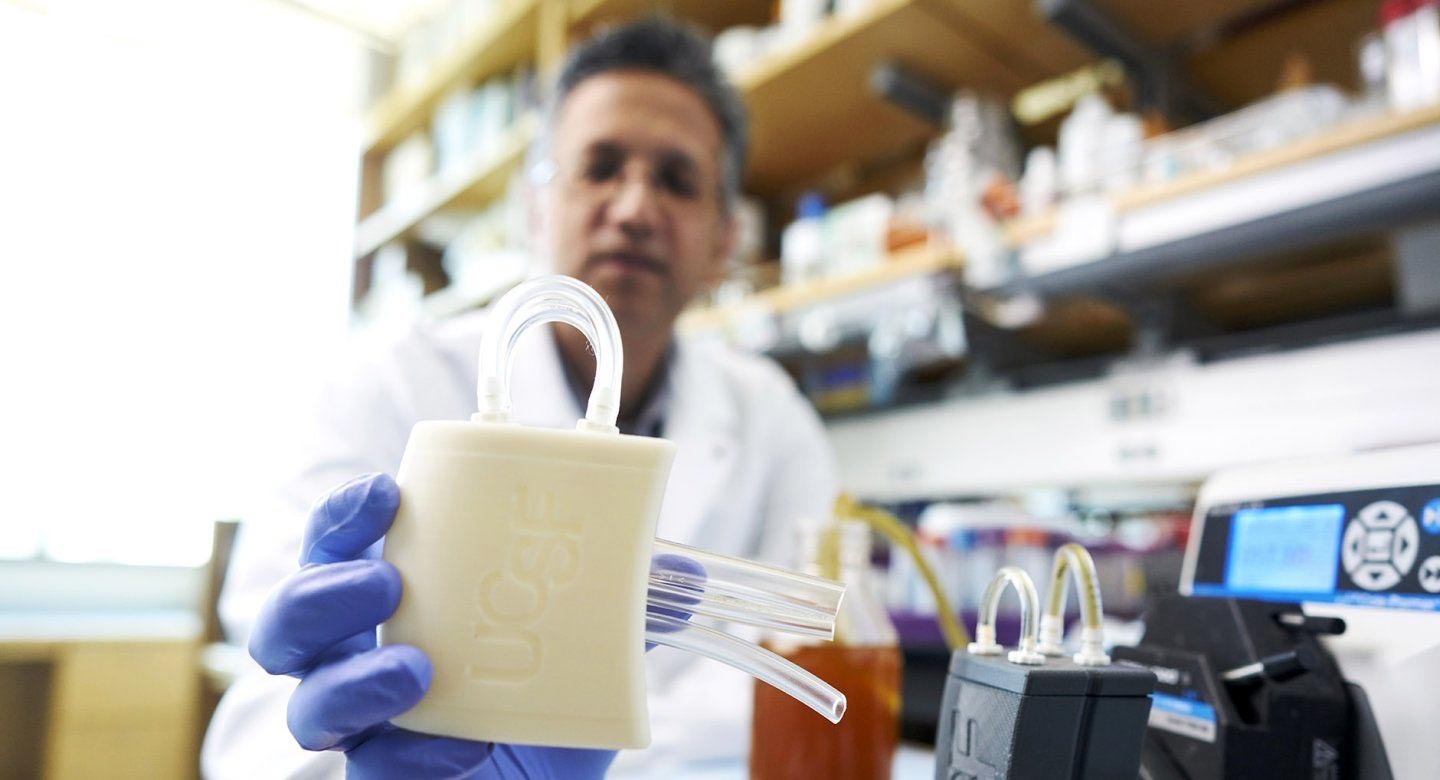
The Kidney Project Proves Its Bioreactor Can Keep Kidney Cells Alive for at Least One Week
Scientists at the University of California, San Francisco (UCSF) are working on a new approach to treating kidney failure that could one day free people from needing dialysis or having to take harsh drugs to suppress their immune system after a transplant.
They have shown for the first time that kidney cells, housed in an implantable device called a bioreactor, can survive inside the body of a pig and mimic several important kidney functions. The device can work quietly in the background, like a pacemaker, and does not trigger the recipient’s immune system to go on the attack.
The findings, published in Nature Communications today (August 29, 2023), are an important step forward for The Kidney Project, which is jointly headed by UCSF’s Shuvo Roy, PhD (technical director) and Vanderbilt University Medical Center’s William H. Fissell, MD (medical director).
The Kidney Project’s Future Directions
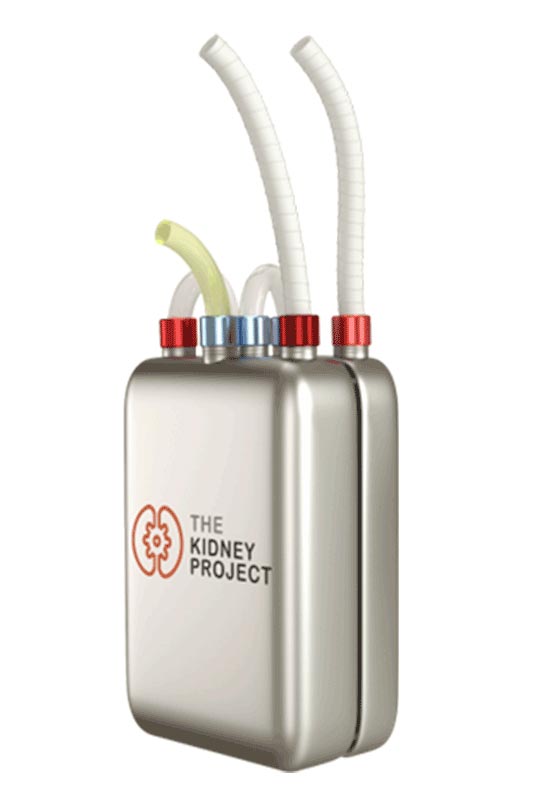
Eventually, scientists plan to fill the bioreactor with different kidney cells that perform vital functions like balancing the body’s fluids and releasing hormones to regulate blood pressure – then pair it with a device that filters waste from the blood.
“The bioartificial kidney will make treatment for kidney disease more effective and also much more tolerable and comfortable.”
Shuvo Roy, PhD
The aim is to produce a human-scale device to improve on dialysis, which keeps people alive after their kidneys fail but is a poor substitute for having a real working organ. More than 500,000 people in the U.S. require dialysis several times a week. Many seek kidney transplants, but there are not enough donors, and only about 20,000 people receive them each year. An implantable artificial kidney would be a boon.
“We are focused on safely replicating the key functions of a kidney,” said Roy, a bioengineering professor in the UCSF School of Pharmacy. “The bioartificial kidney will make treatment for kidney disease more effective and also much more tolerable and comfortable.”
Inspired by Nature, Refined by Science
Roy and his colleagues engineered the bioreactor to connect directly to blood vessels and veins, allowing the passage of nutrients and oxygen, much like a transplanted kidney would. Silicon membranes keep the kidney cells inside the bioreactor safe from attack by the recipient’s immune cells.
The team used a type of kidney cell called a proximal tubule cell, which regulates water and salt, as a test case. Co-author H. David Humes, MD, from the University of Michigan, had previously used these cells to help dialysis patients in the intensive care unit with life-saving results.
A Green Light for The Kidney Project
The team tracked the kidney cells and the recipient animals for seven days after transplantation and both did well. The next step will be month-long trials, as required by the U.S. Food and Drug Administration (FDA), first in animals and eventually in humans.
“We needed to prove that a functional bioreactor will not require immunosuppressant drugs, and we did,” Roy said. “We had no complications and can now iterate up, reaching for the whole panel of kidney functions at the human scale.”
Reference: “Feasibility of an implantable bioreactor for renal cell therapy using silicon nanopore membranes” by Eun Jung Kim, Caressa Chen, Rebecca Gologorsky, Ana Santandreu, Alonso Torres, Nathan Wright, Mark S. Goodin, Jarrett Moyer, Benjamin W. Chui, Charles Blaha, Paul Brakeman, Shant Vartanian, Qizhi Tang, H. David Humes, William H. Fissell and Shuvo Roy, 29 August 2023, Nature Communications.
DOI: 10.1038/s41467-023-39888-2
Authors: Additional UCSF authors are Eun Jung Kim, PhD, Caressa Chen, MD, Rebecca Gologorsky, MD, Ana Santandreu, Alonso Torres, Nathan Wright, MS, Jarrett Moyer, MD, Benjamin W. Chui, PhD, Charles Blaha, MS, Paul Brakeman, MD, PhD, Shant Vartanian, MD, and Qizhi Tang, PhD. For all authors, see the paper.
Funding and disclosures: The research was supported, in part, by the National Institutes of Health (U01EB021214, R25EB023856), as well as philanthropy. For all funding sources and author disclosures, see the paper.
Never miss a breakthrough: Join the SciTechDaily newsletter.
Follow us on Google and Google News.
1 Comment
This can’t happen fast enough for us people on the waiting list