
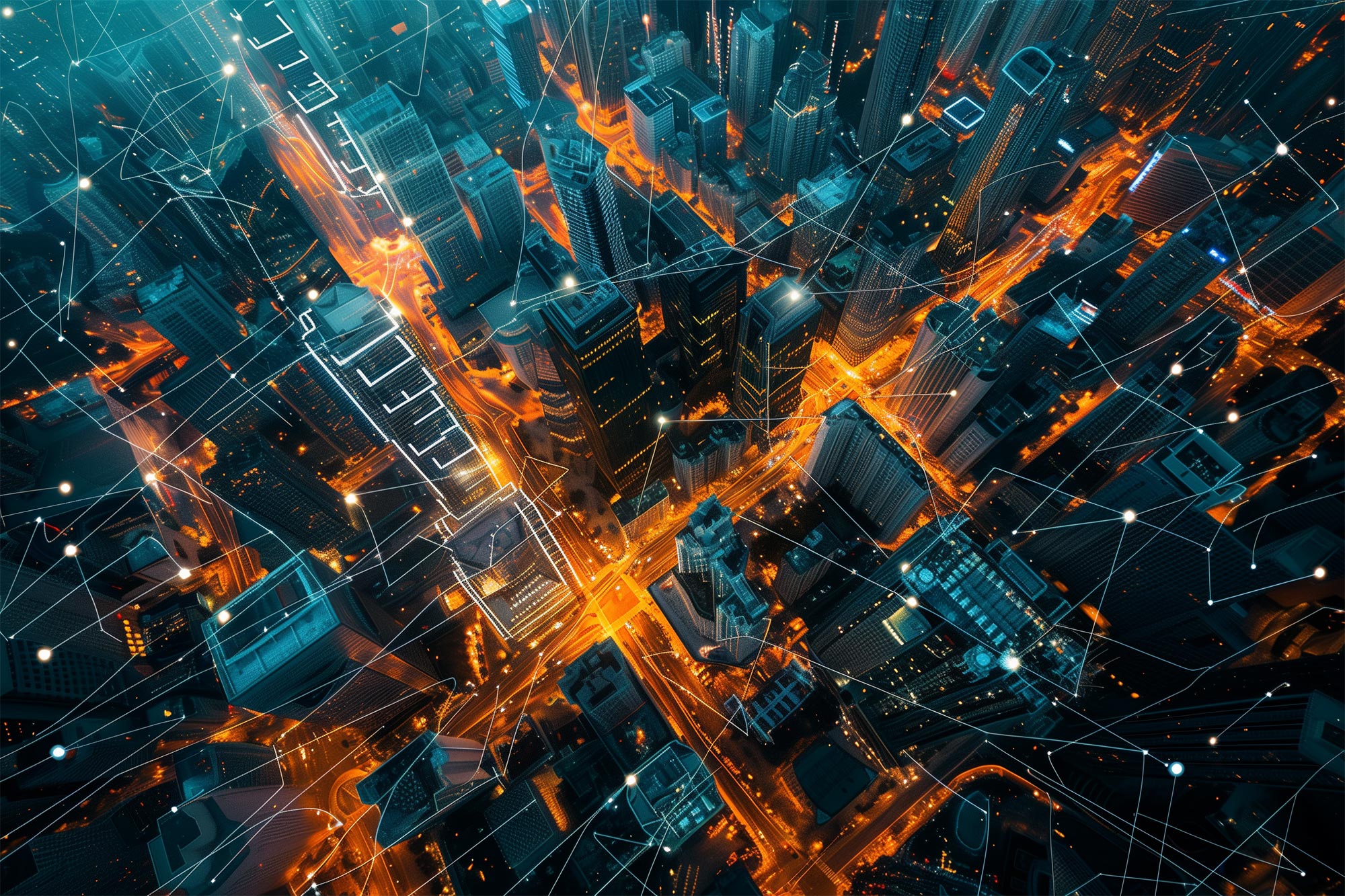
Geospatial data has undergone significant transformations due to the internet and smartphones, revolutionizing accessibility and real-time updates.
A collaborative international team reviewed this evolution, highlighting growth opportunities and challenges.
‘Seismic Shift’ to Crowdsourced Scientific Data Presents Promising Opportunities
The concept of geospatial data, or information related to locations on Earth’s surface, has evolved. With the advent of widely available internet and smartphones, directions that were once only available in a paper map are now updated on your phone in real-time to account for traffic. That evolution was and will continue to be driven by how the data is gathered, according to an international research collaboration representing 18 institutions in four countries.
The team reviewed the current state of geospatial data, highlighting potential areas of growth as well as possible challenges, to serve as a foundational reference to guide applications for both academic and societal use.
Their work was published in the Journal of Remote Sensing.
Data Creation and Analysis Shift
“The landscape of data creation and analysis has undergone a seismic shift in recent times,” said co-corresponding author Xiao Huang, assistant professor at Emory University. “This paradigm shift was precipitated by several key factors, including widespread internet access, the ubiquity of smartphones and a general surge in participatory culture.”
According to Huang, the shift has been profound across industry types. He pointed to urban planning, transportation and environmental monitoring as particularly impacted, with “unprecedented real-time sights and community-driven perspectives, often leading to more responsive and adaptive decision-making processes,” thanks to user-generated data. The same type of data is informing the commercial sector, as well, with better-informed customer-centric product development and marketing strategies.
Democratization of Data
“The significance of this shift lies in its empowerment of ordinary individuals to contribute to and influence fields traditionally dominated by experts and authorities,” Huang said. “This democratization has not only diversified the types of data available but has also led to richer, more multifaceted insight into human behavior and environmental changes.”
Despite such a shift, however, the researchers said a comprehensive, overarching perspective to connect the various data sources, such as social media platforms, with the application domains, such as public health or remote sensing, is still needed.
Bridging Data Sources and Applications
“We aim to bridge this gap and provide a holistic view of the use and potential of crowdsourcing geospatial data,” Huang said. “In this study, we conduct an exhaustive analysis of the current efforts, possibilities, and obstacles associated with crowdsourced geospatial data across two fundamental perspectives: human observations and Earth observations.”
Earth observations refer to the work of large entities, such as academic institutions or government bodies to record data, as opposed to human observations made on social media, for example. In coupling these two perspectives, the researchers identified seven specific challenges: ensuring data quality and accuracy; protecting data privacy; training and educating non-experts; sustaining data collection; navigating legal and ethical issues; and interpreting data. Their paper summarizes the current state of affairs in each area, as well as a potential pathway forward.
Potential of Crowdsourced Data
“Crowdsourced geospatial data has a critical role and vast potential in enhancing human and Earth observations,” Huang said. “This data, contributed by the general public through various platforms, offers high-resolution spatiotemporal observations that traditional methods might miss. This comprehensive review paper underscores the democratization of data collection and its implications for various sectors, emphasizing the necessity of integrating these non-traditional data sources for more comprehensive and nuanced understanding and decision making.”
Future Directions in Crowdsourcing
The researchers identified three primary future directions: expanding the scope of geospatial crowdsourcing by harnessing the power of the crowd; pioneering a sustainable crowdsourcing ecosystem, from motivation to retention; and translating crowdsourced geospatial data into real-world impact.
“Our goal is to enhance the scope and impact of geospatial crowdsourcing by incorporating the temporal dimension, integrating advanced artificial intelligence and machine learning, and utilizing advanced technologies, while ensuring inclusivity, especially from underrepresented regions,” Huang said. “We encourage pioneering a sustainable crowdsourcing ecosystem by fostering a strong, motivated community of citizen scientists, offering effective incentives and comprehensive education, and bridging digital divides.
“This effort culminates in translating the rich, crowdsourced geospatial data into tangible real-world impacts, informing policy decisions, advancing scientific research, and empowering communities and individuals globally.”
Reference: “Crowdsourcing Geospatial Data for Earth and Human Observations: A Review” by Xiao Huang, Siqin Wang, Di Yang, Tao Hu, Meixu Chen, Mengxi Zhang, Guiming Zhang, Filip Biljecki, Tianjun Lu, Lei Zou, Connor Y. H. Wu, Yoo Min Park, Xiao Li, Yunzhe Liu, Hongchao Fan, Jessica Mitchell, Zhenlong Li and Alexander Hohl, 22 January 2024, Journal of Remote Sensing.
DOI: 10.34133/remotesensing.0105
Co-authors include co-corresponding author Siqin Wang, Spatial Sciences Institute, University of California, Los Angeles; Di Yang, Wyoming Geographic Information Science Center, University of Wyoming; Tao Hu, Department of Geography, and Connor Yuhao Wu, Department of Management Science and Information Systems, both with the Oklahoma State University; Meixu Chen, Department of Geography and Planning, University of Liverpool; Meixu Zhang, Carilion School of Medicine, Virginia Tech; Guiming Zhang, Department of Geography & the Environment, University of Denver; Filip Biljecki, Department of Architecture, National University of Singapore; Tianjun Lu, Department of Earth Science and Geography, California State University-Dominguez Hills; Lei Zou, Department of Geography, Texas A&M, College Station; Yoo Min Park, Department of Geography, University of Connecticut; Xiao Li, Transport Studies Unit, University of Oxford; Yuzhe Liu, The MRC Centre for Environment and Health, Imperial College London; Hongchao Fan, Department of Civil and Environmental Engineering, Norwegian University of Science and Technology; Jessica Mitchell, Spatial Analysis Lab, University of Montana; Zhenlong Li, Department of Geography, University of South Carolina; and Alexander Hohl, Department of Geography, The University of Utah.
The Faculty Startup Fund of Emory University’s College of Arts and Sciences supported this research.
Never miss a breakthrough: Join the SciTechDaily newsletter.
Follow us on Google and Google News.