

What Are Clouds and Aerosols?
Clouds are an essential part of the Earth’s climate. Clouds block the sun and shade the ground, cooling the planet’s surface and the atmosphere. They also trap heat and humidity in the atmosphere, which warms the air. Clouds transport water around the globe in the form of moisture and rainfall, affecting climate, vegetation, erosion, and other elements of our Earth. Clouds are incredibly complex and one of the important sources of uncertainty in climate models and Earth system models. For climate scientists, studying how clouds form and how they affect the weather and climate is critical to understanding our changing world and predicting its future.
Clouds usually form around tiny airborne particles called aerosols. Clouds are made of water droplets, ice crystals, or a mix of both. When the sun warms the surface of the Earth, water from oceans and lakes, soil, and plants changes from a liquid to a vapor. This process is called evaporation. As air rises in the atmosphere, it cools and cannot hold as much water vapor. If the colder air encounters the right type of aerosol particles, the water vapor may collect on the aerosol particles as cloud droplets or ice crystals. Whether cloud droplets or ice crystals form depends on the temperature of the air. It also depends on the type of aerosols—some particles are better seeds for clouds than others. When many new cloud droplets or ice crystals grow, a cloud is created.
Many aerosols are natural materials from sea spray, volcanoes, and dust from rocks and soil. These aerosols are natural but not from plants or animals. Other aerosols come from plants and microbes and from the combustion of carbon-based materials. Sea salt particles are good seeds for water droplets, while dust particles often make good seeds for ice crystals.
Other aerosols come from artificial sources. One of these types of aerosols is called black carbon. Most black carbon comes from the burning of fossil fuels such as oil, gasoline, and coal, as well as from the burning of wood and other plant material. Scientists believe black carbon is one of the most important contributors to our warming climate.
How do clouds and aerosols affect climate? Clouds can reflect light, ultraviolet light, and heat from the Sun away from the Earth. This helps stabilize the temperature of the Earth’s atmosphere. But clouds can also trap heat that is in the air or that radiates from the ground. This can warm the atmosphere. Clouds and the climate interact in complex ways. For example, scientists predict that increasing global temperatures could reduce the size and number of clouds in some parts of the globe. This would allow more sunlight to reach the ground and further warm the atmosphere.
Aerosol particles affect the Earth’s climate by acting as the seeds on which clouds form. More aerosol particles can lead to more, but smaller, cloud droplets. This may reduce the rain that falls from that cloud. Aerosol particles also shape the climate as they circulate in the atmosphere. Some of these particles can reflect sunlight, helping to cool the atmosphere. Other aerosol particles absorb heat from sunlight. This causes the atmosphere to warm. This is especially true for black carbon. Because it is black, it is very good at absorbing sunlight.
Fast Facts
- Clouds are made up of droplets that are much smaller than a raindrop. A typical raindrop is 2 millimeters (2000 microns) in diameter. A typical cloud droplet is only 20 microns in diameter.
- The difference between a cloud droplet and a raindrop is size: raindrops are cloud droplets that grow large enough to fall. Similarly, snowflakes are ice crystals in clouds that have grown large enough to fall.
- Clouds can consist of liquid droplets, ice crystals, or a mix.
- Aerosol particles come in many shapes and sizes.
- You can make your own cloud with instructions from NASA.
DOE Office of Science: Contributions to Cloud and Aerosol Research
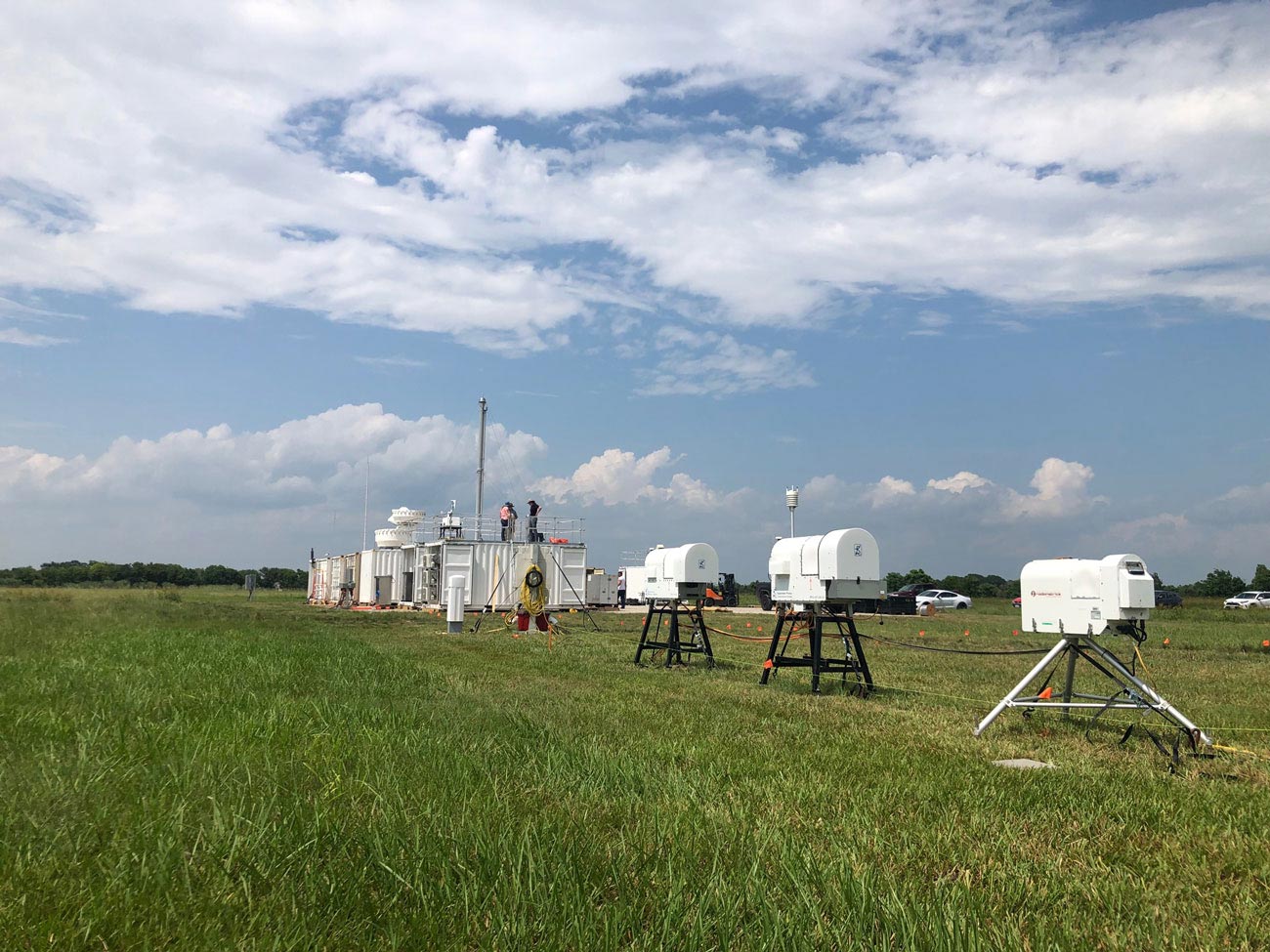
The Department of Energy (DOE) Office of Science Biological and Environmental Research (BER) supports extensive research on clouds, aerosols, and their roles in the Earth’s climate. For example, DOE’s Atmospheric System Research focuses on studies to addresses uncertainty in climate predictions due to clouds, aerosols, and precipitation. For example, one current project is examining how cloud and aerosol interaction changes by season in the South Atlantic. Much of the data used in this work is collected by DOE’s Atmospheric Radiation Measurement (ARM) user facility. ARM consists of several stationary, mobile, and even airborne sites that collect data on the atmosphere. ARM data is freely available to everyone. DOE also supports research through its Earth and Environmental Systems Modeling activity, which develops and applies Earth system and climate models.
Never miss a breakthrough: Join the SciTechDaily newsletter.
Follow us on Google and Google News.