
New research supports the theory that ancient glaciers during the “Snowball Earth” period caused the Great Unconformity, a time gap in the geological record. Thermochronology shows rapid, high magnitude cooling and erosion in North America, suggesting glacial activity as a major factor.
New research provides further evidence that rocks representing up to a billion years of geological time were carved away by ancient glaciers during the planet’s “Snowball Earth” period, according to a study published in Proceedings of the National Academy of Sciences.
The research presents the latest findings in a debate over what caused the Earth’s “Great Unconformity”— a time gap in the geological record associated with the erosion of rock up to 3 miles (5 kilometers) thick in areas across the globe.
Geological Insights and Historical Analysis
“The fact that so many places are missing the sedimentary rocks from this time period has been one of the most puzzling features of the rock record,” said C. Brenhin Keller, an assistant professor of earth sciences and senior researcher on the study. “With these results, the pattern is starting to make a lot more sense.”
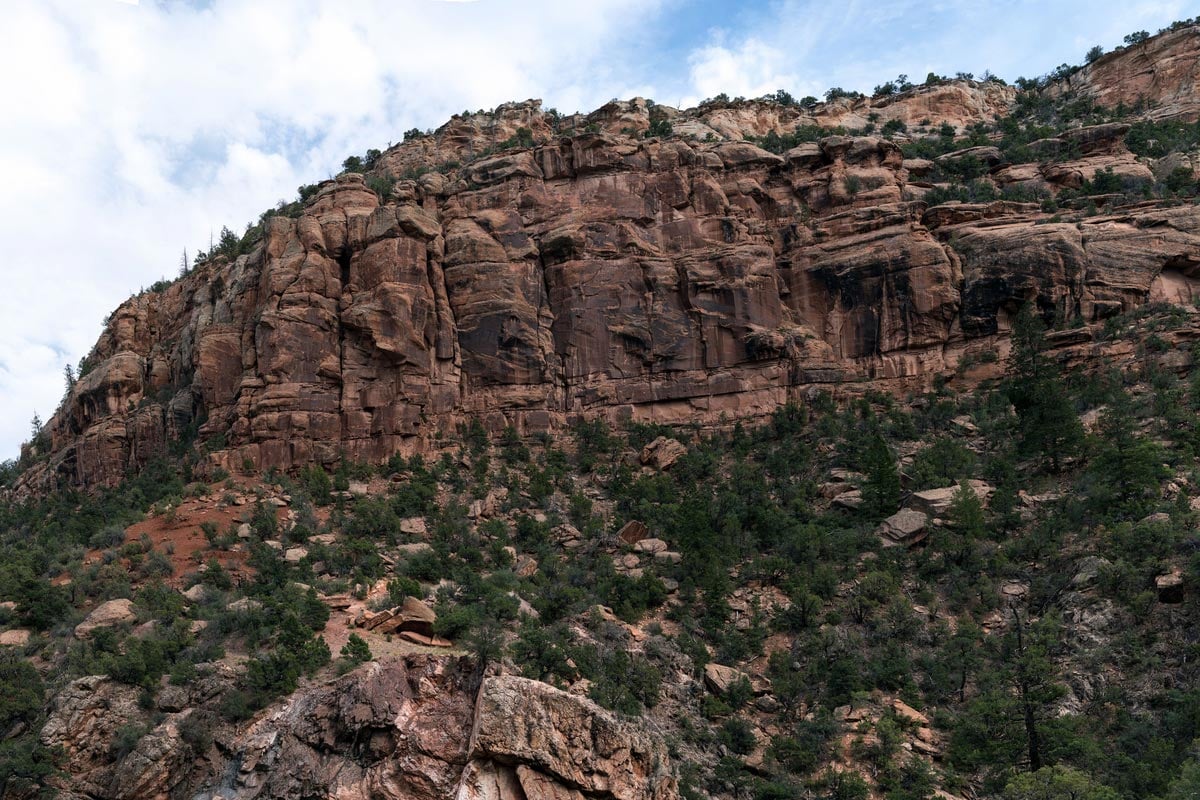
The massive amount of missing rock that has come to be known as the Great Unconformity was first named in the Grand Canyon in the late 1800s. The conspicuous geological feature is visible where rock layers from distant time periods are sandwiched together, and it is often identified where rocks with fossils sit directly above those that do not contain fossils.
“This was a fascinating time in Earth’s history,” said Kalin McDannell, a postdoctoral researcher at Dartmouth and the lead author of the paper. “The Great Unconformity sets the stage for the Cambrian explosion of life, which has always been puzzling since it is so abrupt in the fossil record—geological and evolutionary processes are usually gradual.”
For over a century, researchers have sought to explain the cause of the missing geological time.
Debating the Causes of Massive Erosion
In the last five years, two opposing theories have come into focus: One explains that the rock was carved away by ancient glaciers during the Snowball Earth period about 700 to 635 million years ago. The other focuses on a series of plate tectonic events over a much longer period during the assembly and breakup of the supercontinent Rodinia from about 1 billion to 550 million years ago.
Research led by Keller in 2019 first proposed that widespread erosion by continental ice sheets during the Cryogenian glacial interval caused the loss of rock. This was based on geochemical proxies that suggested that large amounts of mass erosion matched with the Snowball Earth period.
“The new research verifies and advances the findings in the earlier study,” said Keller. “Here we are providing independent evidence of rock cooling and miles of exhumation in the Cryogenian period across a large area of North America.”
The study relies on a detailed interpretation of thermochronology to make the assessment.

Thermochronology allows researchers to estimate the temperature that mineral crystals experience over time as well as their position in the continental crust given a particular thermal structure. Those histories can provide evidence of when missing rock was removed and when rocks currently exposed at the surface may have been exhumed.
Global Implications for Geology and Life Evolution
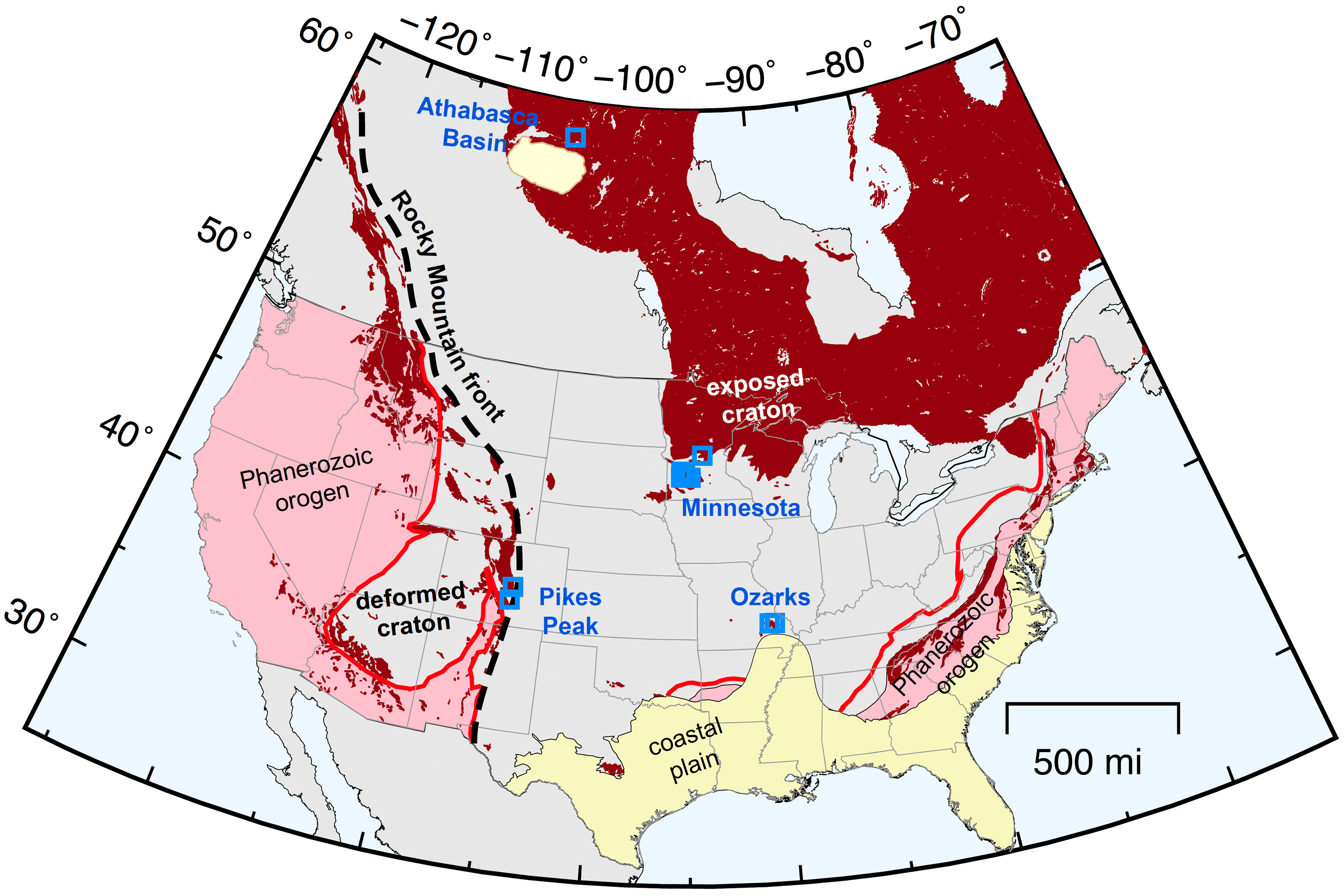
The researchers used multiple measurements from previously published thermochronometric data taken across four North American locations. The areas, known as cratons, are parts of the continent that are chemically and physically stable, and where plate tectonic activity would not have been common during that time.
By running simulations that searched for the time-temperature path the rocks experienced, the research recorded a widespread signal of rapid, high magnitude cooling that is consistent with about 2-3 miles (3-5 kilometers) of erosion during Snowball Earth glaciations across the interior of North America.
“While other studies have used thermochronology to question the glacial origin, a global phenomenon like the Great Unconformity requires a global assessment,” said McDannell. “Glaciation is the simplest explanation for erosion across a vast area during the Snowball Earth period since ice sheets were believed to cover most of North America at that time and can be efficient excavators of rock.”
Glacial Erosion vs. Tectonic Activity
According to the research team, the competing theory that tectonic activity carved out the missing rock was put forth in 2020 when a separate research group questioned whether ancient glaciers were erosive enough to cause the massive loss of rock. While that research also used thermochronology, it applied an alternate technique at only a single tectonically active location and suggested that the erosion occurred prior to Snowball Earth.
“The underlying concept is pretty simple: Something removed a whole lot of rock, resulting in a whole lot of missing time,” said Keller. “Our research demonstrates that only glacial erosion could be responsible at this scale.”
According to the researchers, the new findings also help explain links between the erosion of rock and the emergence of complex organisms about 530 million years ago during the Cambrian explosion. It is believed that erosion during the Snowball Earth period deposited nutrient-rich sediment in the ocean that could have provided a fertile environment for the building blocks of complex life.
The study notes that the two hypotheses of how the rock eroded are not mutually exclusive—it is possible that both tectonics and glaciation contributed to global Earth system disruption during the formation of the Great Unconformity. It appears, however, that only glaciation can explain erosion in the center of the continent, far from the tectonic margins.
“Ultimately with respect to the Great Unconformity, it may be that the generally accepted reconstruction(s) of more concentrated equatorial packing of the Rodinian continents along with the unique environmental conditions of the Neoproterozoic, proved to be a time of geologic serendipity unlike most any other in Earth history,” the research paper says.
Global Examination and Implications
According to the team, this is the first research that uses their thermochronology modeling approach to study a period that extends well beyond a billion years. In the future, the team will repeat their work on other continents, where they hope to further test these hypotheses about how the Great Unconformity was created and preserved.
According to the team, resolving differences in the research is critical to understanding early Earth history and the interconnection of climatic, tectonic, and biogeochemical processes.
“The fact that there may have been tectonic erosion along the craton margins does not rule out glaciation,” said McDannell. “Unconformities are composite features, and our work suggests Cryogenian erosion was a key contributor, but it is possible that both earlier and later erosion were involved in forming the unconformity surface in different places. A global examination will tell us more.”
Reference: “Thermochronologic constraints on the origin of the Great Unconformity” by Kalin T. McDannell, C. Brenhin Keller, William R. Guenthner, Peter K. Zeitler and David L. Shuster, 25 January 2022, Proceedings of the National Academy of Sciences.
DOI: 10.1073/pnas.2118682119
William Guenthner, from the University of Illinois at Urbana-Champaign; Peter Zeitler from Lehigh University; and David Shuster from the University of California, Berkeley and the Berkeley Geochronology Center served as co-authors of the paper.
Never miss a breakthrough: Join the SciTechDaily newsletter.
Follow us on Google and Google News.