
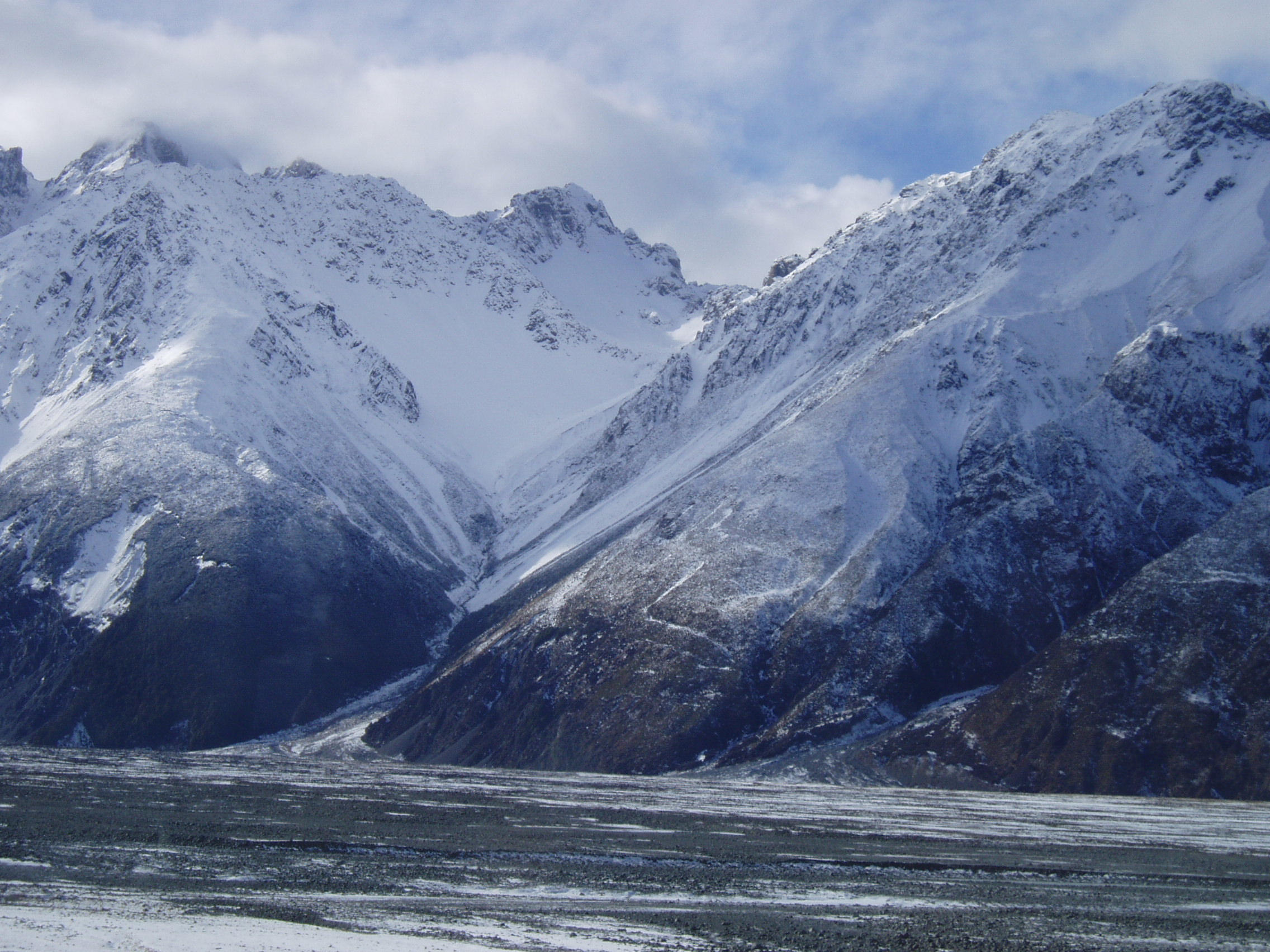
According to research, climate change will have a severe effect on mountain landscapes and human activities, increasing the likelihood of avalanches, river floods, landslides, debris flows, and lake outburst floods.
Mountain landscapes all over the globe are at risk of becoming more dangerous to populations around them as a result of climate change, while their accelerated evolution may bring additional environmental risks to surrounding regions.
This is according to a scientist from the University of the Witwatersrand in Johannesburg, South Africa, who underscores the sensitivity of mountains to global climate change in a new recent study recently published in the journal PeerJ. Professor Jasper Knight of Wits University’s School of Geography, Archaeology, and Environmental Studies demonstrates how complex mountain systems react to climate change in a variety of very different and occasionally unexpected ways, and how these responses can impact mountain landscapes and communities.
The Role of Snow and Ice in Mountain Systems
“Worldwide, mountain glaciers are in retreat because of global warming and this is causing impacts on mountain landforms, ecosystems, and people. However, these impacts are highly variable. The latest report by the Intergovernmental Panel on Climate Change (IPCC) treats all mountains as equally sensitive and responding in the same way to climate change. However, this approach is not correct,” says Knight.
“Mountains with snow and ice work completely differently to low-latitude mountains where snow and ice are generally absent. This determines how they respond to climate and what future patterns of mountain landscape evolution we can expect.”
Around the world, mountain snow and ice provide water for hundreds of millions of people, but this water source is in jeopardy due to shifting weather patterns and shrinking mountain glaciers. Future years will only see a worsening of the water situation in dry continental areas of Asia, North America, South America, and Europe.
Environmental Risks from Shrinking Glaciers
The study also demonstrates how climate change will have a detrimental influence on mountain landscapes and human activity. This includes an increased risk of dangers such as avalanches, river floods, landslides, debris flows, and lake outburst floods. These are exacerbated by glacier retreat and permafrost warming. Alpine ecosystems and endemic species are already threatened with local extinction, and mountain slopes are growing greener as lowland forests move to higher altitudes.
“As snow and ice shrink, mountain land surfaces are getting darker and this dramatically changes their heat balance, meaning they are warming up faster than the areas around them. Therefore, climate change impacts are bigger on mountains than they are anywhere else. This is a real problem, not just for mountains but also for the areas around them,” says Knight.
Impacts on Mountain Communities and Cultures
Mountain communities and cultures are also affected by climate change. Transhumance – moving livestock from one grazing ground to another in a seasonal cycle – and traditional agriculture is dying out as grazing areas shrink and as water becomes scarcer. Tourism, mining, urbanization, and commercial forestry are also pushing out these traditional practices. Mountain heritage landscapes and indigenous cultures and knowledge are not adequately studied or valued.
The new research shows that mountains should be considered and protected as integrated biophysical and socioecological systems, where people as well as physical landscapes are important. This may help safeguard these environments against future change.
“Despite not having significant snow or ice, African mountains are also vulnerable. Our work on climate and landscape change and human adaptations in the Maloti–Drakensberg shows how mountains and people are connected together, and these are also threatened. Understanding these connections can help us better protect them against the worst impacts of climate change,” says Knight.
Reference: “Scientists’ warning of the impacts of climate change on mountains” by Jasper Knight, 24 October 2022, PeerJ.
DOI: 10.7717/peerj.14253
Never miss a breakthrough: Join the SciTechDaily newsletter.
Follow us on Google and Google News.
3 Comments
It seems that it is always the negative aspects of climate change that are emphasized. For balance, it should be noted that decreasing alpine ice has the potential to create more agricultural land, long-term. Increased risk of floods or transient lakes (all lakes are transient on geological time scales) means that there will be more water available. It is up to the local residents to properly manage that water. Increased forestation means more browse and habitat for animals, and more wood for people. The claim of increased warming is too general. First off, dark rocks like basalt, black shales, and diorite, may heat much more than vegetation, which converts some of the incoming solar energy into transpiration that cools the area, and some energy is used to manufacture cellulose instead of heating. Thus, the apparent albedo of a forest isn’t the only consideration in the amount of heating. Some places may cool when trees become established.
When research is so biased, I’m inclined to wonder whether the researchers are incompetent, or have an agenda other than just understanding how things work.
Erosion occurs. Sometimes quickly, sometimes slowly, other times variable. All mountains will be eroded down. It’s a geologic fact.