
Close Menu
    Facebook X (Twitter) Instagram
    SciTechDaily
    • Biology
    • Chemistry
    • Earth
    • Health
    • Physics
    • Science
    • Space
    • Technology
    Facebook X (Twitter) Pinterest YouTube RSS
    SciTechDaily
    Home»Chemistry»Scientists Develop Literal “Power Plants” That Harness Energy From Wind and Rain
    Chemistry

    Scientists Develop Literal “Power Plants” That Harness Energy From Wind and Rain

    By American Chemical SocietyJanuary 19, 2024No Comments3 Mins Read
    Facebook Twitter Pinterest Telegram LinkedIn WhatsApp Email Reddit
    Share
    Facebook Twitter LinkedIn Pinterest Telegram Email Reddit
    Lightbulb Plant
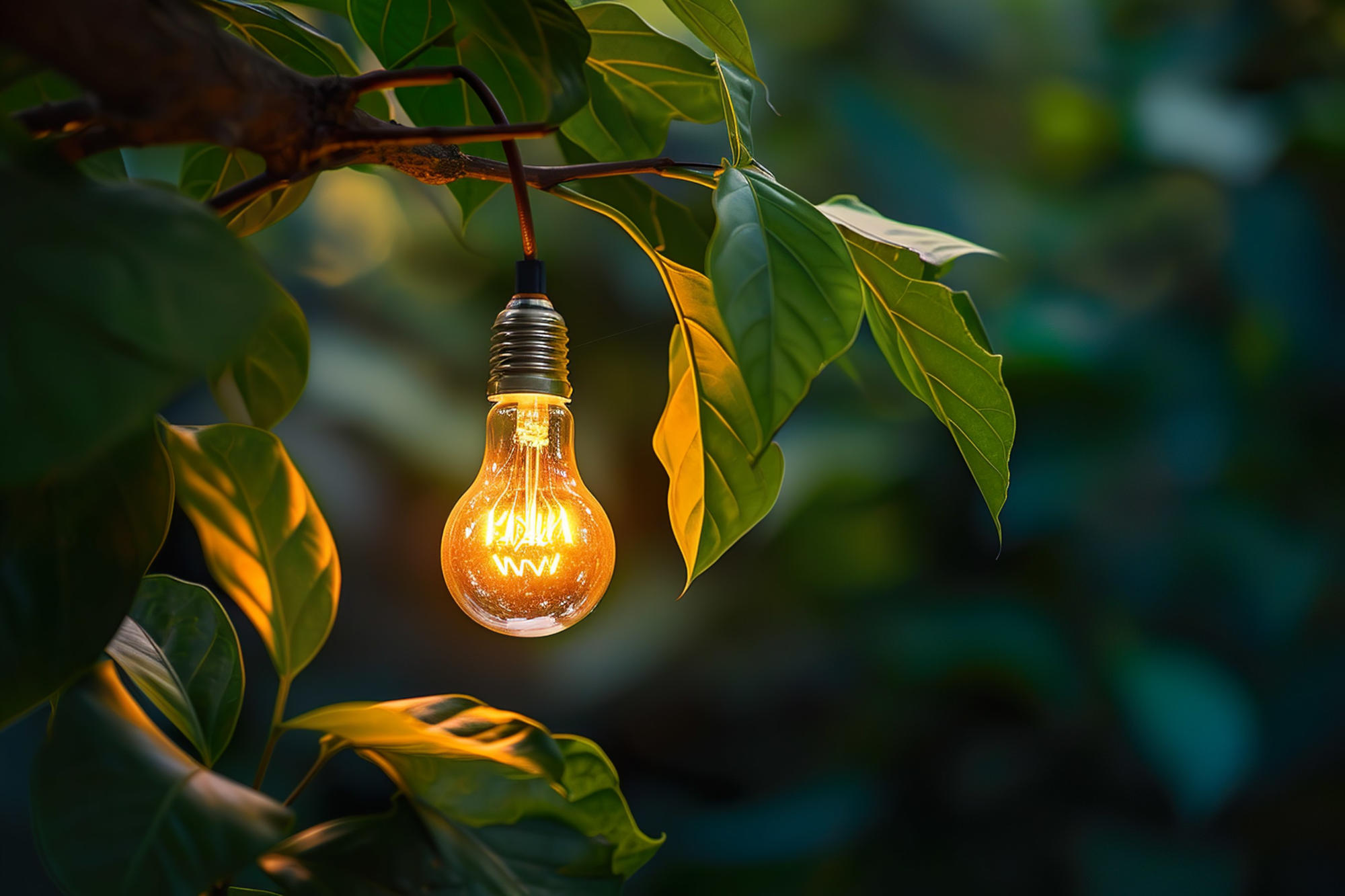
    Researchers have created leaf-shaped “power plants” that generate electricity from wind and rain, offering a new multi-source approach to clean energy production. Credit: SciTechDaily.com

    Fake plants are moving into the 21st century! Scientists have created small, leaf-shaped devices that generate electricity from wind and rain. These literal “power plants” have been detailed in a study recently published in the journal ACS Sustainable Chemistry & Engineering.  The team tested the energy harvesters by incorporating them into artificial plants.

    Electrical energy can be produced by nature in several ways. For example, solar panels convert light energy from the sun, and wind turbines transform the kinetic energy of moving air. But these methods typically rely on a single source and therefore are only effective when that source is available. Solar panels don’t work after sunset, for example, and a calm day won’t generate much wind power.
    Artificial Power Plants
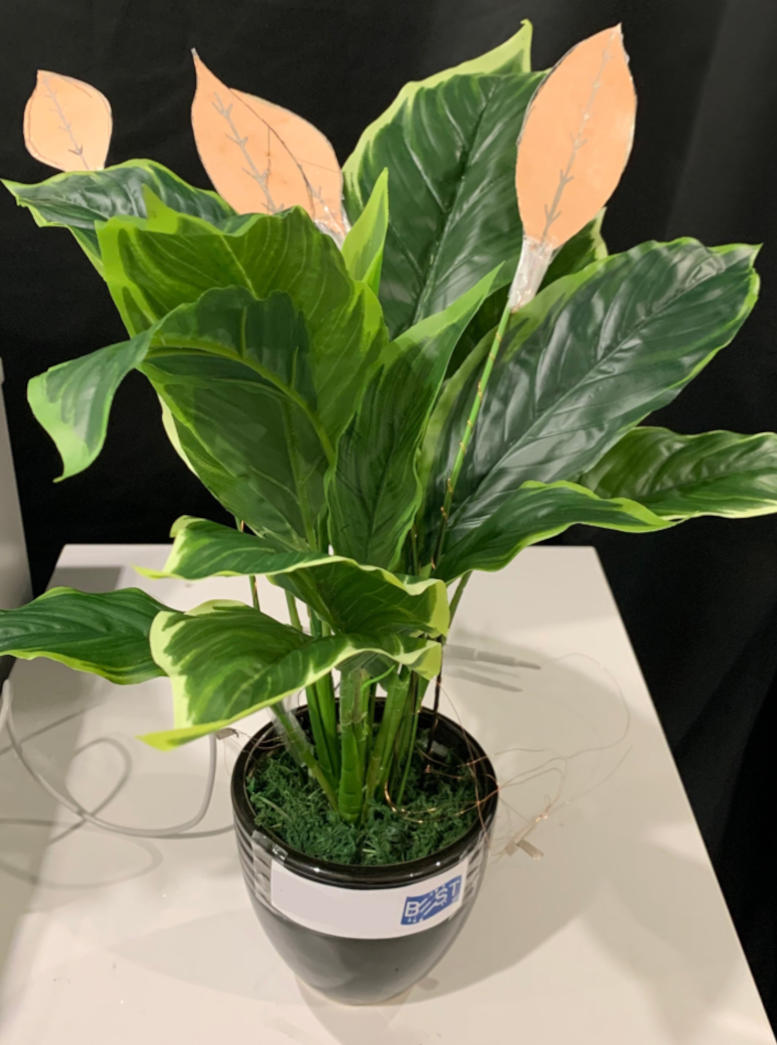
    This “power plant,” featuring beige, leaf-shaped generators, can capture energy from gentle breezes and falling raindrops. Credit: Adapted from ACS Sustainable Chemistry & Engineering, 2024, DOI: 10.1021/acssuschemeng.3c03620

    More recently, multi-source energy harvesters have emerged as a method to capture energy from different renewable sources in one device, maximizing potential output. So, Ravinder Dahiya and colleagues wanted to create a multi-source energy harvester that could generate power from both wind and rain.

    Design and Functionality of Energy Harvesters

    The team built two different types of energy collectors: a triboelectric nanogenerator (TENG) to capture kinetic energy from the wind and a droplet-based energy generator (DEG) to collect energy from falling raindrops. The TENG consisted of a layer of nylon nanofibers sandwiched between layers of polytetrafluoroethylene, more commonly known as Teflon™, and copper electrodes.

    When the layers pressed into each other, static charges were generated and converted into electricity. Teflon was also used to make the DEG, which was waterproofed and covered with a conductive fabric to act as the electrodes. As raindrops hit one of the electrodes, it caused an imbalance in charges, generating a small current and high voltage. Under optimal conditions, the TENG produced 252 volts and the DEG 113 volts, but only for short periods of time.

    The team mounted the DEG atop the TENG and incorporated leaf-shaped versions into an artificial plant. When the leaf-shaped generators were exposed to conditions mimicking natural wind and rain, they powered 10 LED lights in short flickers. This proof-of-concept “power plant” device could be further developed into larger systems or networks of power plants to produce clean energy from natural sources, the researchers say.

    Reference: “Multisource Energy Harvester on Textile and Plants for Clean Energy Generation from Wind and Rainwater Droplets” by Guanbo Min, Gaurav Khandelwal, Abhishek Singh Dahiya, Shashank Mishra, Wei Tang and Ravinder Dahiya, 2 January 2024, ACS Sustainable Chemistry & Engineering.
    DOI: 10.1021/acssuschemeng.3c03620

    Never miss a breakthrough: Join the SciTechDaily newsletter.
    Follow us on Google and Google News.

    American Chemical Society Energy Plants Renewable Energy
    Share. Facebook Twitter Pinterest LinkedIn Email Reddit

    Related Articles

    New Cheap and Efficient Catalyst Could Transform Renewable Energy Storage

    Great Potential – Traditional Medicine Plant Discovered To Emit Ethereal Blue Hue

    What Makes Electric Vehicle Fires So Difficult To Extinguish? [Video]

    Scientists Have Developed a Living “Bio-Solar Cell” That Runs on Photosynthesis

    A New Source of Renewable Energy: Breaking Down Plant Matter

    Designing Catalysts for Sustainable Fuels Using Electrochemistry

    Catalytic Converter Theft Is on the Rise – Here’s Why

    Double-Duty: New Catalyst Generates Hydrogen Fuel While Cleaning Up Wastewater

    Machinery of Photosynthesis Supercharges Solar Energy to Hydrogen Fuel Conversion

    Leave A Reply Cancel Reply

    • Facebook
    • Twitter
    • Pinterest
    • YouTube

    Don't Miss a Discovery

    Subscribe for the Latest in Science & Tech!

    Trending News

    Your Blood Pressure Reading Could Be Wrong Because of One Simple Mistake

    Astronomers Stunned by Ancient Galaxy With No Spin

    Physicists May Be on the Verge of Discovering “New Physics” at CERN

    Scientists Solve 320-Million-Year Mystery of Reptile Skin Armor

    Scientists Say This Daily Walking Habit May Be the Secret to Keeping Weight Off After Dieting

    New Therapy Rewires the Brain To Restore Joy in Depression Patients

    Giant Squid Detected off Western Australia in Stunning Deep-Sea Discovery

    Popular Sugar-Free Sweetener Linked to Liver Disease, Study Warns

    Follow SciTechDaily
    • Facebook
    • Twitter
    • YouTube
    • Pinterest
    • Newsletter
    • RSS
    SciTech News
    • Biology News
    • Chemistry News
    • Earth News
    • Health News
    • Physics News
    • Science News
    • Space News
    • Technology News
    Recent Posts
    • Scientists Say a 40-Year-Old Childhood Obesity Warning May Be Completely Wrong
    • Marijuana Use May Raise Lung Cancer Risk, Researchers Warn
    • This Common Type of Food May Be Raising Your Risk of Heart Disease
    • Fur Seals’ Hearts Suddenly Spike Hours After Returning to Land
    • Scientists Say Cognitive Decline Isn’t Inevitable — Your Brain Can Improve at Any Age
    Copyright © 1998 - 2026 SciTechDaily. All Rights Reserved.
    • Science News
    • About
    • Contact
    • Editorial Board
    • Privacy Policy
    • Terms of Use

    Type above and press Enter to search. Press Esc to cancel.