
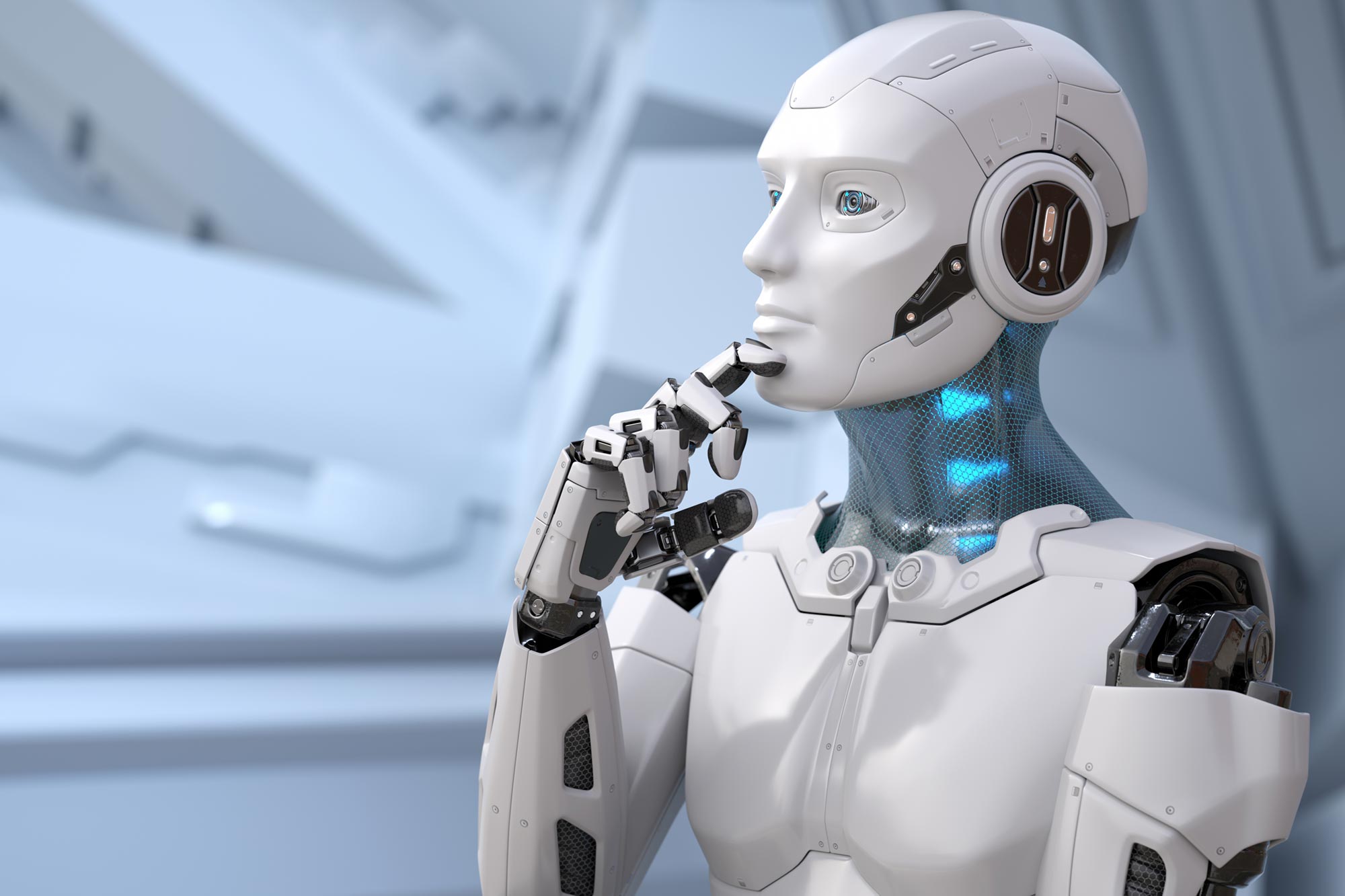
A reverse prediction test suggests that supposedly brainlike AI models may rely on visual strategies the primate brain does not use.
Artificial intelligence can sometimes predict how the brain responds when people recognize objects. But that resemblance may hide an important weakness: the internal workings of today’s vision models do not necessarily match the processes used by a primate brain.
Over the past decade, artificial neural networks (ANNs), computer models designed for visual tasks, have become some of the leading tools for explaining how the brain processes sight. York University researchers wanted to determine whether these systems truly operate like biological vision.
“Artificial intelligence systems are often described as ‘brain-like’ because they can predict activity in parts of the brain that help us recognize objects,” says York University Assistant Professor Kohitij Kar, senior author of a new study. “Until now, scientists mostly tested this in one direction. They asked whether AI models can predict brain activity.”
The researchers reversed that familiar test. If AI genuinely reflects the brain, they reasoned, then recorded brain activity should also predict the model’s internal responses. To examine this possibility, they developed a reverse predictivity test.
“Ultimately, we need computational models to truly understand the underlying neural mechanisms of how we recognize objects. How do we see objects move? While it’s a very easy task that we do every day, computationally, though, it’s a very challenging problem,” says Kar, the Canada Research Chair in Visual Neuroscience and a member of York’s Centre for Vision Research and Centre for Integrative and Applied Neuroscience.
A reverse test challenges brainlike AI
The researchers, including York Postdoctoral Fellow Sabine Muzellec, a Connected Minds trainee, tested the models with 1,320 natural photographs and realistic synthetic images. The set included bears, elephants, faces, apples, cars, dogs, chairs, planes, birds, and zebras shown against indoor, outdoor, and other natural backgrounds.
They also used 300 additional images depicting the same objects in altered forms, including outlines, drawings, simplified representations, and artistic variations. This broader range helped test whether the relationship between brain activity and AI features held across different visual styles.
Brain activity exposes a hidden mismatch
“The results were striking. While AI models can predict the neurons we recorded in the brain fairly well, the brain cannot equally predict many of the model’s internal features. Interestingly, this is not the case when neurons from one brain is compared against ones from another brain,” says Kar.
This imbalance suggests that ANNs may reach correct visual answers through processes that differ from those used by primate brains. Kar warns that the mismatch could widen as models become more complex unless researchers address it early. If an AI model predicts neurons but its own internal features cannot be predicted from neural activity, it may not provide a reliable explanation of how the brain works.
“The findings suggest that today’s AI systems solve visual tasks partly using internal strategies that the brain may not use. Importantly, the parts of AI models that align with the brain are also better at predicting real human behavior,” says Kar.
Why this matters
Researchers increasingly use AI models to design studies of human behavior, including clinical research. Much of that work assumes the systems process the world in ways that resemble the human brain.
“Our findings challenge how similar current AI systems really are with the primate brain. We show that models that were previously thought to be brain-like rely on internal components that the brain does not appear to use. We provide a well-vetted diagnostic metric for the field,” says Muzellec.
Better alignment could strengthen research
More accurate brain-like models could eventually support research involving conditions ranging from post-traumatic stress disorder to autism. For now, however, using poorly aligned systems to interpret human behavior carries risks. Comparable models are also being applied to hearing, language and movement, making reliable validation important across several fields.
“Our approach helps identify which parts of an ANN truly match brain activity, allowing us to build more reliable models for understanding how people see and interpret the world,” says Kar. “This is especially important for our autism research program, which builds on models of the neurotypical brain as a baseline.”
Reference: “Reverse predictivity for bidirectional comparison of neural networks and biological brains” by Sabine Muzellec, and Kohitij Kar, 25 March 2026, Nature Machine Intelligence.
DOI: 10.1038/s42256-026-01204-0
The authors have released a testing toolkit that AI developers can use to evaluate their models and improve how closely their internal features correspond with brain activity.
Never miss a breakthrough: Join the SciTechDaily newsletter.
Follow us on Google and Google News.
3 Comments
In other breaking news, rain is wet!
Hope the researchers are careful with their analysis and include the processing humans with aphantasia or Autism. We somehow manage to function and in some cases out perform more normal human mental processing.
{^_-}
GIGO – Garbage in = Garbage out.
I have begun to lose confidence in the mental life-experience and derived knowledge that is necessary for the programming that is the basis for AI “thinking abilities.”