
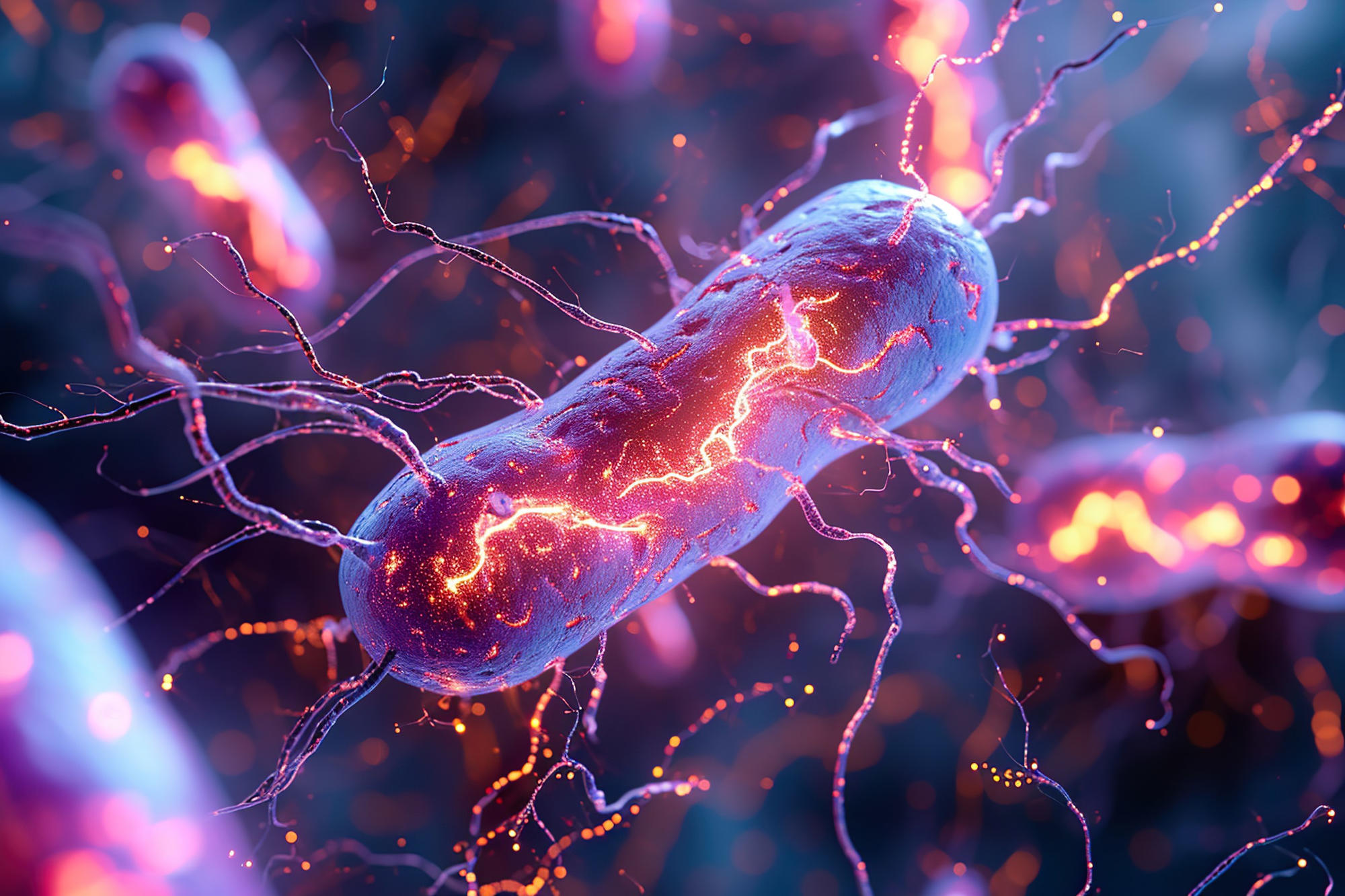
Researchers have discovered a surprising survival strategy that has the potential to transform biotechnology and energy systems.
A team led by Rice University bioscientist Caroline Ajo-Franklin has discovered how certain bacteria breathe by generating electricity, using a natural process that pushes electrons into their surroundings instead of breathing oxygen. The findings, published in Cell, could enable new developments in clean energy and industrial biotechnology.
By identifying how these bacteria expel electrons externally, the researchers offer a glimpse into a previously hidden strategy of bacterial life. This work, which merges biology with electrochemistry, lays the groundwork for future technologies that harness the unique capabilities of these microscopic organisms.
“Our research not only solves a long-standing scientific mystery, but it also points to a new and potentially widespread survival strategy in nature,” said Ajo-Franklin, professor of biosciences, director of the Rice Synthetic Biology Institute and a Cancer Prevention and Research Institute of Texas (CPRIT) Scholar.
Electric respiration explained
Most modern organisms rely on oxygen to metabolize food and release energy. Oxygen serves as the final electron acceptor in a chain of reactions that produces energy. But bacteria, far older than modern organisms such as humans and plants, have evolved other ways to respire in oxygen-deprived environments, including deep-sea vents and the human gut.
The researchers found that some bacteria use naturally occurring compounds called naphthoquinones to transfer electrons to external surfaces. This process, known as extracellular respiration, mimics how batteries discharge electric current, enabling bacteria to thrive without oxygen.

Scientists have long observed this unusual mode of respiration and harnessed it in biotechnology as something of a black box. Now, a Rice-led team has uncovered its mechanism — a breakthrough that suggests extracellular respiration may be far more common in nature than previously believed.
“This newly discovered mechanism of respiration is a simple and ingenious way to get the job done,” said Biki Bapi Kundu, a Rice doctoral student and first author of the study. “Naphthoquinones act like molecular couriers, carrying electrons out of the cell so the bacteria can break down food and generate energy.”
Simulating life without air
The Rice researchers partnered with the Palsson lab at the University of California, San Diego to test their findings. Using advanced computer modeling, they simulated bacterial growth in environments devoid of oxygen but rich in conductive surfaces.
The simulations revealed that bacteria could indeed sustain themselves by discharging electrons externally. Further laboratory tests confirmed that bacteria placed on conductive materials continued to grow and generate electricity, effectively breathing through the surface.
This interdisciplinary approach deepened the understanding of bacterial metabolism’s versatility and revealed a real-time method for electronically monitoring and influencing bacterial behavior.
Applications in clean technology and beyond
This foundational discovery has far-reaching practical implications. Biotechnology processes such as wastewater treatment and biomanufacturing could be significantly improved through better management of electron imbalances. Electricity-exhaling bacteria could fix these imbalances to keep the systems running efficiently.
“Our work lays the foundation for harnessing carbon dioxide through renewable electricity, where bacteria function similarly to plants with sunlight in photosynthesis,” Ajo-Franklin said. “It opens the door to building smarter, more sustainable technologies with biology at the core.”
The technology may also enable bioelectronic sensors in oxygen-deprived environments, offering new tools for medical diagnostics, pollution monitoring, and deep-space exploration.
Reference: “Extracellular respiration is a latent energy metabolism in Escherichia coli” by Biki Bapi Kundu, Jayanth Krishnan, Richard Szubin, Arjun Patel, Bernhard O. Palsson, Daniel C. Zielinski and Caroline M. Ajo-Franklin, 10 April 2025, Cell.
DOI: 10.1016/j.cell.2025.03.016
Never miss a breakthrough: Join the SciTechDaily newsletter.
Follow us on Google and Google News.