
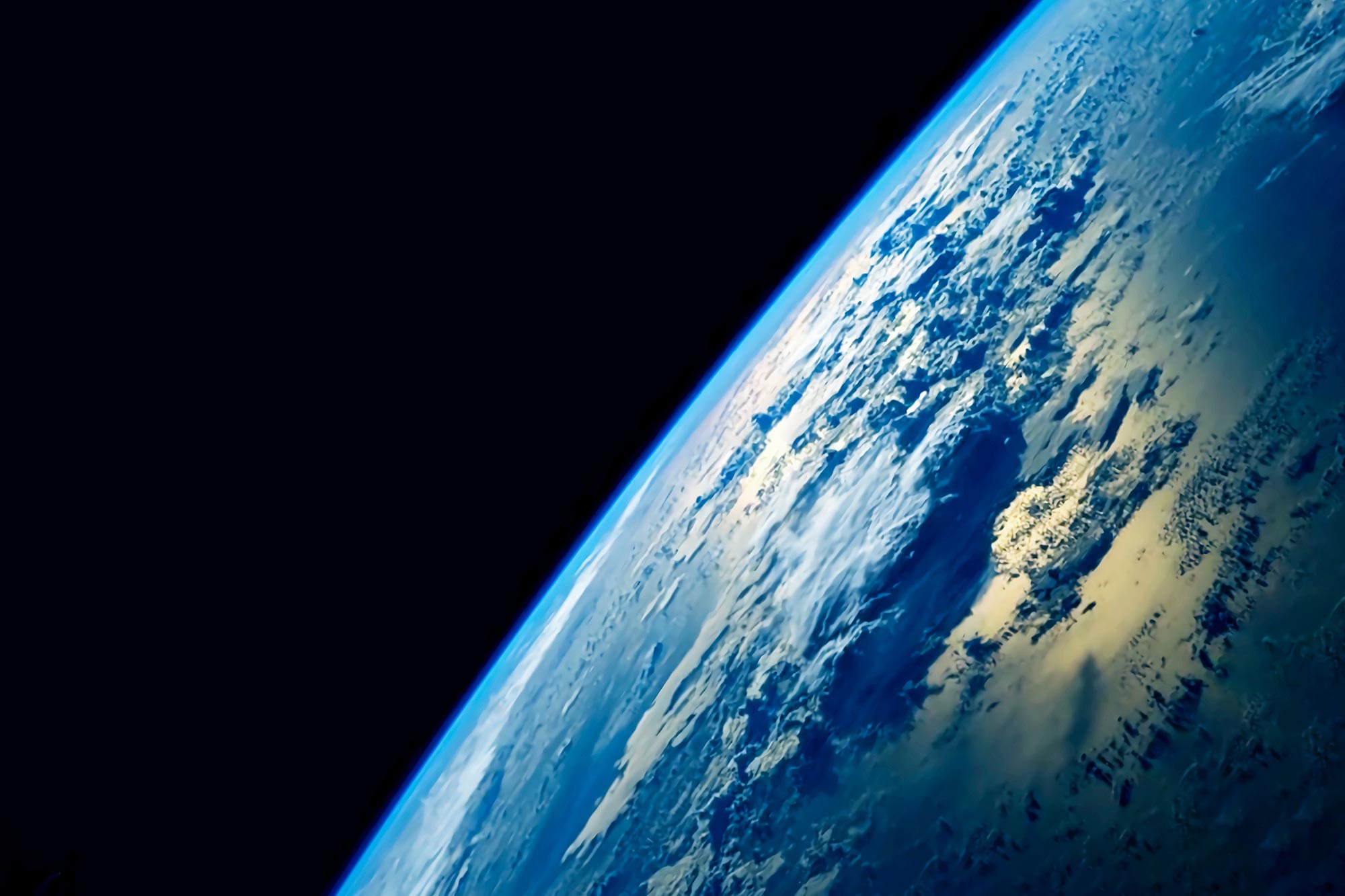
Researchers have found that early Earth’s atmosphere could naturally produce sulfur-based biomolecules, including amino acids like cysteine. Using light and simple gases, they recreated conditions that created complex molecules long thought to require living organisms.
These findings suggest that life’s raw ingredients may have been widespread, not limited to rare environments like volcanic vents.
Early Atmosphere as a Source of Life’s Raw Materials
Earth’s ancient air may have played a far larger role in the rise of life than scientists once believed.
A study published today (December 1) in the Proceedings of the National Academy of Sciences, led by researchers from CU Boulder and several collaborators, reports that the early atmosphere may have been actively generating sulfur-based molecules billions of years ago. These compounds are known to be important for life.
The discovery challenges the long-standing assumption that such sulfur molecules appeared only after living organisms had already evolved.
“Our study could help us understand the evolution of life at its earliest stages,” said first author Nate Reed, a postdoctoral fellow at NASA who completed the research while working in the Department of Chemistry and the Cooperative Institute for Research in Environmental Sciences (CIRES) at CU Boulder.
Sulfur’s Role and Long-Held Assumptions
Sulfur, like carbon, is a fundamental element found in every form of life, from bacteria to humans. It appears in several amino acids, which serve as the basic components of protein.
Although Earth’s early atmosphere contained sulfur, scientists had believed that organic sulfur compounds, including amino acids, formed only after living systems were already present.
Earlier simulations that attempted to reproduce early Earth conditions rarely created meaningful quantities of sulfur biomolecules before life. In the few cases when they did appear, the molecules formed under very specific and unlikely environmental conditions.
This background helped shape reactions when the James Webb Space Telescope identified dimethyl sulfide, a sulfur molecule made by marine algae on modern Earth, on the exoplanet K2-18b. Many researchers saw the detection as a potential signal of life elsewhere.
New Experiments Shift the Picture
However, earlier work by Reed and senior author Ellie Browne, a chemistry professor and CIRES fellow, showed that dimethyl sulfide could be generated in the lab using only light and simple atmospheric gases. That finding suggested the molecule might arise naturally even on worlds without life.
Building on that insight, Browne, Reed, and their colleagues began exploring what Earth’s early atmosphere itself could have produced. They illuminated a mixture of methane, carbon dioxide, hydrogen sulfide, and nitrogen to mimic pre-life atmospheric conditions.
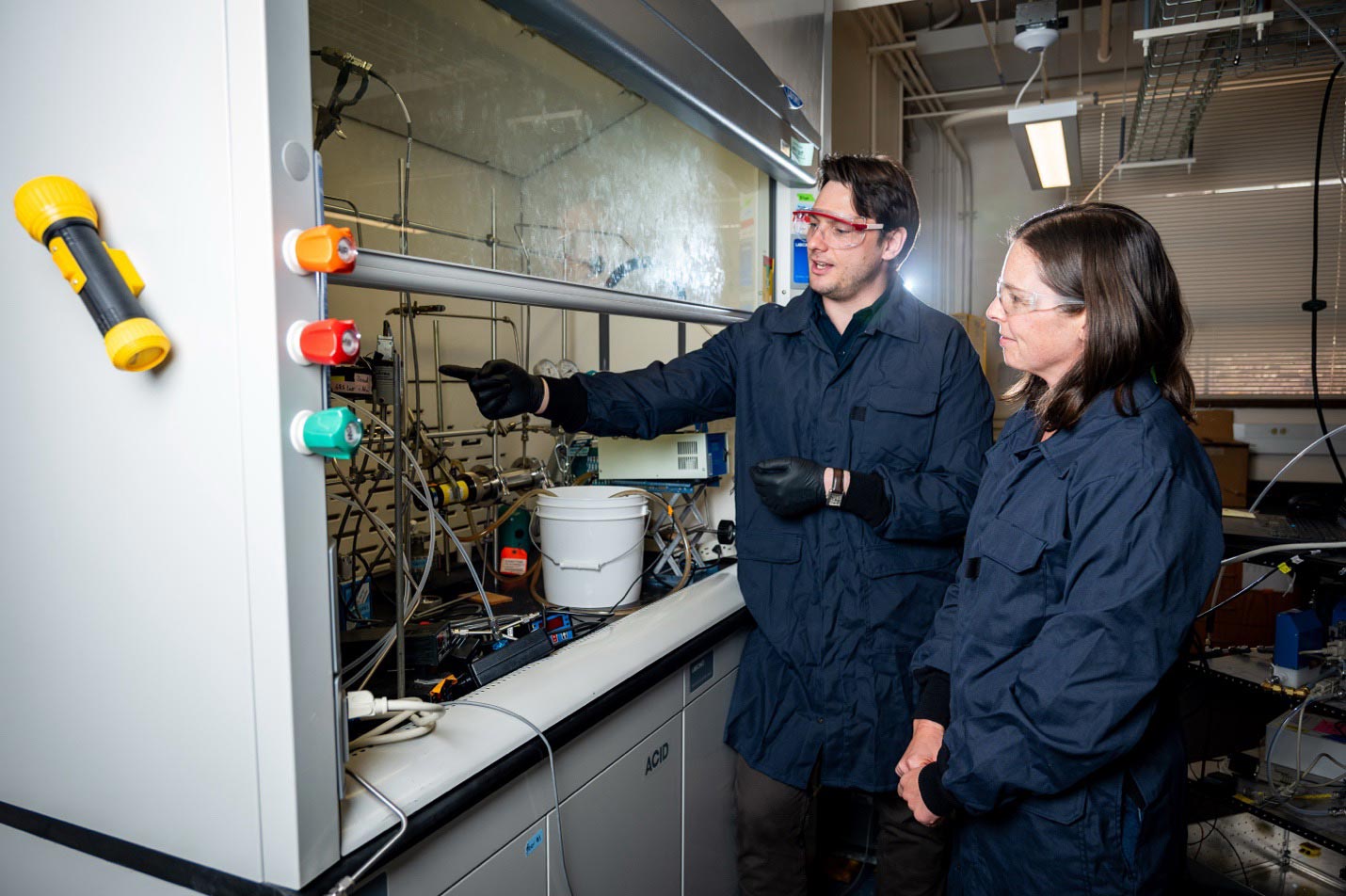
Sulfur is notoriously difficult to study in the lab, Browne said, because it adheres to equipment and appears in extremely small amounts in the atmosphere compared to CO2 and nitrogen. “You have to have equipment that can measure incredibly tiny quantities of the products,” she explained.
Using a highly sensitive mass spectrometer capable of detecting trace chemicals, the researchers discovered that their early Earth simulation created an entire collection of sulfur biomolecules. These included the amino acids cysteine and taurine, along with coenzyme M, a compound essential for metabolism.
A Sky Capable of Supporting a Nascent Biosphere
The team then estimated what an entire primordial atmosphere could have generated. Their calculations indicated that the early sky might have produced enough cysteine to supply about one octillion (one followed by 27 zeros) cells. By comparison, Earth today contains approximately one nonillion (one followed by 30 zeros) cells.
“While it’s not as many as what’s present now, that was still a lot of cysteine in an environment without life. It might be enough for a budding global ecosystem, where life is just getting started,” Reed said.
According to the researchers, these airborne molecules may have fallen to the surface through rainfall, delivering biologically important ingredients directly to land or ocean environments.
Rethinking Where Life’s First Molecules Came From
“Life probably required some very specialized conditions to get started, like near volcanoes or hydrothermal vents with complex chemistry,” Browne said. “We used to think life had to start completely from scratch, but our results suggest some of these more complex molecules were already widespread under non-specialized conditions, which might have made it a little easier for life to get going.”
Reference: “An Archean atmosphere rich in sulfur biomolecules” by Nathan W. Reed, Cade M. Christensen, Jason D. Surratt, Shawn Erin McGlynn, Boswell A. Wing, Cajetan Neubauer, Margaret A. Tolbert and Eleanor C. Browne, 1 December 2025, Proceedings of the National Academy of Sciences.
DOI: 10.1073/pnas.2516779122
Never miss a breakthrough: Join the SciTechDaily newsletter.
Follow us on Google and Google News.