
Close Menu
    Facebook X (Twitter) Instagram
    SciTechDaily
    • Biology
    • Chemistry
    • Earth
    • Health
    • Physics
    • Science
    • Space
    • Technology
    Facebook X (Twitter) Pinterest YouTube RSS
    SciTechDaily
    Home»Science»Scientists Discover Giant Ice Channels Beneath Antarctic Ice Shelf
    Science

    Scientists Discover Giant Ice Channels Beneath Antarctic Ice Shelf

    By University of ExeterOctober 7, 2013No Comments3 Mins Read
    Facebook Twitter Pinterest Telegram LinkedIn WhatsApp Email Reddit
    Share
    Facebook Twitter LinkedIn Pinterest Telegram Email Reddit
    Scientists Discover Giant Channels Beneath Antarctic Ice Shelf
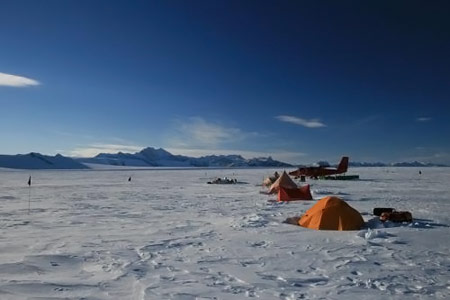
    The British Antarctic Survey’s Twin Otter survey plane & camp, the plane was used to collect data about the size of the sub-ice-shelf channel. Credit: Neil Ross.

    Using satellite images and airborne radar measurements, a team of scientists has discovered giant channels of ice beneath the Antarctic ice shelf.

    Scientists have discovered huge ice channels beneath a floating ice shelf in Antarctica. At 250 meters (820 feet) high, the channels are almost as tall as the Eiffel Tower and stretch hundreds of kilometers along the ice shelf.

    The channels are likely to influence the stability of the ice shelf and their discovery will help researchers understand how the ice will respond to changing environmental conditions.

    Researchers from the University of Exeter, Newcastle University, the University of Bristol, the University of Edinburgh, the British Antarctic Survey, and the University of York, used satellite images and airborne radar measurements to reveal the channels under the ice shelf. The channels can be seen on the surface of the ice shelf, as well as underneath, because the ice floats at a different height depending on its thickness.

    The researchers also predicted the path of meltwater flowing under the part of the ice in contact with the land – known as the ice sheet. They discovered that the predicted flow paths lined up with the channels under the ice shelf at the point where the ice starts to float.

    The match-up indicates that the water flow beneath the grounded ice sheet is responsible for the formation of the channels beneath the floating ice shelf. When the meltwater flowing under the ice sheet enters the ocean beneath the ice shelf, it causes a plume of ocean water to form, which then melts out the vast channels under the ice shelf. Previously, it was thought that water flowed in a thin layer beneath the ice sheet, but the evidence from this study suggests it flows in a more focused manner much like rivers of water. The way in which water flows beneath the ice sheet strongly influences the speed of ice flow, however, the implications for the future of the ice sheet are yet to be determined.

    Dr Anne Le Brocq from the University of Exeter said: “If we are to understand the behavior of the ice sheet, and its contribution to changes in sea level, we need to fully understand the role of water at the base of the ice sheet. The information gained from these newly discovered channels will enable us to understand more fully how the water system works and how the ice sheet will behave in the future.”

    Channels of this magnitude have been observed before elsewhere, but their formation has been attributed to purely oceanic processes rather than meltwater exiting the grounded ice sheet. Now, with the connection to the meltwater system established, readily obtainable observations from the channels have the potential to shed light on how meltwater flows at the base of an inaccessible kilometer-thick ice sheet. The study received funding from Natural Environment Research Council (NERC) and the European Space Agency (ESA).

    Reference: “Evidence from ice shelves for channelized meltwater flow beneath the Antarctic Ice Sheet” by Anne M. Le Brocq, Neil Ross, Jennifer A. Griggs, Robert G. Bingham, Hugh F. J. Corr, Fausto Ferraccioli, Adrian Jenkins, Tom A. Jordan, Antony J. Payne, David M. Rippin and Martin J. Siegert, 6 October 2013, Nature Geoscience.
    DOI: 10.1038/ngeo1977

    Never miss a breakthrough: Join the SciTechDaily newsletter.
    Follow us on Google and Google News.

    Antarctica British Antarctic Survey Geoscience University of Exeter
    Share. Facebook Twitter Pinterest LinkedIn Email Reddit

    Related Articles

    Undetected Melting Threat: Scientists Discover New Antarctic Tipping Point

    Larsen C Ice Shelf is Thinning from Above and Below

    Scientists Discover Life in the Sediments of an Antarctic Subglacial Lake

    Mysterious “Godzillus” Fossil Discovered by Amateur Paleontologist

    Russians Celebrate Drilling into Lake Vostok, Biggest Antarctic Subglacial Lake

    Research Suggests First Plants Triggered Ice Ages

    Octopuses Beat the Frigid Waters of the Antarctic by Rewriting Their RNA

    First Plant-Eating Dinosaur Discovered in Antarctica

    Lava Fingerprinting Reveals Differences Between Hawaiian Volcanoes

    Leave A Reply Cancel Reply

    • Facebook
    • Twitter
    • Pinterest
    • YouTube

    Don't Miss a Discovery

    Subscribe for the Latest in Science & Tech!

    Trending News

    AI Could Detect Early Signs of Alzheimer’s in Under a Minute – Far Before Traditional Tests

    What if Dark Matter Has Two Forms? Bold New Hypothesis Could Explain a Cosmic Mystery

    This Metal Melts in Your Hand – and Scientists Just Discovered Something Strange

    Beef vs. Chicken: Surprising Results From New Prediabetes Study

    Alzheimer’s Breakthrough: Scientists Discover Key Protein May Prevent Toxic Protein Clumps in the Brain

    Quantum Reality Gets Stranger: Physicists Put a Lump of Metal in Two Places at Once

    Scientists May Have Found the Key to Jupiter and Saturn’s Moon Mystery

    Scientists Uncover Brain Changes That Link Pain to Depression

    Follow SciTechDaily
    • Facebook
    • Twitter
    • YouTube
    • Pinterest
    • Newsletter
    • RSS
    SciTech News
    • Biology News
    • Chemistry News
    • Earth News
    • Health News
    • Physics News
    • Science News
    • Space News
    • Technology News
    Recent Posts
    • Living With Roommates Might Be Changing Your Gut Microbiome Without You Knowing
    • Simple and Cheap Blood Test Could Detect Cancer and Other Diseases Before Symptoms Appear
    • Century-Old Cleaning Chemical Linked to 500% Increased Risk of Parkinson’s Disease
    • What if Your Memories Never Happened? Physicists Take a New Look at the Boltzmann Brain Paradox
    • Students Found an Ancient Star That Shouldn’t Be in the Milky Way
    Copyright © 1998 - 2026 SciTechDaily. All Rights Reserved.
    • Science News
    • About
    • Contact
    • Editorial Board
    • Privacy Policy
    • Terms of Use

    Type above and press Enter to search. Press Esc to cancel.