
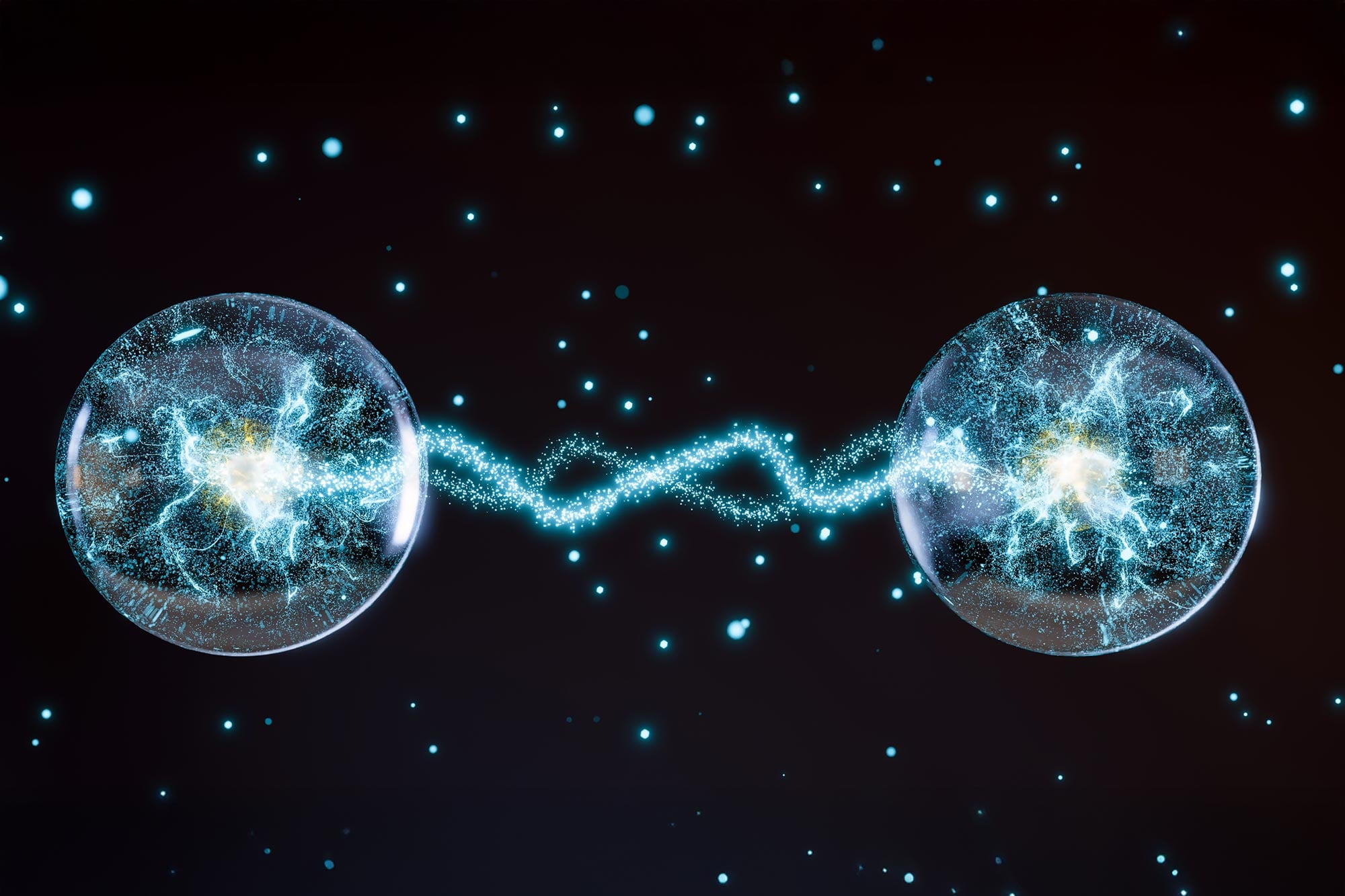
A team of physicists has uncovered a hidden topological structure within one of the most widely used sources of quantum entanglement.
Researchers from the University of the Witwatersrand in South Africa, working together with scientists from Huzhou University, have identified an unexpected property in a widely used quantum optics technique. Experiments that routinely generate entangled photons in laboratories appear to contain hidden topological structures.
The team reports the highest level of topology observed in any physical system so far: structures spanning 48 dimensions and more than 17,000 distinct topological signatures. This vast set of patterns could function as a powerful new framework for encoding quantum information in ways that remain stable even in the presence of noise.
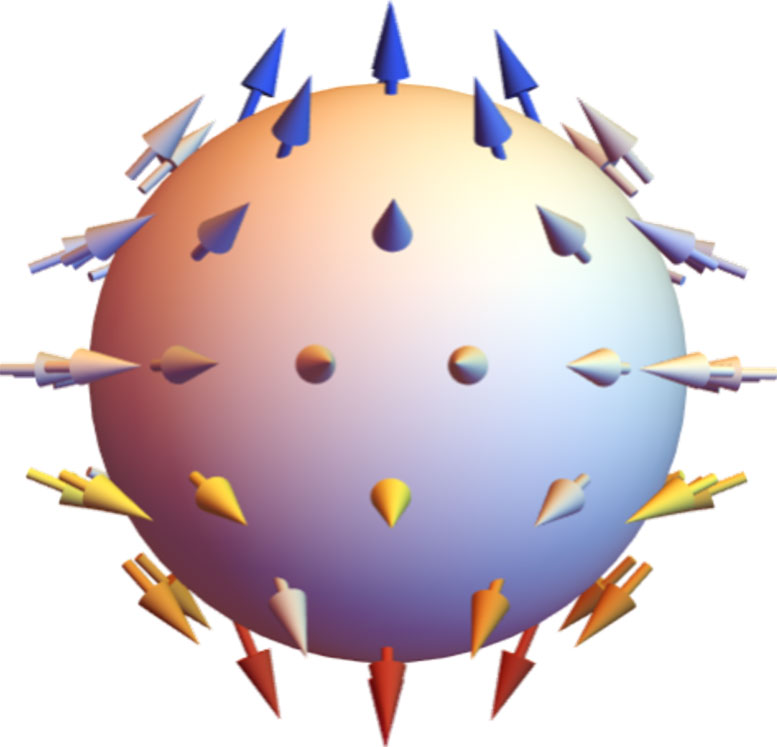
Hidden topology inside quantum light
In most quantum optics laboratories, entangled photons are produced using a process called spontaneous parametric downconversion (SPDC). This method naturally generates entanglement in the spatial properties of light. By examining these spatial degrees of freedom, the researchers discovered that the structure of entangled light contains previously unnoticed high-dimensional topologies.
These structures offer a new way to represent and protect information in quantum systems, potentially helping quantum signals resist noise and interference. The team demonstrated these features using the orbital angular momentum (OAM) of light, which can exist in two-dimensional states as well as in far higher-dimensional configurations.
The study, published in Nature Communications, shows that measuring the orbital angular momentum of two entangled photons reveals a topological structure embedded within the entanglement itself. Because OAM can assume an unlimited range of values, the possible topological configurations are also effectively limitless. “We report a major advance in this work: we only need one property of light (OAM) to make a topology, whereas previously it was assumed that at least two properties would be needed – usually OAM and polarization,” says Professor Andrew Forbes, from the Wits School of Physics.
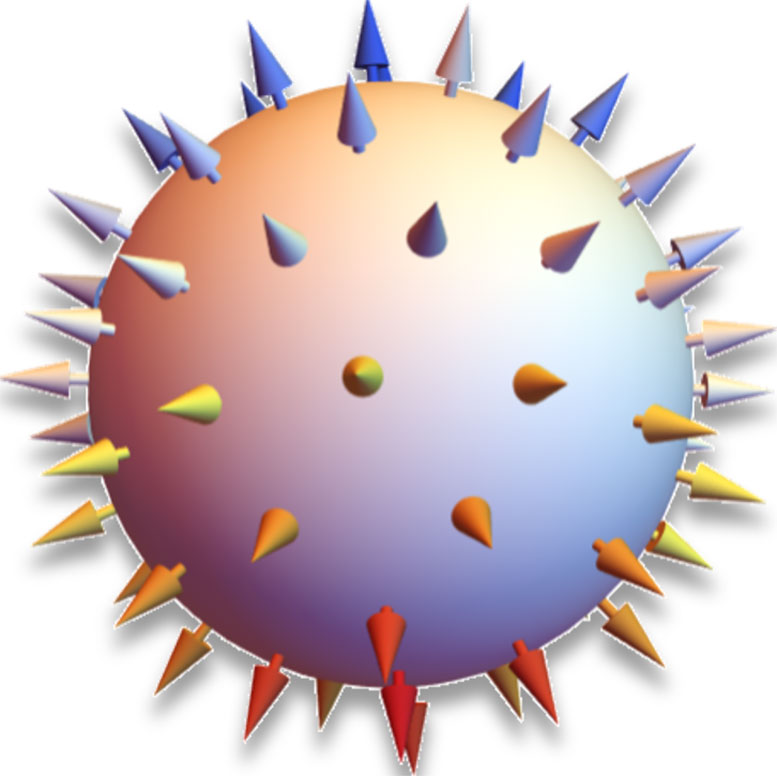
“The consequence is that since OAM is high-dimensional, so too is the topology, and this let us report the highest topologies ever observed.” The researchers also found that once the topology extends beyond two dimensions, it can no longer be described with a single number. Instead, a range of topological numbers is required, reflecting the greater complexity that appears in higher-dimensional systems.
A universal resource in quantum optics
One of the most practical aspects of the discovery is that the necessary ingredients are already present in many existing laboratories. The experimental setup relies on resources that are standard in quantum optics research, meaning that scientists do not need specialized engineering systems to explore these effects. Pedro Ornelas explains, “You get the topology for free, from the entanglement in space. It was always there, it just had to be found.”
Prof. Robert de Mello Koch, lead author from Huzhou University explains further, “In high dimensions, it is not so obvious where to look for the topology. We used abstract notions from quantum field theory to predict where to look and what to look for – and found it in the experiment!”
Orbital angular momentum entanglement has long been investigated in many quantum experiments. However, its practical use has been limited because the quantum states can be fragile and sensitive to disturbance. The researchers now suggest that studying OAM entanglement through the lens of topology could provide a way to overcome that limitation. By focusing on these deeper structural features, scientists may open new paths toward stable quantum technologies capable of operating reliably outside laboratory conditions.
Reference: “Revealing the topological nature of entangled orbital angular momentum states of light” by Robert de Mello Koch, Pedro Ornelas, Neelan Gounden, Bo-Qiang Lu, Isaac Nape and Andrew Forbes, 12 December 2025, Nature Communications.
DOI: 10.1038/s41467-025-66066-3
Never miss a breakthrough: Join the SciTechDaily newsletter.
Follow us on Google and Google News.
7 Comments
In high dimensions, it is not so obvious where to look for the topology. You used abstract notions from quantum field theory to predict where to look and what to look for – and found it in the experiment!
VERY GOOD! Thank you for your hard work.
Please ask researchers to think deeply:
1. Based on quantum mechanics, is quantum spherical or two-dimensional spin?
2. Is quantum dynamic or static?
3. If quantum is spherical, what is its relationship with two-dimensional spin?
4. What are global and local?
Just as:
Parity is a global symmetry, and its conservation law requires that physical laws remain invariant under spatial reflection transformations. Nature often maintains global parity conservation through adjustments in local symmetries. Therefore, directly inferring parity violation based solely on locally observed asymmetries not only confuses conceptual hierarchies but also lacks logical rigor.
——Excerpted from https://zhuanlan.zhihu.com/p/2015373605614134260.
When we pursue the ultimate truth of all things, the space in which our bodies and all things exist may itself be the final and deepest puzzle we need to explore. This is not only the pursuit of physics, but also the most magnificent exploration of the origin of the universe by human reason.
Based on the Topological Vortex Theory (TVT), space is an uniformly incompressible physical entity. Space-time vortices are the products of topological phase transitions of the tipping points in space, are the point defects in spacetime. Point defects do not only impact the thermodynamic properties, but are also central to kinetic processes. They create all things and shape the world through spin and self-organization.
In today’s physics, some so-called peer-reviewed journals—including Physical Review Letters, Nature, Science, and others—stubbornly insist on and promote the following:
1. Even though θ and τ particles exhibit differences in experiments, physics can claim they are the same particle. This is science.
2. Even though topological vortices and antivortices have identical structures and opposite rotational directions, physics can define their structures and directions as entirely different. This is science.
3. Even though two sets of cobalt-60 rotate in opposite directions and experiments reveal asymmetry, physics can still define them as mirror images of each other. This is science.
4. Even though vortex structures are ubiquitous—from cosmic accretion disks to particle spins—physics must insist that vortex structures do not exist and require verification. Only the particles that like God, Demonic, or Angelic are the most fundamental structures of the universe. This is science.
5. Even though everything occupies space and maintains its existence in time, physics must still debate and insist on whether space exists and whether time is a figment of the human mind. This is science.
6. Even though space, with its non-stick, incompressible, and isotropic characteristics, provides a solid foundation for the development of physics, physics must still insist that the ideal fluid properties of space do not exist. This is science.
and go on.
Is this the counterintuitive science they widely promote? Compromising with pseudo academic publications and peer review by pseudo scholars is an insult to science and public intelligence. Some so-called scholars no longer understand what shame is. The study of Topological Vortex Theory (TVT) reminds us that the most profound problems in physics often lie at the intersection of different theories. By exploring these border regions, we can not only resolve contradictions in existing theories but also discover new physical phenomena and application possibilities.
Under the topological vortex architecture, it is highly challenging for even two hydrogen atoms or two quarks to be perfectly symmetrical, let alone counter-rotating two sets of cobalt-60. Contemporary physics and so-called peer-reviewed publications (including Physical Review Letters, Science, Nature, etc.) stubbornly believe that two sets of counter rotating cobalt-60 are two mirror images of each other, constructing a more shocking pseudoscientific theoretical framework in the history of science than the “geocentric model”. This pseudo scientific framework and system have seriously hindered scientific progress and social development.
For nearly a century, physics has been manipulated by this pseudo scientific theoretical system and the interest groups behind it, wasting a lot of manpower, funds, and time. A large amount of pseudo scientific research has been conducted, and countless pseudo scientific papers have been published, causing serious negative impacts on scientific and social progress, as well as humanistic development.
Complexity does not necessarily mean that there is no logical and architectural framework to follow. Mathematics is the language and tool that reveals the motion of spacetime, rather than the motion itself. Although the physical form of spacetime vortices is extremely simple, their interaction patterns are highly complex, and we must develop more and richer mathematical languages to describe and understand them.
The development of the Topological Vortex Theory (TVT) reflects a progression from concrete physical phenomena to abstract mathematical modeling and, ultimately, to interdisciplinary unification. Its core innovation lies in forging the continuous spacetime geometry of general relativity with the discrete interactions of quantum field theory within the same topological dynamical system. The core idea of TVT — space is physical, and matter is its topological excitation—already provides a solid and elegant scientific path for understanding the origin of all things.
——Excerpted from https://scitechdaily.com/microscope-spacecrafts-most-precise-test-of-key-component-of-the-theory-of-general-relativity/#comment-909171 and https://t.pineal.cn/blogs/6255/A-Mathematical-and-Physical-Analysis-On-the-Origin-of-Objects.
Are these science?
Example 1
Two sets of cobalt-60 are manually rotated in opposite directions, and even without detection, people around the world know that they will not be symmetrical because these two objects are not mirror images of each other at all. However, a group of so-called physicists and so-called academic publications do not believe it. They conducted experiments and the results were indeed asymmetric, but they still firmly believed that these two objects were mirror images of each other, and the asymmetry was due to a violation of the previous natural laws (CP violation). In the history of science, there can never be a dirtier and uglier operation and explanation than this.
—— Excerpted from https://scitechdaily.com/what-happens-when-light-gains-extra-dimensions/#comment-947619.
Example 2
Please see how the so-called “mystery of θ – τ” is explained: θ and τ are completely identical in all measurable physical properties such as mass, lifetime, charge, spin, etc. However, experimental observations have shown that the θ meson decays into two π mesons, while the τ meson decays into three π mesons, making it difficult for physicists to explain why they are so similar. Physicist Martin Block proposed a highly challenging idea: θ and τ are the same particle, but in weak interactions, parity is not conserved. An easy to understand explanation is the following analogy:: There are two boxes of apples with identical weight, color, and taste. However, when one box is opened, there are two apples, while when the other box is opened, there are three apples. This confuses the old farmer who buys apples. He circled around the orchard and came up with a highly challenging idea: these two boxes of apples are not from the same tree, so they are the same.
—— Excerpted from https://scitechdaily.com/what-happens-when-light-gains-extra-dimensions/#comment-947686.
Everyone who has a reverence for natural laws and regulations deserves respect.
In the physical world constructed by the American Physical Society (APS) and its publications using parity violation, particles from God, Demons, and Angels wander around, while dead and alive cats jump up and down, unconstrained by dynamics and thermodynamics, and unaware of what is dirty, ugly, and shameful in public. APS and its publications reject the possibility that spaces with zero viscosity, zero compression, and zero anisotropy in mathematics may form spatiotemporal vortices through topological transformations. They don’t know that space and non existence are not the same concept.
If a self proclaimed scientific society (such as American Physical Society) deviates from science without shame, it is highly likely to be heading towards the end.
The totality of total zero is all I need to know
Thank you for your attention and comments.
However, more is different. The number of zeros matters when it accumulates. Please think in terms of geometry, not merely numbers. Nature is the final court of appeal for science, and it is geometric, not merely numerical.
Help Humanity First, Help Humanity To Rebuild,
Sustainable Amazing Abundance For All. 👉 #SOSSTSE
A Relational Interpretation of High-Dimensional Topology in Entangled Light
Comment / Submission:
This is a genuinely exciting result. The identification of high-dimensional topological structure emerging directly from orbital angular momentum (OAM) entanglement is particularly significant, especially the finding that topology can arise from a single degree of freedom rather than requiring multiple coupled variables.
What stands out is that the topology is not being imposed externally — it appears to be intrinsic to the relational structure of the entangled system itself.
This aligns closely with a framework I have been developing, called Relational Interference Geometry (RIG), in which geometry is not fundamental but emerges from correlations between quantum states.
In that framework, a key idea is that distance and geometry can be reconstructed from correlation strength, for example:
𝑑
(
𝑖
,
𝑗
)
=
−
log
(
∣
𝐶
𝑖
𝑗
∣
+
𝜖
)
d(i,j)=−log(∣C
ij
∣+ϵ)
Under this interpretation, what your team is observing may be understood as:
• Topology emerging directly from the structure of entanglement correlations
• High-dimensional behavior reflecting the intrinsic dimensionality of the correlation space
• Stability arising from topological constraints within relational networks, not from the physical substrate alone
Your result that multiple topological invariants are required in higher dimensions is particularly important. It suggests that topology in these systems is not a single global quantity, but a distributed, multi-parameter structure, which is exactly what one would expect if geometry itself is emergent from relational constraints.
The most intriguing implication, in my view, is this:
If topology is already present “for free” in entangled systems, then geometry itself may also be a derived property — not a fundamental one.
This raises a natural next step:
• Can the full effective geometry (metric + curvature) be reconstructed directly from measured correlation structures in OAM-entangled photons?
If so, these systems may provide an experimentally accessible bridge between:
• quantum optics
• topological physics
• and emergent spacetime models
Your work may represent one of the first clear experimental windows into that connection.
Excellent work — this feels like an important direction for both quantum information and fundamental physics.
— Ed Wilson
Author, Relational Interference Geometry (RIG)
Entanglement experiment suggestion . Two same size mirrored surfaces facing each other embedded with sensors all in a vacuum containment vesale , the reflections become entangled in the same idea of having entangled quantum states seperated that would change simultaneously , then from one edge introduce a pin size object from an edge in between the two mirrored reflections , as the pin enters the reflection monitored surfaces embedded sensors catching reactive sensations to show the stream of entanglement and if you could monitor the time difference between down to the attosecond get the speed and if light was taken out of the science and the pin removed did the sensors change the connection showing conductivity of entanglement . Just a thought I have always made a connection between mirrors and entanglement .