
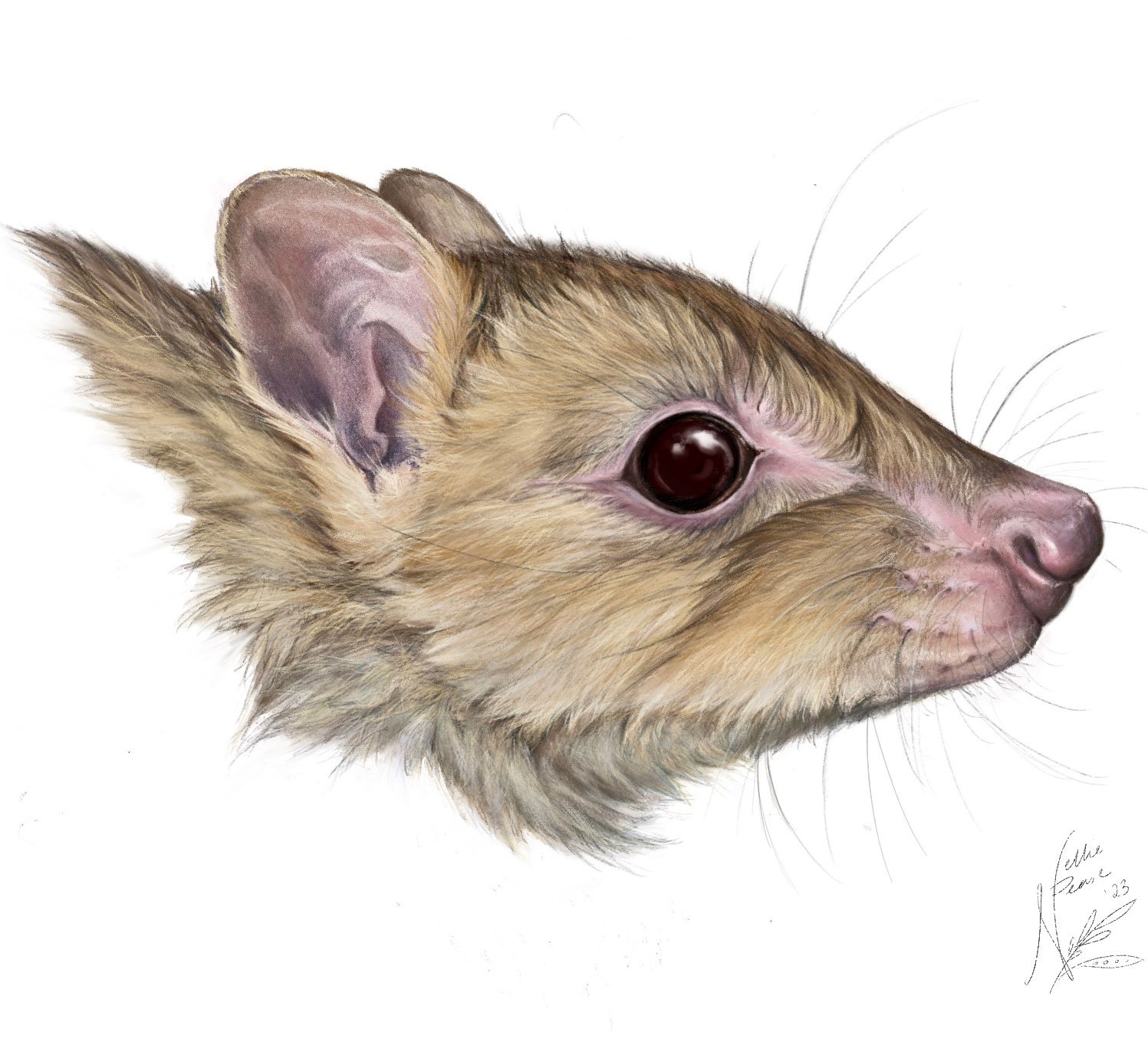
Scientists have discovered a new species of marsupial in Australia’s bushland, closely related to the kangaroo.
Researchers have identified a new species of bushland marsupial that is closely related to kangaroos. Unfortunately, evidence suggests this species has already disappeared.
The discovery came after scientists from Curtin University, the Western Australian Museum, and Murdoch University examined fossil remains found in caves across the Nullarbor and southwestern Australia. Their analysis revealed not only a previously unknown species of bettong but also two new subspecies of woylie.
Woylies: Small but Powerful Ecosystem Engineers
Woylies, also called brush-tailed bettongs, play an important role in their environment. These small marsupials can shift several tons of soil each year while digging for the underground fungi they prefer to eat. Native to Western Australia, woylies are also the most frequently relocated mammal in the country, moved between areas as part of programs designed to safeguard the critically endangered species.
Lead author Mr. Jake Newman-Martin, a PhD student in Curtin’s School of Molecular and Life Sciences, said the discovery unlocked vital clues about the diversity of woylies, also known as brush-tailed bettong.
“Woylies are critically endangered marsupials that have been the focus of conservation efforts for decades,” Mr. Newman-Martin said.
“In this new research, we’ve named a completely new species based on fossil material, and two new subspecies of woylies for the first time. Sadly, many of them have become extinct before we’ve even been aware of them.
“Our results split the critically endangered woylie into two living subspecies, which is very important for conservation when we’re considering breeding and translocation initiatives to increase the size and fitness of populations.”
Expanding Knowledge Through Fossil Analysis
Co-author Dr. Kenny Travouillon, Curator of Terrestrial Zoology at the Western Australian Museum, said researchers used bone measurements to assess the diversity of woylies and the number of species.
“This research confirmed several distinct species and expanded the known diversity of woylies by measuring skull and body fossil material that had previously not been looked at in detail,” Dr. Travouillon said.
“What we’ve found through this research tells us that examining fossils alongside genetic tools could offer significant insights that may help conservation efforts of this critically endangered native species.”
The scientific name of the new Nullarbor species has been described as Bettongia haoucharae but the researchers will work with Indigenous people to identify an appropriate collaborative name given woylie is a Noongar word.
Reference: “A taxonomic revision of the Bettongia penicillata (Diprotodontia: Potoroidae) species complex and description of the subfossil species Bettongia haoucharae sp. nov.” by Jake Newman-Martin, Kenny J. Travouillon, Natalie Warburton, Milo Barham and Alison J. Blyth, 5 September 2025, Zootaxa.
DOI: 10.11646/zootaxa.5690.1.1
The research examined specimens from the Western Australian Museum, South Australia Museum, Australian Museum, Queensland Museum, Museums Victoria, Flinders University research collection, Natural History Museum London, and Oxford University Museum of Natural History.
Never miss a breakthrough: Join the SciTechDaily newsletter.
Follow us on Google and Google News.
1 Comment
O ya! This is early age blasphemy!
Why don’t you provide attention on forest fire belonging ecobiomes instead of pulverized ash,Mr.?