

Five new Piloderma fungi species have been identified, highlighting forest biodiversity and conservation needs.
Although fungi in the genus Piloderma are common, scientists have recently identified five previously unknown species. One of them is now recognized as one of the most widespread species in Northern Europe, while another is found only in old-growth forests.
These findings, published in Fungal Biology, reveal that the diversity within this genus is much greater than previously believed. They also raise concerns that some species may be at risk of disappearing due to the logging of old-growth forests.
Many Piloderma species are among the most common fungi in Sweden. They form a symbiotic relationship with trees known as mycorrhiza, where the fungi help trees absorb water and nutrients in exchange for sugar. This relationship plays a vital role in the health and growth of forest ecosystems.

The five new species are described in a recent study in Fungal Biology. Combined with seven new species reported last year, the total number of known Piloderma species has now tripled. What was once considered a small genus is now categorized as medium-sized.
“We have long suspected that Piloderma species are important in mycorrhizal symbiosis and that their diversity is much greater than the number of named species suggested. It is rewarding to finally identify and name them so we can begin to understand and communicate more clearly about these fungi,” says Martin Ryberg, professor at the Department of Organismal Biology.
Rare species found in old-growth forest
One of the new species described is Piloderma fugax. It appears to be rare and was found close to Gällivare in Sweden and in Trøndelag in Norway. Its ecology deviates from other species in the genus, as it only grows in old-growth forests. Since it is also small and difficult to detect, the researchers have given it the name fugax, which means shy, hidden, or fleeting in Latin.
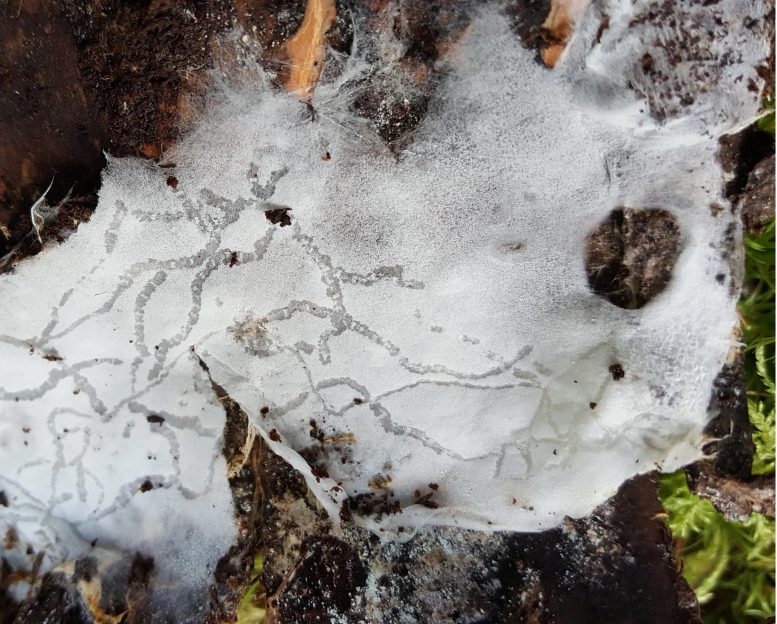
“It’s interesting but also a little frightening to see that in a genus like Piloderma, where we previously thought all species were common, there are such hidden old-growth forest species. They risk disappearing as the forest landscape is transformed from natural forests to plantations. Because of their insignificant size, no one has discovered them. I hope that our research can assist in making more people aware of and marvel at this kind of species and forests,” says Sten Svantesson, lead author of the study.

Compared DNA to identify new species
In the study, the researchers looked for new species in Sweden, Norway, Finland, and Lithuania. They collected fruiting bodies and went through collections already made in other research projects. Then, potentially new species were compared with existing species to establish that they were, in fact, new.
“Species are deemed to be new if we, based on DNA sequencing, consider that we can establish that they are biologically distinct from existing species, that is, if no reproduction occurs between them. We then use data from soil and root tip samples uploaded into international gene databases from previous studies to obtain more information about their geographical distribution and ecology,” says Sten Svantesson.
Among the five new species found, was also Piloderma luminosum. This very common species was found to be easily recognisable by its almost luminous yellow to orange fruiting bodies. It has been distinguished from a species complex that includes the equally common species Piloderma byssinum. The difference between the two species is small but consistent.
“These two species often grow right next to each other and are commonly occurring in soil and root tip samples. By distinguishing them as different species, their differentiation can now be investigated – whether they have developed different niches or whether other factors have led to one original species becoming two,” says Sten Svantesson.
Reference: “Five new species in Piloderma (Atheliales, Basidiomycota) and epitypification of P. byssinum” by Sten Svantesson, Lowie Tondeleir, Matti Kulju, Reda Iršėnaitė, Björn D. Lindahl, Teppo Helo, Karl-Henrik Larsson and Martin Ryberg, 30 December 2024, Fungal Biology.
DOI: 10.1016/j.funbio.2024.101531
Funding: The Swedish Taxonomy Initiative
Never miss a breakthrough: Join the SciTechDaily newsletter.
Follow us on Google and Google News.