
Close Menu
    Facebook X (Twitter) Instagram
    SciTechDaily
    • Biology
    • Chemistry
    • Earth
    • Health
    • Physics
    • Science
    • Space
    • Technology
    Facebook X (Twitter) Pinterest YouTube RSS
    SciTechDaily
    Home»Biology»New Species of Bent-Toed Gecko Discovered in Cambodia
    Biology

    New Species of Bent-Toed Gecko Discovered in Cambodia

    By North Carolina Museum of Natural SciencesApril 15, 2020No Comments3 Mins Read
    Facebook Twitter Pinterest Telegram LinkedIn WhatsApp Email Reddit
    Share
    Facebook Twitter LinkedIn Pinterest Telegram Email Reddit
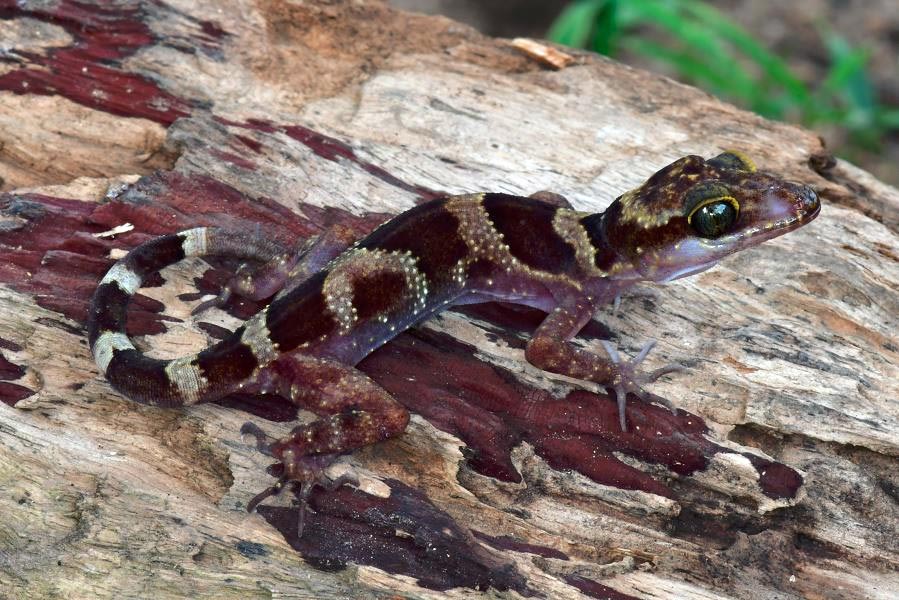
    Bent-Toed Gecko
    A new species of bent-toed gecko (Cyrtodactylus phnomchiensis) has been discovered in Cambodia’s Prey Lang Wildlife Sanctuary by Wild Earth Allies Biologist Thy Neang in collaboration with Bryan Stuart of the North Carolina Museum of Natural Sciences. Credit: Thy Neang

    A new species of bent-toed gecko (Cyrtodactylus phnomchiensis) has been described from Cambodia’s Prey Lang Wildlife Sanctuary by Wild Earth Allies Biologist Thy Neang in collaboration with North Carolina Museum of Natural Sciences’ Herpetologist Bryan Stuart. This new species is described in ZooKeys.

    The species was discovered by Thy Neang during Wild Earth Allies field surveys in June-July 2019 on an isolated mountain named Phnom Chi in the Prey Lang Wildlife Sanctuary when he encountered an unusual species of bent-toed gecko. “It was an extremely unexpected discovery. No one thought there were undescribed species in Prey Lang,” said Neang.

    The geckos were found to belong to the C. irregularis species complex that includes at least 19 species distributed in south¬ern and central Vietnam, eastern Cambodia, and southern Laos. This is the first member of the complex to be found west of the Mekong River, demonstrating how biogeographic barriers can lead to speciation. Additionally, the geckos were unique in morphological characters and mitochondrial DNA, and distinct from C. ziegleri to which they are most closely related. Researchers have named the species Cyrtodactylus phnomchiensis after Phnom Chi mountain where it was found.
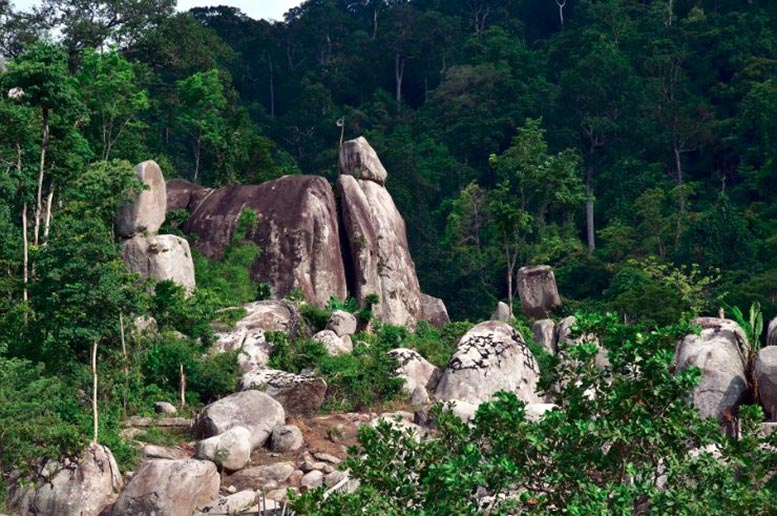
    Phnom Chi
    Habitat at Phnom Chi, the type locality of Cyrtodactylus phnomchiensis. Credit: Thy Neang

    Bent-toed geckos of the genus Cyrtodactylus are one of the most species-diverse genera of gekkonid lizards, with 292 recognized species. Much of the diversity within Cyrtodactylus has been described only during the past decade and from mainland Southeast Asia, and many of these newly recognized species are thought to have extremely narrow geographic ranges. As such, Cyrtodactylus phnomchiensis is likely endemic to Phnom Chi, which consists of an isolated small mountain of rocky outcrops (peak of 652 m or 2,140 ft elevation) and a few associated smaller hills, altogether encompassing an area of approximately 4,464 hectares (45 square kilometers) in Kampong Thom and Kratie Provinces within the Prey Lang Wildlife Sanctuary, Cambodia.

    The forest habitat in Phnom Chi remains in relatively good condition, but small-scale illegal gold extraction around its base threatens the newly discovered species. A second species of lizard, the scincid Sphenomorphus preylangensis, was also recently described from Phnom Chi by a team of researchers including Neang. These new discoveries underscore the importance of Prey Lang Wildlife Sanctuary for biodiversity conservation and the critical need to strengthen its management.

    Further, an assessment of C. phnomchiensis is urgently warranted by the IUCN Red List of Threatened Species (IUCN 2020) because of its small area of occupancy, status as relatively uncommon, and ongoing threats to its habitat.

    “This exciting discovery adds another reptile species to science for Cambodia and the world. It also highlights the global importance of Cambodia’s biodiversity and illustrates the need for future exploration and biological research in Prey Lang,” said Neang.

    “When [Neang] first returned from fieldwork and told me that he had found a species in the C. irregularis group so far west of the Mekong River in Cambodia, I did not believe it. His discovery underscores how much unknown biodiversity remains out there in unexpected places. Clearly, Prey Lang Wildlife Sanctuary is important for biodiversity and deserves attention,” said Neang’s co-author Stuart of the North Carolina Museum of Natural Sciences.

    Never miss a breakthrough: Join the SciTechDaily newsletter.
    Follow us on Google and Google News.

    Biodiversity Gecko New Species
    Share. Facebook Twitter Pinterest LinkedIn Email Reddit

    Related Articles

    Scientists Discover New Species of “Rock-Climbing” Gecko in Madagascar

    New Species Discovery 50 Years in the Making: Carolina Sandhills Salamander

    Scientists Say Gentoo Penguins Are Four Species, Not One

    New Species Found in the Hottest Place on Earth

    Xenophyophores: Four Freaky New Species of Giant Single-Celled Organisms Discovered on Pacific Seafloor

    New Diamond Frog From Northern Madagascar – “As Soon as I Saw This Frog, I Knew It Was a New Species!”

    Bizarre New Parasitic Species Discovered… on Twitter

    New Green Pit Viper From India Named After Salazar Slytherin From Harry Potter

    Incredible New Species Discovered in Abyssal Deep Sea Canyons Off Ningaloo

    Leave A Reply Cancel Reply

    • Facebook
    • Twitter
    • Pinterest
    • YouTube

    Don't Miss a Discovery

    Subscribe for the Latest in Science & Tech!

    Trending News

    Millions Take These IBS Drugs, But a New Study Finds Serious Risks

    Scientists Unlock Hidden Secrets of 2,300-Year-Old Mummies Using Cutting-Edge CT Scanner

    Bread Might Be Making You Gain Weight Even Without Eating More Calories

    Scientists Discover Massive Magma Reservoir Beneath Tuscany

    Europe’s Most Active Volcano Just Got Stranger – Here’s Why Scientists Are Rethinking It

    Alzheimer’s Symptoms May Start Outside the Brain, Study Finds

    Millions Take This Popular Supplement – Scientists Discover a Concerning Link to Heart Failure

    The Universe Is Expanding Too Fast and Scientists Can’t Explain Why

    Follow SciTechDaily
    • Facebook
    • Twitter
    • YouTube
    • Pinterest
    • Newsletter
    • RSS
    SciTech News
    • Biology News
    • Chemistry News
    • Earth News
    • Health News
    • Physics News
    • Science News
    • Space News
    • Technology News
    Recent Posts
    • Doctors Surprised by the Power of a Simple Drug Against Colon Cancer
    • Why Popular Diabetes Drugs Like Ozempic Don’t Work for Everyone: The “Genetic Glitch”
    • Scientists Create Improved Insulin Cells That Reverse Diabetes in Mice
    • Scientists Stunned After Finding Plant Thought Extinct for 60 Years
    • A Common Diabetes Drug May Hold the Key to Stopping HIV From Coming Back
    Copyright © 1998 - 2026 SciTechDaily. All Rights Reserved.
    • Science News
    • About
    • Contact
    • Editorial Board
    • Privacy Policy
    • Terms of Use

    Type above and press Enter to search. Press Esc to cancel.