
Research Reveals That Honeypot Ant Honey Possesses Strong Antimicrobial Qualities
Researchers have found that the honey produced by ants native to Australia possesses unique anti-microbial activity against bacteria and fungi that could make the liquid useful medicinally.
The study, which was recently published in the journal PeerJ, was led by Andrew Dong and Dr. Kenya Fernandes from the Carter Lab at the University of Sydney. The lab is under the guidance of Professor Dee Carter from the School of Life and Environmental Sciences and the Sydney Institute for Infectious Diseases.
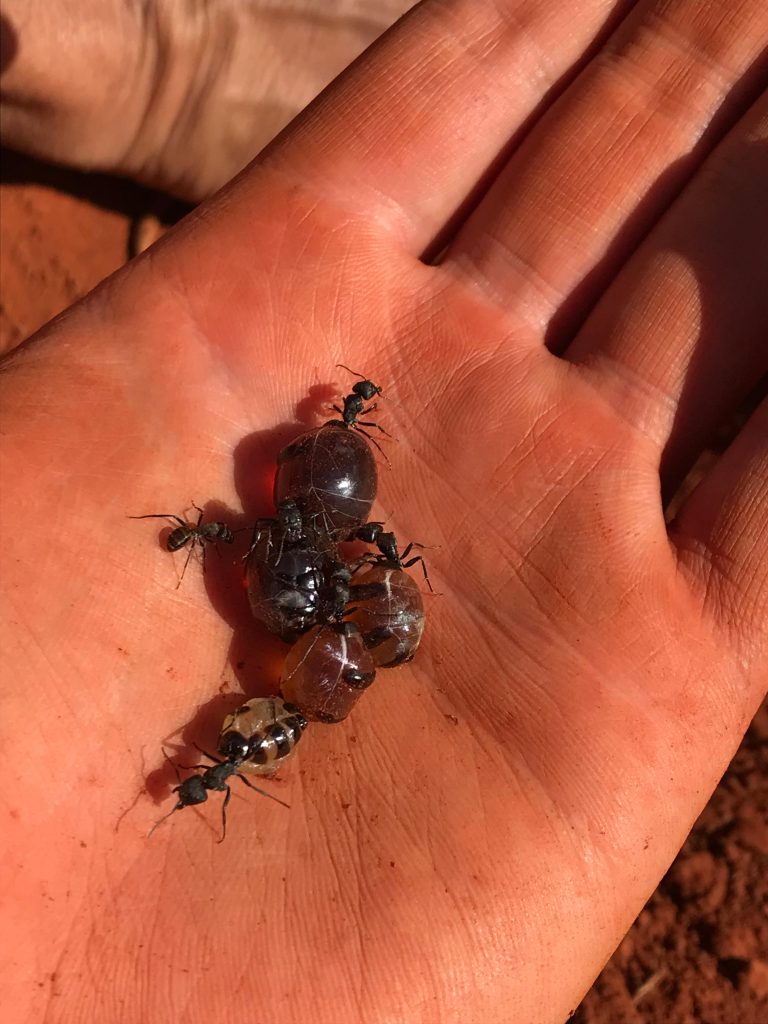
The team studied the Australian honeypot ant, Camponotus inflatus, which is found throughout desert areas mainly in Western Australia and the Northern Territory.
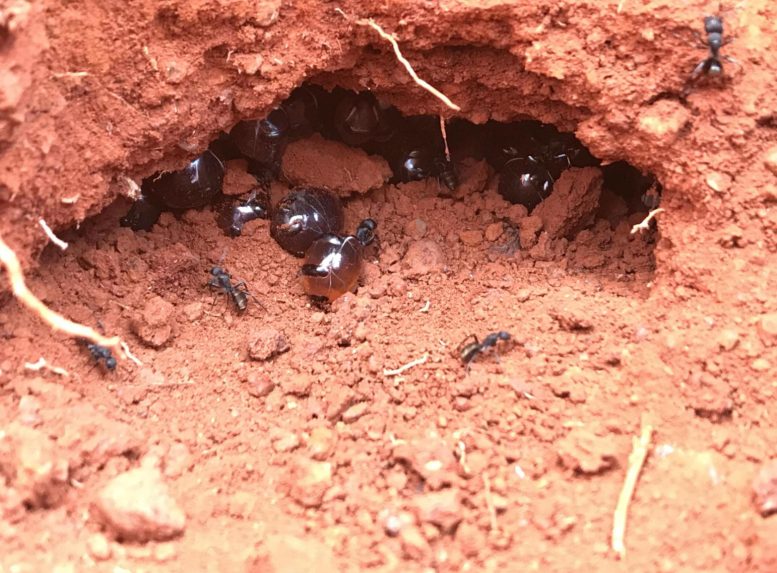
Among their colonies is a class of overfed workers that are stuffed with nectar and sugary substances by other worker ants, causing their abdomens to inflate with honey and take on a translucent, amber appearance.
These ants effectively become immobile vending machines for their colony, regurgitating honey when other food options are scarce. Danny Ulrich from the Tjupan language group, who runs honeypot ant tours in Kalgoorlie, helped the researchers track down specimens for their study.
Traditional Indigenous Knowledge Meets Modern Science
“For our people, honey ants are more than just a food source. Digging for them is a very enjoyable way of life and a way of bringing the family together,” Mr Ulrich said. “Our people have been enjoying sweet honey ants for thousands of years. As for its medicinal use, we use it for sore throats and sometimes as a topical ointment to help keep infections at bay.”
The researchers said their study marks the first time that ant honey has been investigated for its medicinal properties.
“I have long been fascinated by the honeypot ant and its amazing way of producing and storing honey,” Mr Dong said. “Given the medicinal use of the honey by Indigenous people, I wondered if it might have unique antimicrobial characteristics.”
The scientists have confirmed that ant honey has a quite different mechanism of action compared with Manuka honey, which is well-established as a topical treatment for wounds and skin infections.
Potential for New Antibiotic Discoveries
“Our research shows that honeypot ant honey possesses a distinctive effect that sets it apart from other types of honey,” Dr Fernandes said. “This discovery means that honeypot ant honey could contain compounds with substantial antimicrobial power; identifying these could provide us with starting points for developing new and different types of antibiotics.”
Honeypot ants have been used medicinally by First Nations people for thousands of years, including for the treatment of colds and sore throats. But now Western science is catching up with their traditions.
“This study demonstrates that honeypot ant honey has unique antimicrobial characteristics that validate its therapeutic use by Indigenous peoples,” Professor Carter said. “Taking something that has been honed by evolution to work in nature and then applying this to human health is a great way to come up with therapeutic strategies.”
Effective Against Bacteria and Fungi
The researchers found the ant’s honey is effective against Staphylococcus aureus, a bacterium commonly known as golden staph. The bacteria colonize on the skin and nose of people, but if they enter through a cut, they can cause infections such as boils and sores or, in serious cases, death.
They also found ant honey is potent against two species of fungi, Aspergillus and Cryptococcus. Both fungi can be found in soil and this ability to inhibit them probably evolved to prevent ant colonies from being invaded by fungi. These fungi can also cause serious infections in people with suppressed immune systems.
Reference: “Unique antimicrobial activity in honey from the Australian honeypot ant (Camponotus inflatus)” by Andrew Z. Dong, Nural Cokcetin, Dee A. Carter and Kenya E. Fernandes, 26 July 2023, PeerJ.
DOI: 10.7717/peerj.15645
Never miss a breakthrough: Join the SciTechDaily newsletter.
Follow us on Google and Google News.
1 Comment
Not long out from under our own rocks, we have to exploit EVERYTHING. Digging ants won’t be the road to corporate riches but if we synthesize their anti-biotics might there not be a feed-back evolutionary mechanism wherein educated staph aureus or aspergillus makes its way back into the wild massively through our agriculture, able to evade the ant’s protective mechanisms causing their demise or inconvenience? Oh whatthehell were they good for anyway?