
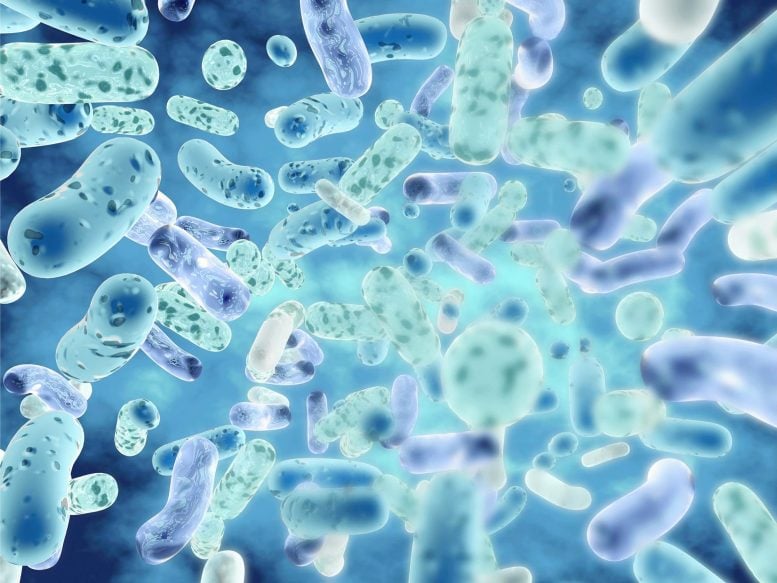
A team of researchers from Göttingen University investigates kombucha cultivation in extraterrestrial environments.
The possibility of kombucha cultures surviving under Martian-like environments has been studied by an international research team that includes the University of Göttingen. Kombucha, also known as tea fungus or mushroom tea, is a popular beverage that is made by fermenting sugared tea using kombucha cultures, a symbiotic culture of bacteria and yeast.
Surprisingly, a bacterial species that produces cellulose persisted despite the simulated Martian atmosphere destroying the kombucha cultures’ microbial ecology. The findings were published in the journal Frontiers in Microbiology.
Kombucha Cultures in Space
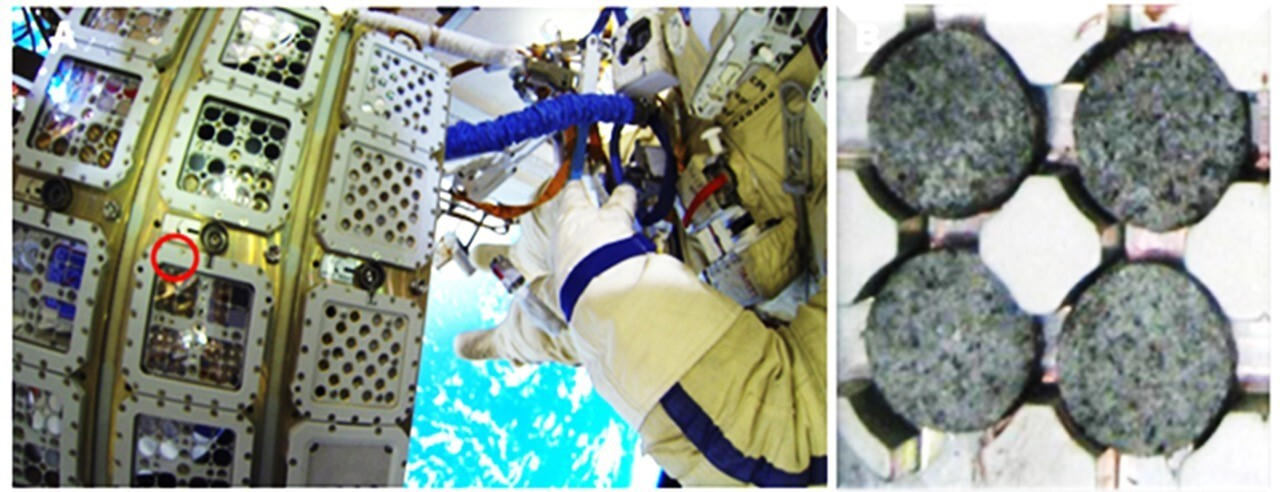
In 2014, with the help of the European Space Agency, the researchers working on the “Biology and Mars Experiment” (BIOMEX) project launched kombucha cultures to the International Space Station (ISS).

The objective was to get a better understanding of cellulose’s resilience as a biomarker, kombucha’s genomic structure, and its extraterrestrial survival behavior. The samples were reactivated on Earth and cultured for another two and a half years after one and a half years under simulated Martian conditions outside the ISS.
Working alongside researchers from the University of Minas Gerais in Brazil, Professor Bertram Brenig, director of the University of Göttingen’s Institute of Veterinary Medicine, was in charge of sequencing and bioinformatic analysis of the metagenomes of the reactivated cultures and individual kombucha cultures.
“Based on our metagenomic analysis, we found that the simulated Martian environment drastically disrupted the microbial ecology of kombucha cultures. However, we were surprised to discover that the cellulose-producing bacteria of the genus Komagataeibacter survived.”
Cellulose as a Biomarker for Extraterrestrial Life
The results suggest that the cellulose produced by the bacteria is probably responsible for their survival in extraterrestrial conditions. This also provides the first evidence that bacterial cellulose could be a biomarker for extraterrestrial life and cellulose-based membranes or films could be a good biomaterial for protecting life and producing consumer goods in extraterrestrial settlements.
Another interesting aspect of these experiments could be the development of novel drug delivery systems, for example, the development of medicine suitable for use in space. Another focus was on investigations into changes in antibiotic resistance: the research team was able to show that the total number of antibiotic and metal resistance genes – meaning that these microorganisms might survive despite antibiotics or metals in the environment – were enriched in the exposed cultures.
“This result shows that the difficulties associated with antibiotic resistance in medicine in space should be given special attention in the future,” the scientists said.
Reference: “The Space-Exposed Kombucha Microbial Community Member Komagataeibacter oboediens Showed Only Minor Changes in Its Genome After Reactivation on Earth” by Daniel Santana de Carvalho, Ana Paula Trovatti Uetanabaro, Rodrigo Bentes Kato, Flávia Figueira Aburjaile, Arun Kumar Jaiswal, Rodrigo Profeta, Rodrigo Dias De Oliveira Carvalho, Sandeep Tiwar, Anne Cybelle Pinto Gomide, Eduardo Almeida Costa, Olga Kukharenko, Iryna Orlovska, Olga Podolich, Oleg Reva, Pablo Ivan P. Ramos, Vasco Ariston De Carvalho Azevedo, Bertram Brenig, Bruno Silva Andrade, Jean-Pierre P. de Vera, Natalia O. Kozyrovska, Debmalya Barh and Aristóteles Góes-Neto, 11 March 2022, Frontiers in Microbiology.
DOI: 10.3389/fmicb.2022.782175
Never miss a breakthrough: Join the SciTechDaily newsletter.
Follow us on Google and Google News.