
Close Menu
    Facebook X (Twitter) Instagram
    SciTechDaily
    • Biology
    • Chemistry
    • Earth
    • Health
    • Physics
    • Science
    • Space
    • Technology
    Facebook X (Twitter) Pinterest YouTube RSS
    SciTechDaily
    Home»Biology»Scientists Discover Unusual Ancient Fish 900 Miles North of Its Previous Known Range
    Biology

    Scientists Discover Unusual Ancient Fish 900 Miles North of Its Previous Known Range

    By Griffith UniversityMay 28, 2024No Comments4 Mins Read
    Facebook Twitter Pinterest Telegram LinkedIn WhatsApp Email Reddit
    Share
    Facebook Twitter LinkedIn Pinterest Telegram Email Reddit
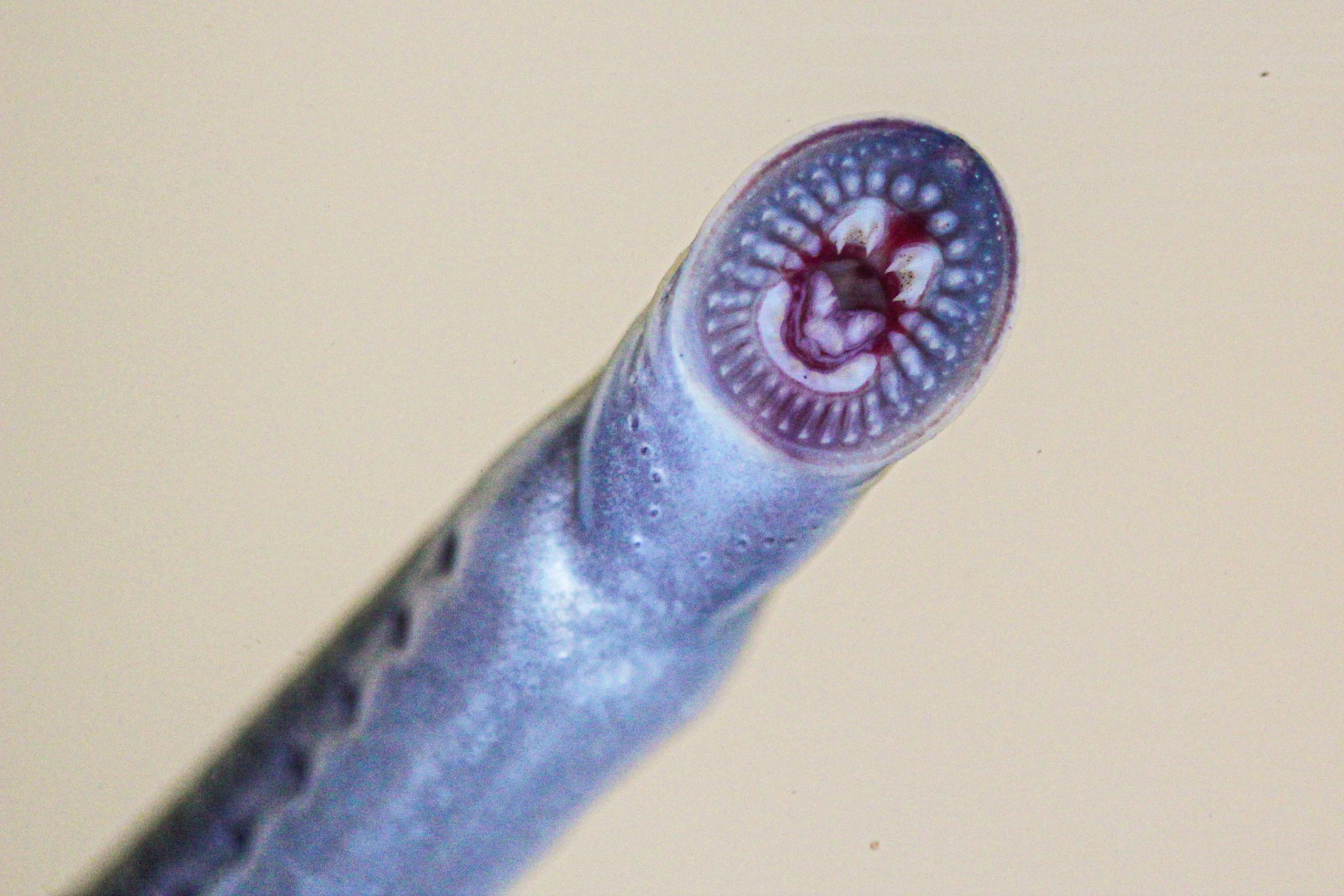
    Mouth of a Juvenile Australian Brook Lamprey
    The Australian brook lamprey, a non-parasitic jawless fish, has been found in Queensland, extending its known range. Conservation efforts face challenges due to its mistaken identity with a more common species. Scientists stress the importance of protecting this Endangered species amidst threats like habitat changes and rising sea levels. Credit: David Moffatt

    The Australian brook lamprey (Mordacia praecox) belongs to a group of primitive jawless fish. Growing up to 15 cm in length, it has rows of sharp teeth. Unlike most lamprey species, which use their teeth to suck blood, this species is non-parasitic.

    As larvae, the Australian brook lamprey lives buried in the bottom of streams for around three years, filter-feeding. Its adult phase is about one year long, in which it doesn’t feed at all. Prior to this study – funded in part by the Australian Government through the National Environmental Science Program’s (NESP) Resilient Landscapes Hub – the species was widely believed to only live in a few streams along a 170 km stretch of coastline near the NSW/Victoria border.
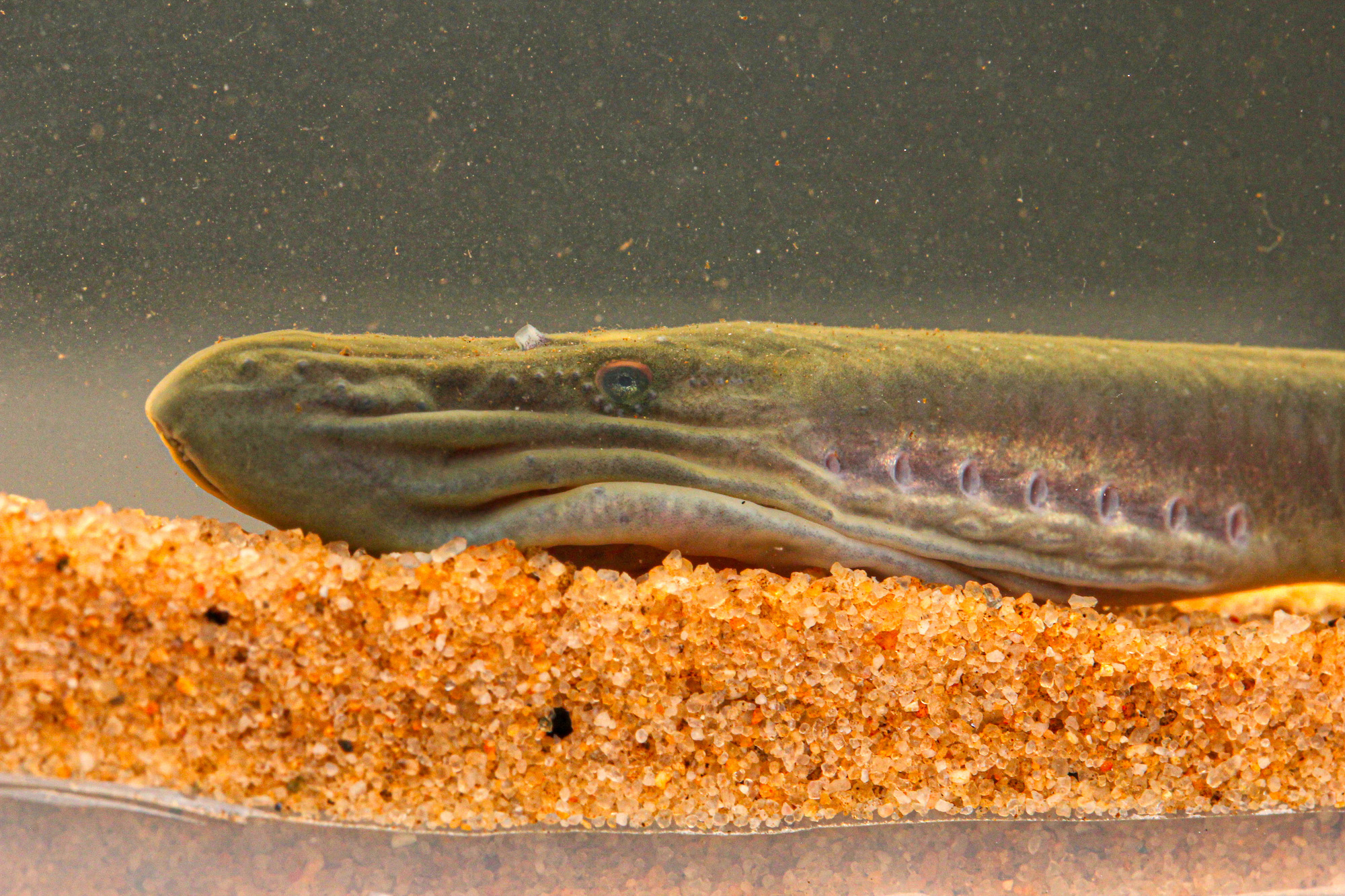
    Close Up of the Head of an Adult Male Australian Brook Lamprey
    A close-up of the head of an adult male Australian brook lamprey. Credit: David Moffatt

    The study began after another exciting discovery: Dr. Luke Carpenter-Bundhoo from the Australian Rivers Institute at Griffith University found the species living in streams on K’gari (Fraser Island). To unravel the mystery of Queensland lampreys, Dr. Carpenter-Bundhoo teamed up with David Moffatt from DESI, who had found isolated populations of lamprey in other Queensland streams.

    Together, they confirmed reports of Australian brook lamprey in Queensland, including as far north as Rockhampton! With this enormous extension of its geographic range, the Australian brook lamprey becomes the only lamprey species in the world to live in truly tropical waters.

    Conservation Concerns

    “It’s quite exciting to find an Endangered species so far out of its known range, yet so close to populated areas. We expect these animals naturally occur in Queensland, and have been here for an awfully long time, but have remained hidden due to their cryptic nature,” said Mr. Moffatt.

    The Australian brook lamprey is thought to be extinct where it was first described, in southern NSW. Its existence is thought to be threatened by sedimentation, wildfires, and human development.

    Perhaps the biggest threat to their conservation is that they’re very difficult to identify – this species truly faces a case of mistaken identity. For most of their life, the non-parasitic Australian brook lamprey is indistinguishable from its more common blood-sucking southern relative, the short-headed lamprey (Mordacia mordax), which has a conservation status of ‘Least Concern’.
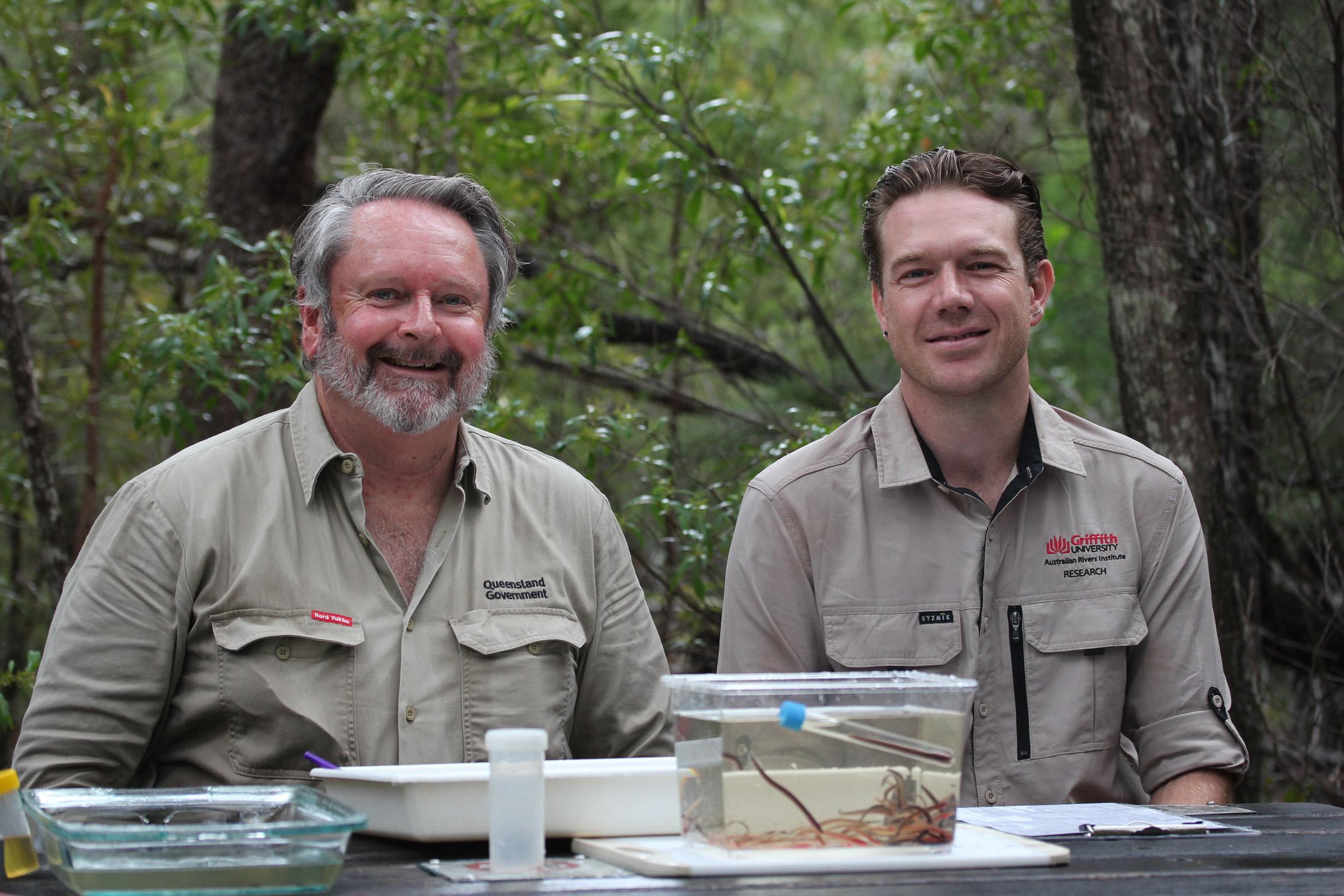
    David Moffatt and Luke Carpenter Bundhoo
    David Moffatt and Dr. Luke Carpenter-Bundhoo with a small tank of Australian brook lamprey. Credit: Troy Harris

    Add to this the fact that, globally, only a few people can tell them apart.

    In their new Endangered Species Research article, Dr. Carpenter-Bundhoo and Mr. Moffatt outline the difficulties of implementing a conservation strategy for this fish and propose some solutions.

    The species’ conservation is especially important, given that projected sea level rises mean that many of the lowland freshwater coastal streams where Australian brook lamprey live are likely to become saltwater.

    With these new findings, scientists will be better equipped to conserve this unusual and Endangered species.

    Reference: “Expanding the known range and practical conservation issues of the Endangered Australian brook lamprey Mordacia praecox” by Luke Carpenter-Bundhoo and David B. Moffatt, 25 April 2024, Endangered Species Research.
    DOI: 10.3354/esr01319

    The surveys were partially funded by an NESP project that aims to restore ecosystem health in the Moonaboola (Mary River) catchment area of south-east Queensland and protect threatened species like the Australian lungfish, the Mary River cod and the giant barred frog.

    Never miss a breakthrough: Join the SciTechDaily newsletter.
    Follow us on Google and Google News.

    Endangered Griffith University Marine Biology
    Share. Facebook Twitter Pinterest LinkedIn Email Reddit

    Related Articles

    Mining the Deep Sea Could Erase Sharks We’ve Only Just Discovered

    Shocking Scientists: Iconic Bluebottle Jellyfish Revealed To Be Four Distinct Species

    Rare Deep-Sea Shark Faces Extinction As Its Home Disappears

    The Race Against Extinction: Genetic Lifeline Discovered for Endangered Shortfin Mako Sharks

    Digital Resurrection: Scientists Are on a Mission To Preserve the World’s Most Endangered Marine Mammal

    Now Critically Endangered: Giant Clams Face Extinction Crisis

    Biased Waters: The Skewed Science of Marine Conservation

    Shark Shock – Scientists Discover Basking Sharks Are Warm-Bodied in One-in-a-Thousand Exception

    Iconic Sunflower Sea Star Is Now Critically Endangered

    Leave A Reply Cancel Reply

    • Facebook
    • Twitter
    • Pinterest
    • YouTube

    Don't Miss a Discovery

    Subscribe for the Latest in Science & Tech!

    Trending News

    Why Popular Diabetes Drugs Like Ozempic Don’t Work for Everyone: The “Genetic Glitch”

    Scientists Stunned After Finding Plant Thought Extinct for 60 Years

    Scientists Discover Tiny New Spider That Hunts Prey 6x Its Size

    Natural Component From Licorice Shows Promise for Treating Inflammatory Bowel Disease

    Scientists Warn: Popular Sweetener Linked to Dangerous Metabolic Effects

    Monster Storms on Jupiter Unleash Lightning Beyond Anything on Earth

    Scientists Create “Liquid Gears” That Spin Without Touching

    The Simple Habit That Could Help Prevent Cancer

    Follow SciTechDaily
    • Facebook
    • Twitter
    • YouTube
    • Pinterest
    • Newsletter
    • RSS
    SciTech News
    • Biology News
    • Chemistry News
    • Earth News
    • Health News
    • Physics News
    • Science News
    • Space News
    • Technology News
    Recent Posts
    • Ancient Bacteria Turned a DNA System Into a Cell Skeleton
    • Researchers Finally Solve 50-Year-Old Blood Group Mystery
    • Scientists Discover “Molecular Switch” That Fuels Alzheimer’s Brain Inflammation
    • Hidden Ocean Currents Revealed in Stunning Detail by AI
    • Trees Emit Tiny Lightning Flashes During Storms and Scientists Finally Prove It
    Copyright © 1998 - 2026 SciTechDaily. All Rights Reserved.
    • Science News
    • About
    • Contact
    • Editorial Board
    • Privacy Policy
    • Terms of Use

    Type above and press Enter to search. Press Esc to cancel.