
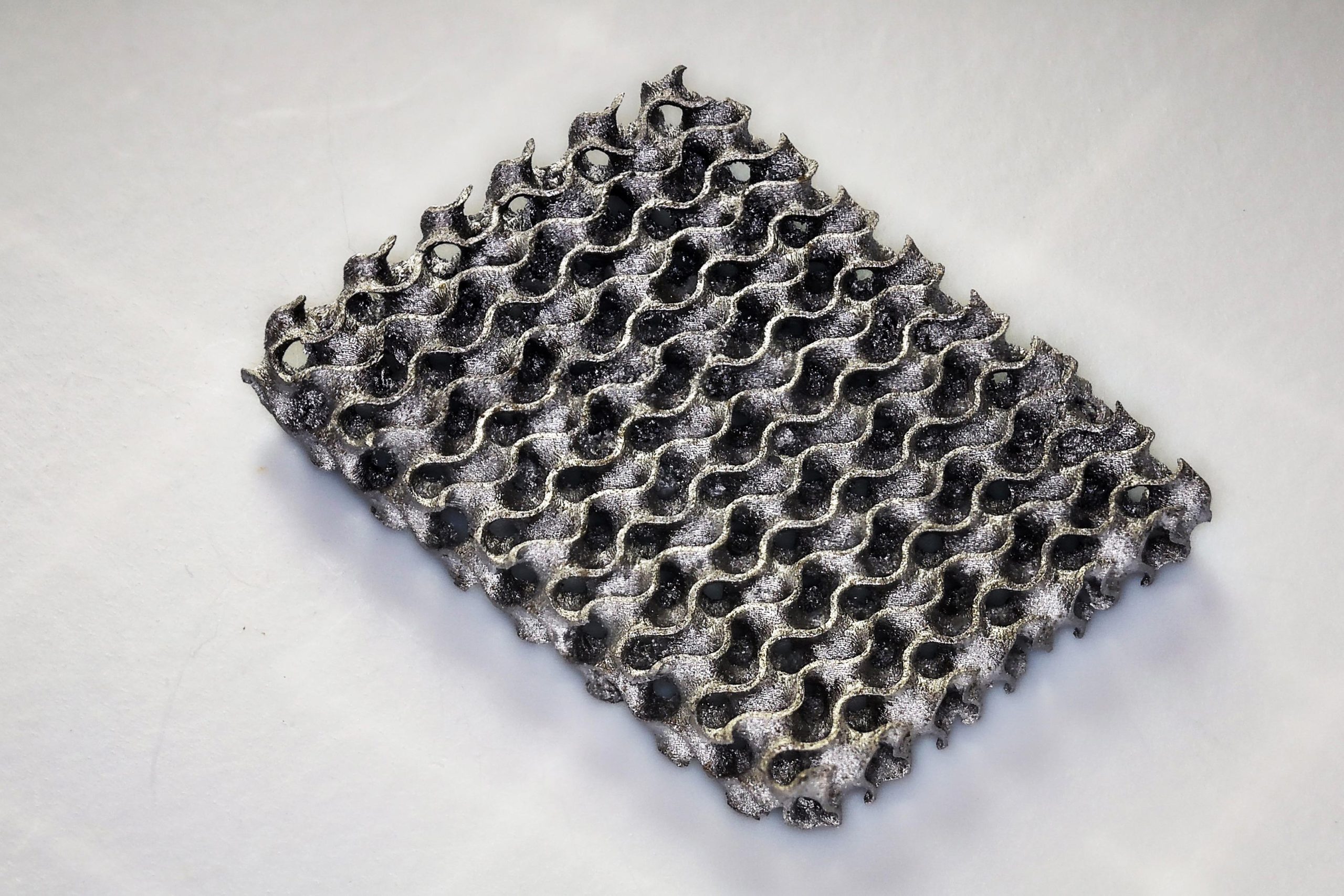
EPFL scientists have created a breakthrough 3D printing method that uses hydrogels as templates to produce ultra-dense, durable metals and ceramics.
The process builds a gel scaffold that is later infused with metal salts and converted into nanoparticles, then heated to reveal the final solid form. The resulting materials are stronger and less prone to warping than those made with traditional methods.
Unlocking the Potential of Vat Photopolymerization
Vat photopolymerization is a 3D printing process where a liquid resin that reacts to light is poured into a container and then solidified layer by layer using a laser or ultraviolet light to form a 3D shape. However, this approach is limited because it only works with light-sensitive polymers, which restricts the types of materials that can be produced.
Some 3D printing techniques have tried to overcome this by transforming printed polymers into metals or ceramics. Yet, according to Daryl Yee, head of the Laboratory for the Chemistry of Materials and Manufacturing at EPFL’s School of Engineering, these materials often fall short in quality.
“These materials tend to be porous, which significantly reduces their strength, and the parts suffer from excessive shrinkage, which causes warping,” he says.
A Hydrogel Breakthrough for Metal and Ceramic Printing
To solve these challenges, Yee and his team developed an innovative method described in their paper published in Advanced Materials. Instead of curing a resin that already contains metal compounds, the researchers begin by 3D printing a framework made from a simple, water-based gel called a hydrogel. This blank structure is then soaked in metal salts, which are chemically transformed into tiny metal-containing nanoparticles that spread throughout the gel. The process can be repeated several times to increase the concentration of metal within the material.
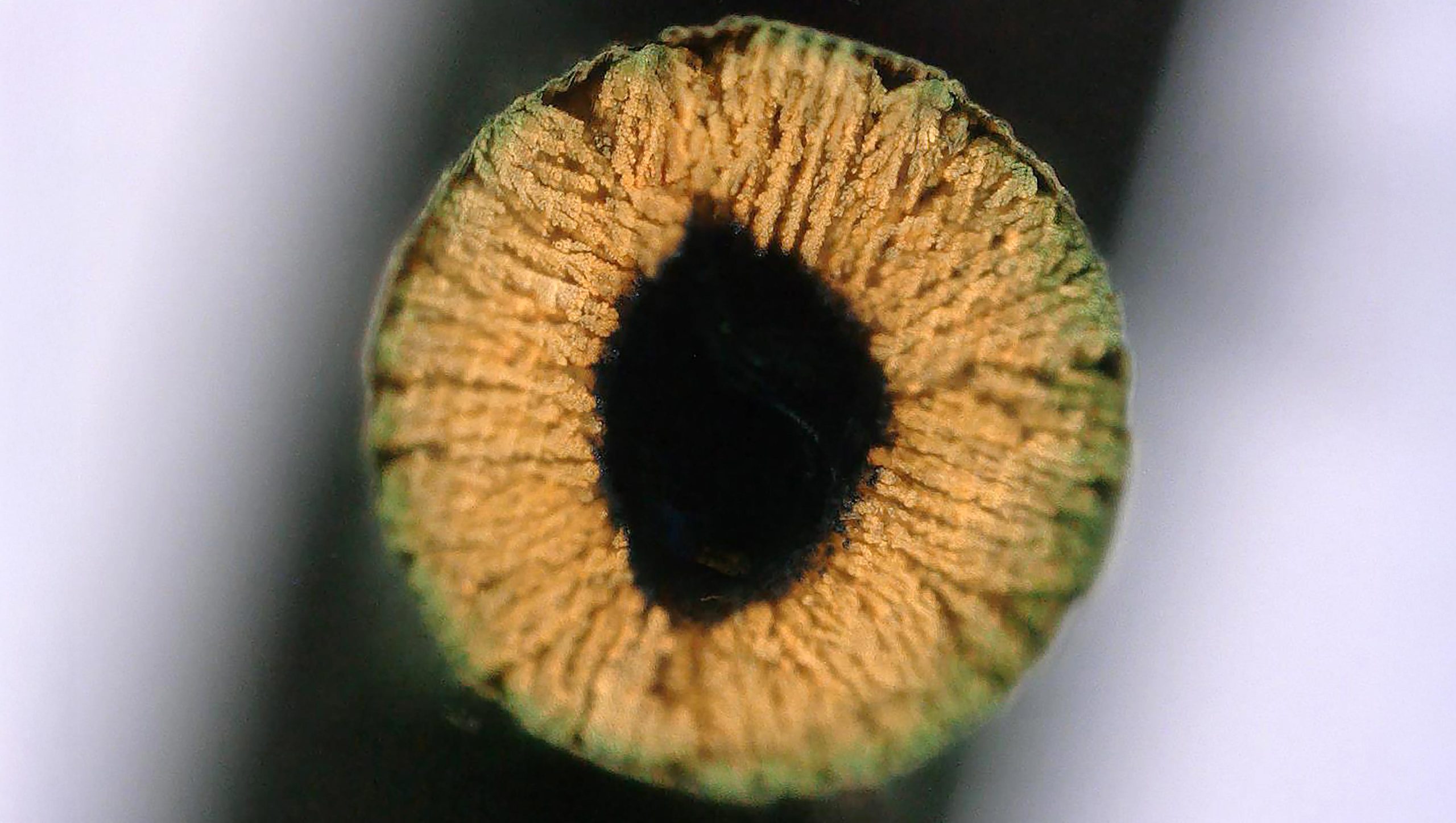
After 5-10 of these “growth cycles,” the remaining hydrogel is removed through heating, leaving behind a metal or ceramic structure that perfectly replicates the original gel’s shape. The result is an exceptionally dense and durable object. Because the metal salts are introduced only after the printing step, one hydrogel model can be converted into a variety of metals, ceramics, or composite materials.
“Our work not only enables the fabrication of high-quality metals and ceramics with an accessible, low-cost 3D printing process; it also highlights a new paradigm in additive manufacturing where material selection occurs after 3D printing, rather than before,” Yee summarizes.
Targeting Advanced 3D Architectures
For their study, the team fabricated intricate mathematical lattice shapes called gyroids out of iron, silver, and copper, demonstrating their technique’s ability to produce strong yet complex structures. To test the strength of their materials, they used a device called a universal testing machine to apply increasing pressure to the gyroids.
“Our work highlights a new paradigm in additive manufacturing where material selection occurs after 3D printing, rather than before.”
Daryl Yee, head of the ALCHEMY lab
“Our materials could withstand 20 times more pressure compared to those produced with previous methods, while exhibiting only 20% shrinkage versus 60-90%,” says PhD student and first author Yiming Ji.
Applications in Energy, Sensors, and Biomedicine
The scientists say their technique is especially interesting for the fabrication of advanced 3D architectures that must be simultaneously strong, lightweight, and complex, like sensors, biomedical devices, or devices for energy conversion and storage. For example, metal catalysts are essential for enabling reactions that convert chemical energy into electricity. Other applications could include high-surface area metals with advanced cooling properties for energy technologies.
Looking ahead, the team is working on improving their process to facilitate uptake by industry, notably by further increasing the density of their materials. Another goal is speed: the repeated infusion steps, while essential for producing stronger materials, make the method more time-consuming compared to other 3D printing techniques for converting polymers to metals. “We are already working on bringing the total processing time down by using a robot to automate these steps,” Yee says.
Reference: “Hydrogel-Based Vat Photopolymerization of Ceramics and Metals with Low Shrinkages via Repeated Infusion Precipitation” by Yiming Ji, Ying Hong, Dhruv R. Bhandari and Daryl W. Yee, 24 September 2025, Advanced Materials.
DOI: 10.1002/adma.202504951
Never miss a breakthrough: Join the SciTechDaily newsletter.
Follow us on Google and Google News.
4 Comments
That would be handy for armour plate on tanks……
And here I thought that templating is a common technique with AM. Apparently it is a different paradigm 🙃
So… I gather that the metals are twenty times stronger than previous 3D printed metals… but not twenty times stronger than a pure metal.
thanks for this