
Close Menu
    Facebook X (Twitter) Instagram
    SciTechDaily
    • Biology
    • Chemistry
    • Earth
    • Health
    • Physics
    • Science
    • Space
    • Technology
    Facebook X (Twitter) Pinterest YouTube RSS
    SciTechDaily
    Home»Biology»Scientists Grow Tiny Brains in 3D-Printed Bioreactor
    Biology

    Scientists Grow Tiny Brains in 3D-Printed Bioreactor

    By American Institute of PhysicsApril 6, 2021No Comments3 Mins Read
    Facebook Twitter Pinterest Telegram LinkedIn WhatsApp Email Reddit
    Share
    Facebook Twitter LinkedIn Pinterest Telegram Email Reddit
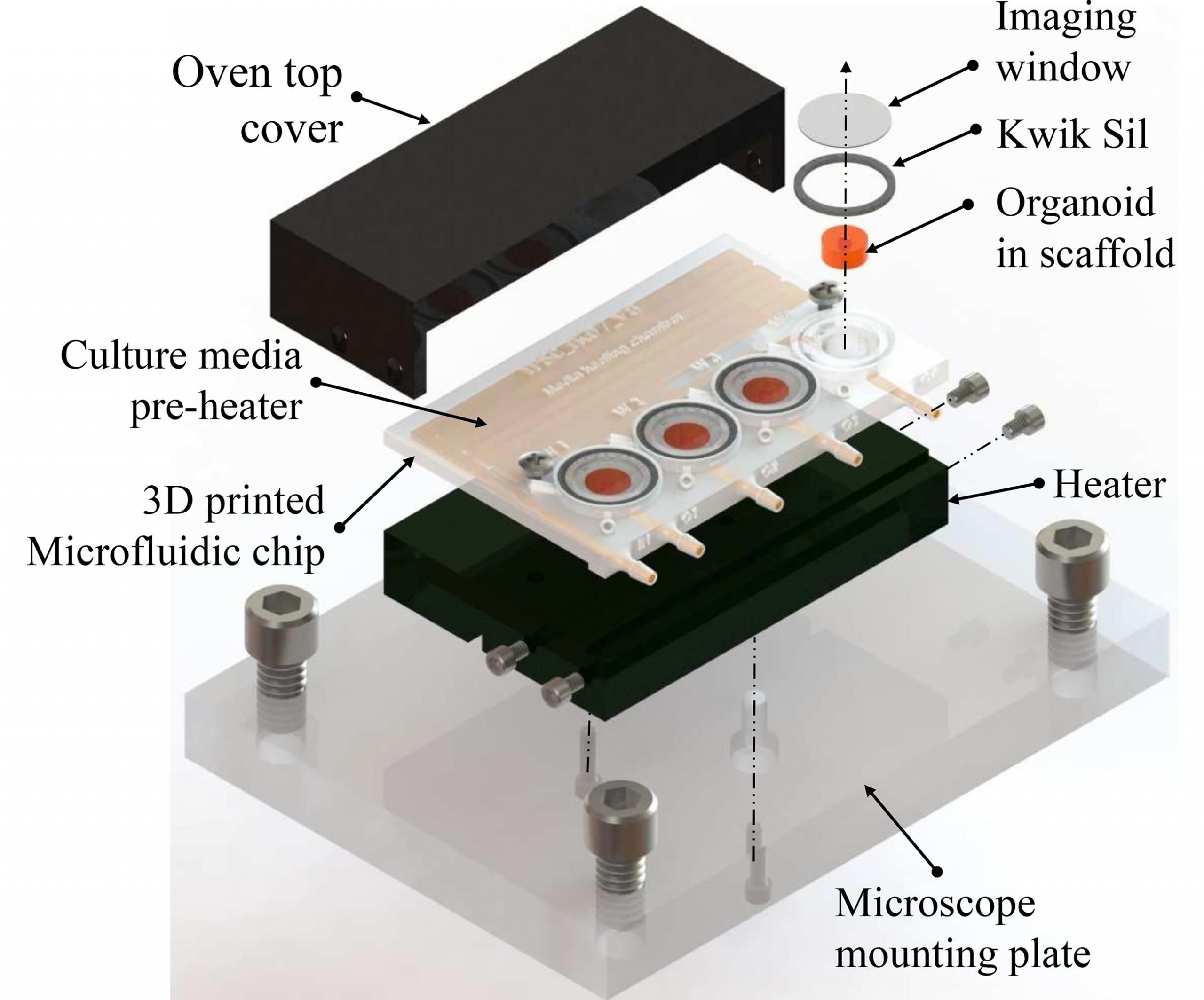
    3D-Printed Microfluidic Bioreactor for Organ-on-Chip Cell Culture
    A 3D-printed microfluidic bioreactor for organ-on-chip cell culture. Credit: Ikram Khan

    Small device contains wells to let small bits of tissue grow, develop, and be studied in real time.

    Scientists from MIT and the Indian Institute of Technology Madras have grown small amounts of self-organizing brain tissue, known as organoids, in a tiny 3D-printed system that allows observation while they grow and develop. The work is reported in Biomicrofluidics, by AIP Publishing.

    Current technology for real-time observation of growing organoids involves the use of commercial culture dishes with many wells in a glass-bottomed plate placed under a microscope. The plates are costly and only compatible with specific microscopes. They do not allow for the flow or replenishment of a nutrient medium to the growing tissue.

    Recent advances have used a technique known as microfluidics, where a nutrient medium is delivered through small tubes connected to a tiny platform or chip. These microfluidic devices are, however, expensive and challenging to manufacture.

    Simple, Reusable, and Cost-Effective Design

    The current advance uses 3D printing to create a reusable and easily adjustable platform that costs only about $5 per unit to fabricate. The design includes imaging wells for the growing organoids and microfluidic channels to provide a nutrient medium and preheating that supports tissue growth.

    A biocompatible type of resin used in dental surgery was used for the 3D-printed device. The printed chip was cured by exposing it to UV light, then sterilized before live cells were placed in the wells. After sealing the top of the wells with a glass slide, the nutrient medium and drugs for use in the study were added through small inlet ports.

    “Our design costs are significantly lower than traditional petri dish- or spin-bioreactor-based organoid culture products,” said author Ikram Khan. “In addition, the chip can be washed with distilled water, dried, and autoclaved and is, therefore, reusable.”

    The investigators tested their device with organoids derived from human cells. They observed the growing brain organoids with a microscope and were able to successfully follow their growth and development for seven days. The small bit of brain tissue developed a cavity or ventricle surrounded by a self-organizing structure that resembles a developing neocortex.

    Improved Viability Through Continuous Perfusion

    The percentage of cells in the core of the organoid that died during this one-week period was smaller in the 3D-printed device than in regular culture conditions. The investigators believe that their cell design protects the tiny growing brain.

    Khan said, “One advantage offered by our microfluidic device is that it allows constant perfusion of the culture chamber, which more closely mimics a physiological tissue perfusion than conventional culture, and thus reduces cell death at the organoid core.”

    The investigators hope to increase the capacity of their device by scaling up the number of available wells. Other improvements will allow for additional instruments to be integrated into the design.

    Reference: “A low-cost 3D printed microfluidic bioreactor and imaging chamber for live-organoid imaging” by Ikram Khan, Anil Prabhakar, Chloe Delepine, Hayley Tsang, Vincent Pham and Mriganka Sur, 6 April 2021, Biomicrofluidics.
    DOI: 10.1063/5.0041027

    Never miss a breakthrough: Join the SciTechDaily newsletter.
    Follow us on Google and Google News.

    American Institute of Physics Biomechanics Biophysics Cell Biology Popular
    Share. Facebook Twitter Pinterest LinkedIn Email Reddit

    Related Articles

    Artificial Cells – The Powerhouse of the Future

    SARS vs. COVID-19: Why Some Coronavirus Strains Are More Infectious Than Others

    Egg Experiment Reveals Scrambling of the Brain on Impact to Find Answers About Concussions

    Incredible 3D Video Microscopy Shows Human White Blood Cells Use Molecular Paddles to Swim

    Special Genes Behind the Pressure Sensor of the Venus Flytrap

    COVID-19 Warning: Flushing Public Restroom Toilets Can Spew Clouds of Particles Carrying Viruses

    COVID-19 Warning: Humid Air Can Extend Lifetime of Virus-Laden Aerosol Droplets

    Virtually Captured: Biomechanical Snapping Mechanisms of the Venus Flytrap Revealed

    Video Shows Single-Cell Organism Making Complex Decisions – Resolves Century-Old Scientific Debate

    Leave A Reply Cancel Reply

    • Facebook
    • Twitter
    • Pinterest
    • YouTube

    Don't Miss a Discovery

    Subscribe for the Latest in Science & Tech!

    Trending News

    Even Occasional Binge Drinking May Triple Liver Damage Risk

    Liftoff! NASA’s Artemis II Launch Sends Astronauts Around the Moon for First Time in 50 Years

    Scientists Discover New Way To Eliminate “Zombie Cells” Driving Aging

    This New Quantum Theory Could Change Everything We Know About the Big Bang

    This One Vitamin May Help Protect Your Brain From Dementia Years Later

    Stopping Weight-Loss Drugs Like Ozempic Can Quickly Erase Heart Benefits

    A 500-Million-Year-Old Surprise Is Forcing Scientists to Rethink Spider Evolution

    Coffee and Blood Pressure: What You Need To Know Before Your Next Cup

    Follow SciTechDaily
    • Facebook
    • Twitter
    • YouTube
    • Pinterest
    • Newsletter
    • RSS
    SciTech News
    • Biology News
    • Chemistry News
    • Earth News
    • Health News
    • Physics News
    • Science News
    • Space News
    • Technology News
    Recent Posts
    • Chemists Thought Phosphorus Was Fully Understood – They Were Wrong
    • Scientists Discover Strange Property of Rice and Turn It Into a Smart Material
    • New Water Filter Removes up to 98% of Hard-To-Catch “Forever Chemicals”
    • This Nearby Earth-Sized Planet Could Answer Big Questions About Alien Worlds
    • A Fiery Finale: How NASA’s Artemis II Moon Mission Returns to Earth
    Copyright © 1998 - 2026 SciTechDaily. All Rights Reserved.
    • Science News
    • About
    • Contact
    • Editorial Board
    • Privacy Policy
    • Terms of Use

    Type above and press Enter to search. Press Esc to cancel.