
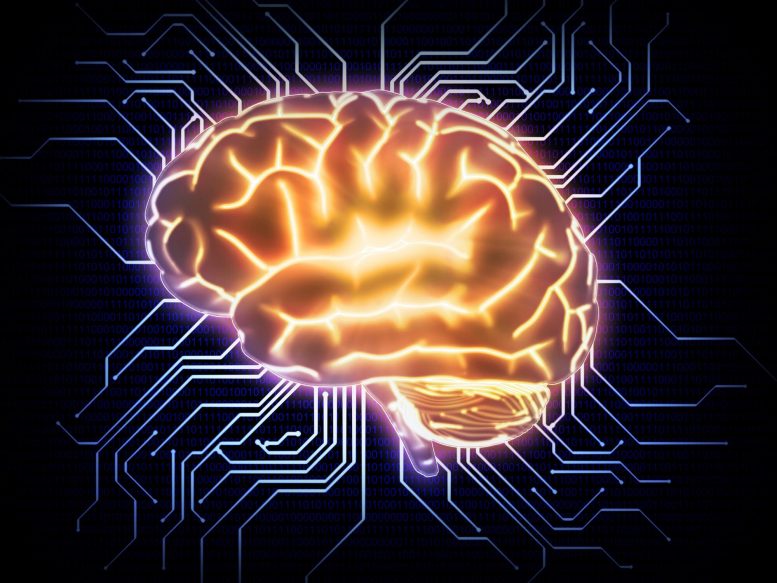
The future of computing includes biology says an international team of scientists.
The time has come to create a new kind of computer, say researchers from John Hopkins University together with Dr. Brett Kagan, chief scientist at Cortical Labs in Melbourne, who recently led development of the DishBrain project, in which human cells in a petri dish learned to play Pong.
In an article published on February 27 in the journal Frontiers in Science, the team outlines how biological computers could surpass today’s electronic computers for certain applications while using a small fraction of the electricity required by today’s computers and server farms.
Organoid intelligence (OI) is an emerging scientific field aiming to create biocomputers where lab-grown brain organoids serve as ‘biological hardware’. In their article, published in Frontiers in Science, Smirnova et al., outline the multidisciplinary strategy needed to pursue this vision: from next-generation organoid and brain-computer interface technologies, to new machine-learning algorithms and big data infrastructures.
They’re starting by making small clusters of 50,000 brain cells grown from stem cells and known as organoids. That’s about a third the size of a fruit fly brain. They’re aiming for 10 million neurons which would be about the number of neurons in a tortoise brain. By comparison, the average human brain has more than 80 billion neurons.
The article highlights how the human brain continues to massively outperform machines for particular tasks. Humans, for example, can learn to distinguish two types of objects (such as a dog and a cat) using just a few samples, while AI algorithms need many thousands. And while AI beat the world champion in Go in 2016, it was trained on data from 160,000 games – the equivalent of playing for five hours each day, for more than 175 years.

Energy Efficiency of Biological Systems
Brains are also more energy efficient. Our brains are thought to be able to store the equivalent of more than a million times the capacity of an average home computer (2.5 petabytes), using the equivalent of just a few watts of power. US data farms, by contrast, use more than 15,000 megawatts a year, much of it generated by dozens of coal-fired power stations.
In the paper, the authors outline their plan for “organoid intelligence,” or OI, with the brain organoids grown in cell-culture. Although brain organoids aren’t “mini brains,” they share key aspects of brain function and structure. Organoids would need to be dramatically expanded from around 50,000 cells currently. “For OI, we would need to increase this number to 10 million,” says senior author Prof Thomas Hartung of Johns Hopkins University in Baltimore.
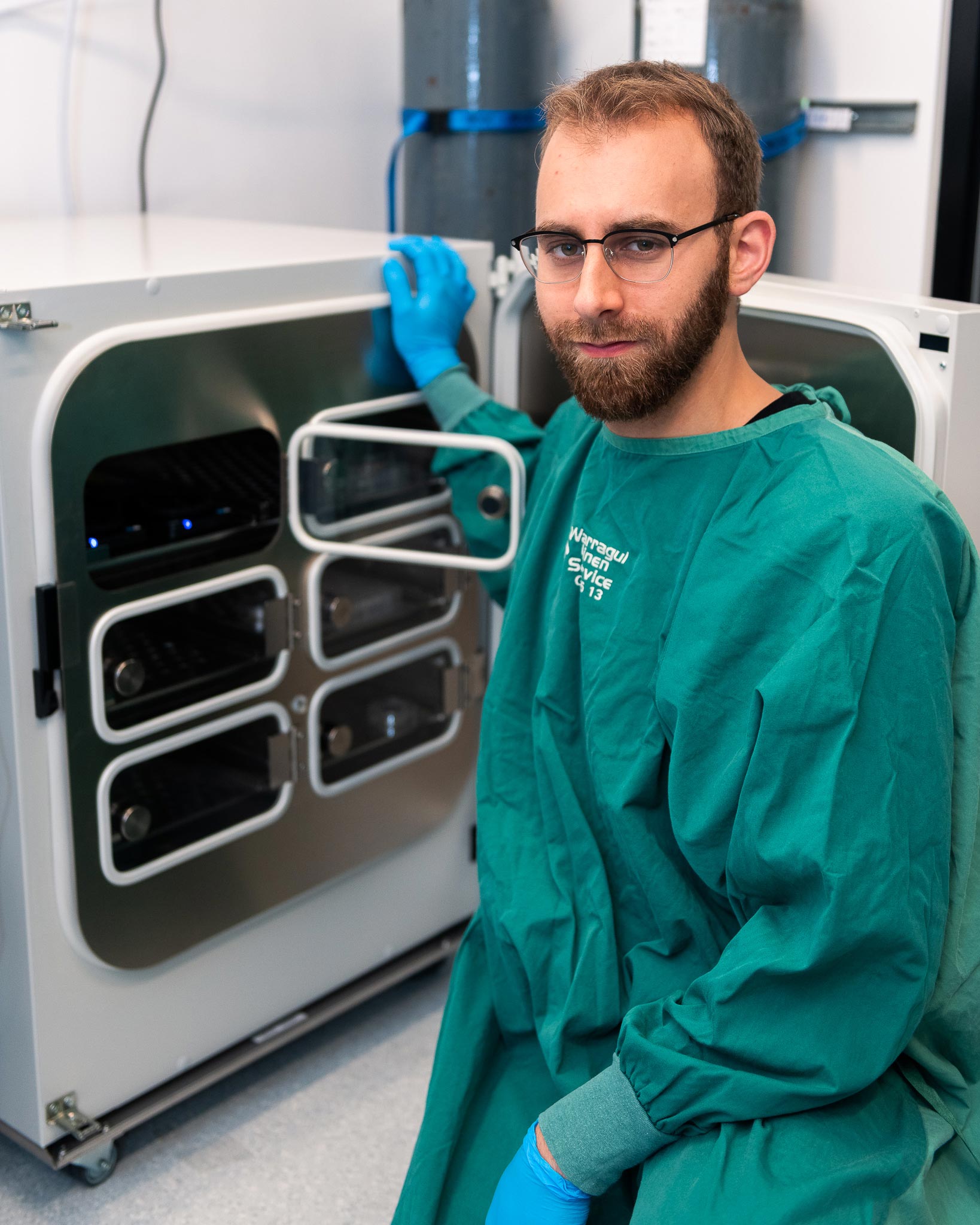
Brett and his colleagues at Cortical Labs have already demonstrated that biocomputers based on human brain cells are possible. A recent paper in Neuron showed that a flat culture of brain cells could learn to play the video game Pong.
“We have shown we can interact with living biological neurons in such a way that compels them to modify their activity, leading to something that resembles intelligence,” says Kagan of the relatively simple Pong-playing DishBrain. “Working with the team of amazing people assembled by Professor Hartung and colleagues for this Organoid Intelligence collaboration, Cortical Labs is now trying to replicate that work with brain organoids.”
The Path Forward for Organoid Intelligence
“I would say that replicating [Cortical Labs’] experiment with organoids already fulfills the basic definition of OI,” says Thomas.
“From here on, it’s just a matter of building the community, the tools, and the technologies to realize OI’s full potential,” he said.
“This new field of biocomputing promises unprecedented advances in computing speed, processing power, data efficiency, and storage capabilities – all with lower energy needs,” Brett says. “The particularly exciting aspect of this collaboration is the open and collaborative spirit in which it was formed. Bringing these different experts together is not only vital to optimize for success but provides a critical touch point for industry collaboration.”
And the technology could also enable scientists to better study personalized brain organoids developed from skin or small blood samples of patients suffering from neural disorders, such as Alzheimer’s disease, and run tests to investigate how genetic factors, medicines, and toxins influence these conditions.
For more on this research, see Revolutionary Biocomputers Powered by Human Brain Cells.
Reference: “Organoid intelligence (OI): the new frontier in biocomputing and intelligence-in-a-dish” by Lena Smirnova, Brian S. Caffo, David H. Gracias, Qi Huang, Itzy E. Morales Pantoja, Bohao Tang, Donald J. Zack, Cynthia A. Berlinicke, J. Lomax Boyd, Timothy D. Harris, Erik C. Johnson, Brett J. Kagan, Jeffrey Kahn, Alysson R. Muotri, Barton L. Paulhamus, Jens C. Schwamborn, Jesse Plotkin, Alexander S. Szalay, Joshua T. Vogelstein, Paul F. Worley and Thomas Hartung, 27 February 2023, Frontiers in Science.
DOI: 10.3389/fsci.2023.1017235
Never miss a breakthrough: Join the SciTechDaily newsletter.
Follow us on Google and Google News.