
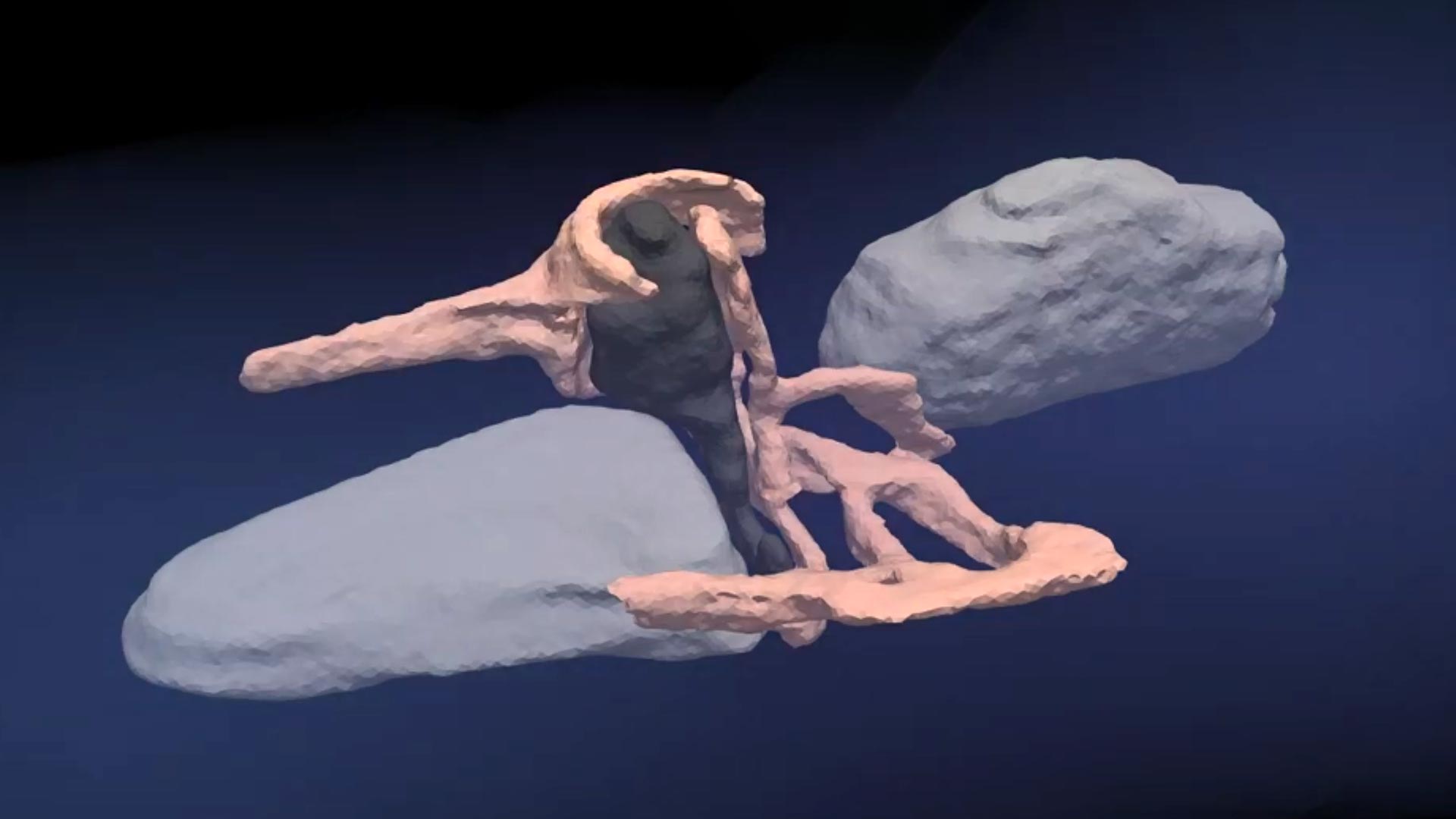
Researchers at UC San Diego have developed SMART, a software package capable of realistically simulating cell-signaling networks.
This tool, tested across various biological systems, enhances the understanding of cellular responses and aids in advancing research in fields like systems biology and pharmacology.
Researchers at the University of California San Diego (UCSD) have developed and tested a new software tool called Spatial Modeling Algorithms for Reactions and Transport (SMART). This innovative software can accurately simulate cell-signaling networks — the intricate systems of molecular interactions that enable cells to respond to signals from their environment. These networks are complex due to the many steps involved and the three-dimensional shapes of cells and their components, making them challenging to model with existing tools. SMART addresses these challenges, promising to accelerate research in fields such as systems biology, pharmacology, and biomedical engineering.
The team successfully tested SMART across various biological systems, including cell responses to adhesive signals, calcium release in neurons and heart muscle cells, and ATP production within a detailed mitochondrial model. With its flexible, precise, and efficient simulation capabilities, SMART opens new possibilities for understanding cellular behavior and developing treatments for human diseases.
This video shows a simulation created with SMART that showcases the calcium release dynamics within heart cells. This process is essential for heart muscles to contract.
The researchers successfully tested the new software in biological systems at several different scales, from cell signaling in response to adhesive cues, to calcium release events in subcellular regions of neurons and cardiac muscle cells, to the production of ATP (the energy currency in cells) within a detailed representation of a single mitochondrion. By providing a flexible, accurate and efficient tool for modeling cell-signaling networks, SMART paves the way for more detailed simulations to advance our understanding of cellular behavior and drive the development of new treatments for human diseases.
The study, published today (December 19) in Nature Computational Science, was led by Emmet Francis, Ph.D., an American Society for Engineering Education postdoctoral fellow in the research group supervised by Professor Padmini Rangamani, Ph.D., both affiliated with the Department of Pharmacology at UC San Diego School of Medicine and the Department of Mechanical and Aerospace Engineering at UC San Diego Jacobs School of Engineering. The initial version of this software was written by Justin Laughlin, Ph.D., a former graduate student in Rangamani’s group.
Reference: “Spatial modeling algorithms for reactions and transport in biological cells” by Emmet A. Francis, Justin G. Laughlin, Jørgen S. Dokken, Henrik N. T. Finsberg, Christopher T. Lee, Marie E. Rognes and Padmini Rangamani, 19 December 2024, Nature Computational Science.
DOI: 10.1038/s43588-024-00745-x
SMART is part of an ongoing collaboration with a research team led by Marie Rognes, Ph.D., at Simula Research Laboratory in Oslo, Norway. This research was funded, in part, by the National Science Foundation, the Wu Tsai Human Performance Alliance, the Air Force Office of Scientific Research, the Hartwell Foundation, the Kavli Institute of Brain and Mind, the European Research Council, the Research Council of Norway, the K. G. Jebsen Center for Brain Fluid Research, and the Fulbright Foundation.
Never miss a breakthrough: Join the SciTechDaily newsletter.
Follow us on Google and Google News.
2 Comments
Mint mobile tv
A phenomenal achievement, closely related to my lifetime of research regarding ATP and mitochondria, initiated by my Ph.D. dissertation solving the chemical, molecular, and physiological mechanism of firefly bioluminescense. via google. My congratulations and here’s to the quantum electron.