
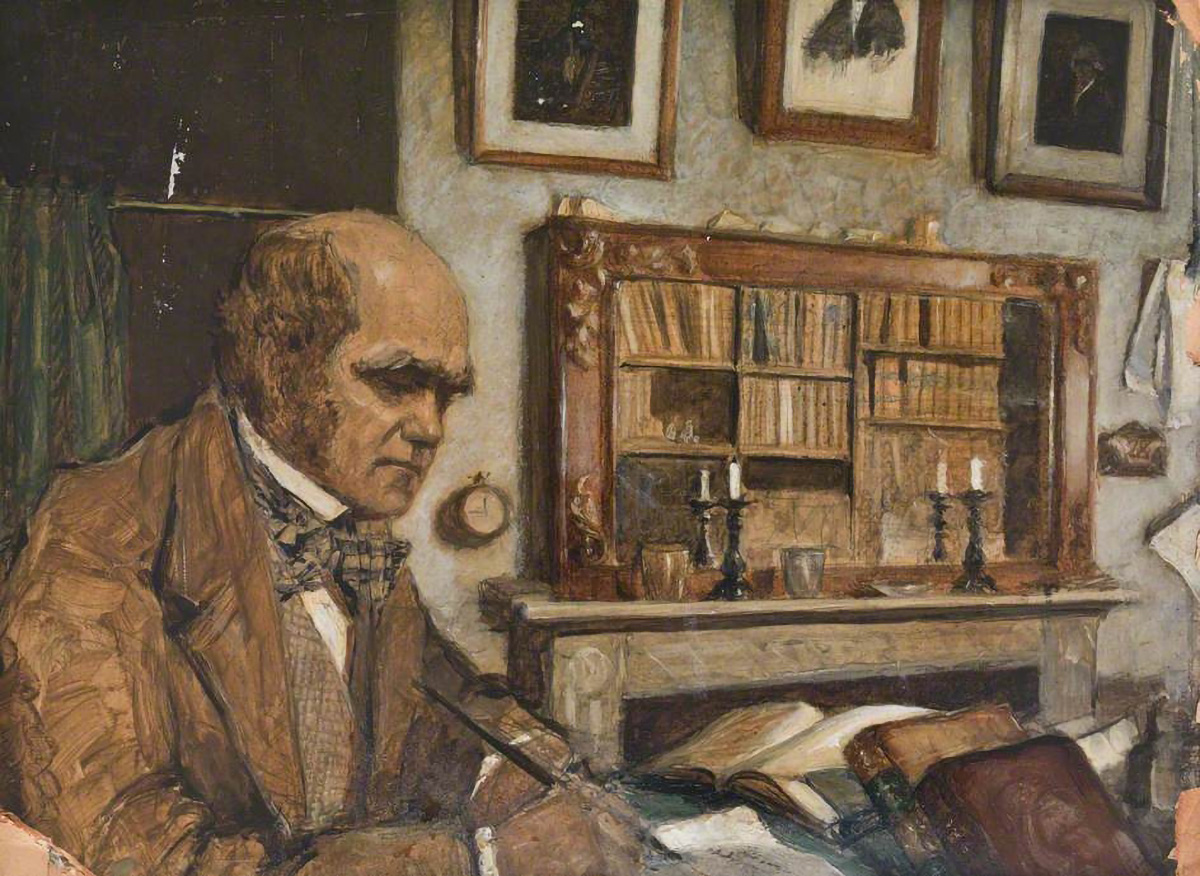
Charles Darwin – arguably the most influential man of science in history, accumulated a vast personal library throughout his working life. Until now, 85 percent of its contents were unknown or unpublished.
This year, coinciding with Darwin’s 215th birthday, The Complete Work of Charles Darwin Online, the scholarly project helmed by Dr. John van Wyhe at the National University of Singapore (NUS) Department of Biological Sciences, has released an online 300-page catalog detailing Darwin’s complete personal library, with 7,400 titles across 13,000 volumes and items including books, pamphlets, and journals. Previous lists only had 15 percent of his whole collection. Darwin’s library has also been virtually re-assembled with 9,300 links to copies of the works freely available online.
“This unprecedentedly detailed view of Darwin’s complete library allows one to appreciate more than ever that he was not an isolated figure working alone but an expert of his time building on the sophisticated science and studies and other knowledge of thousands of people. Indeed, the size and range of works in the library makes manifest the extraordinary extent of Darwin’s research into the work of others,” said Dr van Wyhe.
Discovering Darwin’s complete library
After his death in 1882, much of Darwin’s library was preserved and cataloged, but many other items were dispersed or lost, and details of the vast majority of the contents have never been published until now. For many years, scholars have referred to Darwin’s library as containing 1,480 books, based on those that survive in the two main collections, the University of Cambridge and Down House.
Over 18 years the Darwin Online project has identified thousands of Darwin’s obscure references in his own catalogs and lists of items such as pamphlets and journals that were originally in his library. Each reference required its own detective story to discover the publications that Darwin had hurriedly recorded. In addition, missing details such as author, date or the source of clippings in thousands of records from older catalogs have been identified for the first time.
A major source of information that helped to reveal the original contents is the 426-page handwritten “Catalogue of the Library of Charles Darwin”, compiled from 1875. A painstaking comparison of its abbreviated entries revealed 440 unknown titles that were originally in the library. An inventory of his homemade after his death recorded 2,065 bound books and an unknown number of unbound volumes and pamphlets. In the drawing-room, 133 titles and 289 volumes of mostly unscientific literature were recorded. Amazingly, the legacy duty valuer estimated that the “Scientific Library that is books relating to Science” was worth only 30 pounds and 12 shillings [about £2,000 today] Indeed, all the books were valued at only 66 pounds and 10 shillings [about £4,400 today]. Today any book that belonged to Darwin is worth a great deal to collectors.
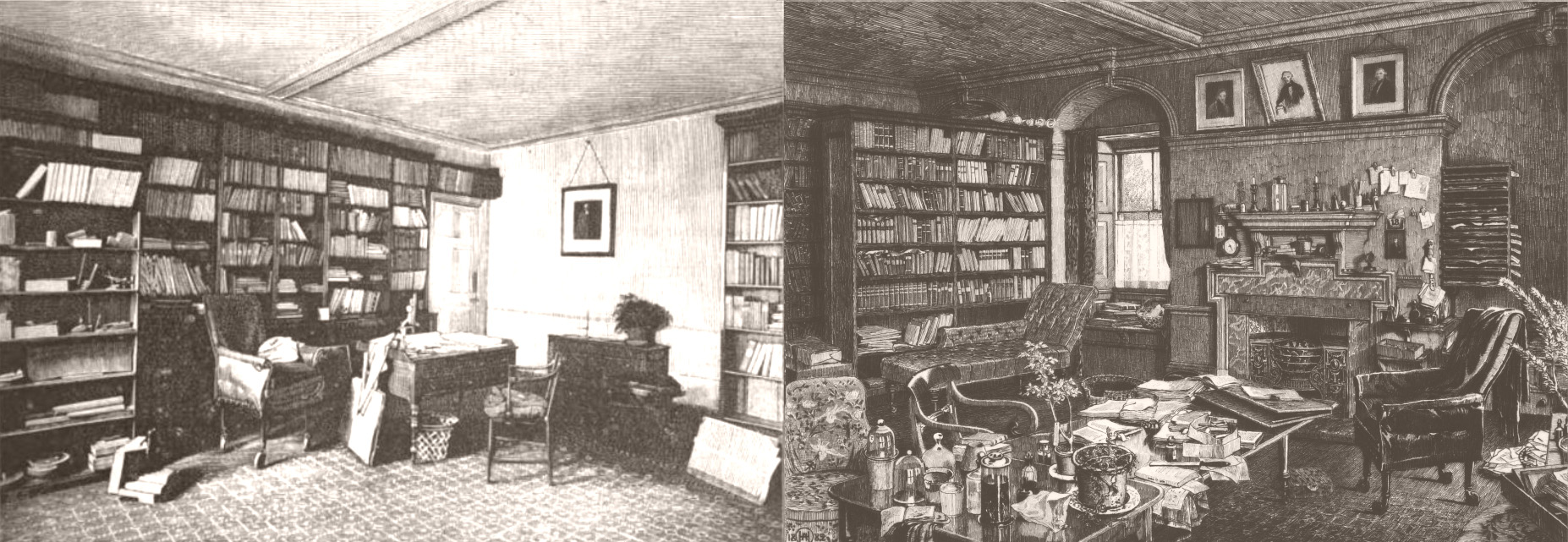
Other sources of information that helped to build Darwin’s complete library were lists of pamphlets, Darwin’s reading notebooks, Emma Darwin’s diaries, the Catalogue of books given to the Cambridge Botany School in 1908 and the 30 volumes of the Darwin Correspondence. Items that still exist but were never included in the lists of Darwin’s library include his unbound materials at Cambridge University Library, books now in other institutional collections, private collections and books sold at auctions over the past 130 years. Combining these and many other sources of evidence allowed Darwin’s library to be reconstructed.
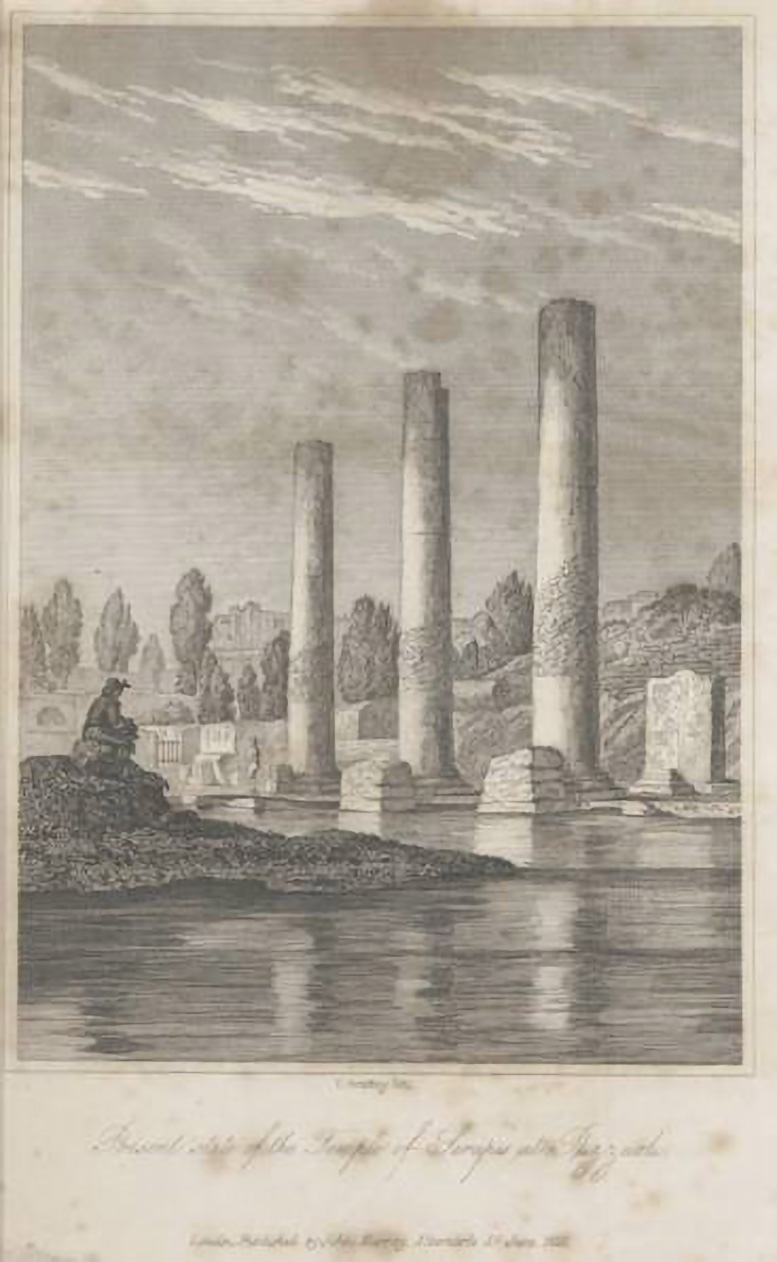
For example, Darwin’s copy of an 1826 article by the ornithologist John James Audubon: ‘Account of the habits of the Turkey Buzzard (Vultura aura), particularly with the view of exploding the opinion generally entertained of its extraordinary power of smelling’ was sold in 1975. Darwin had investigated this point during the voyage of the Beagle and recorded reading a critic of Audubon in the lost Galapagos notebook. In 2019, a copy of Elizabeth Gaskell’s 1880 novel Wives and daughters appeared at auction. A note in it records: “This book was a great favourite of Charles Darwin’s and the last book to be read aloud to him.”
Understanding Darwin’s library
Most of the works in Darwin’s library are, unsurprisingly, on scientific subjects, especially biology and geology. Yet, the library also included works on farming, animal breeding and behavior, geographical distribution, philosophy, psychology, religion, and other topics that interested Darwin, such as art, history, travel, and language. Most of the works are in English, but almost half are in other languages, especially German, French, and Italian as well as Dutch, Danish, Spanish, Swedish, and Latin.
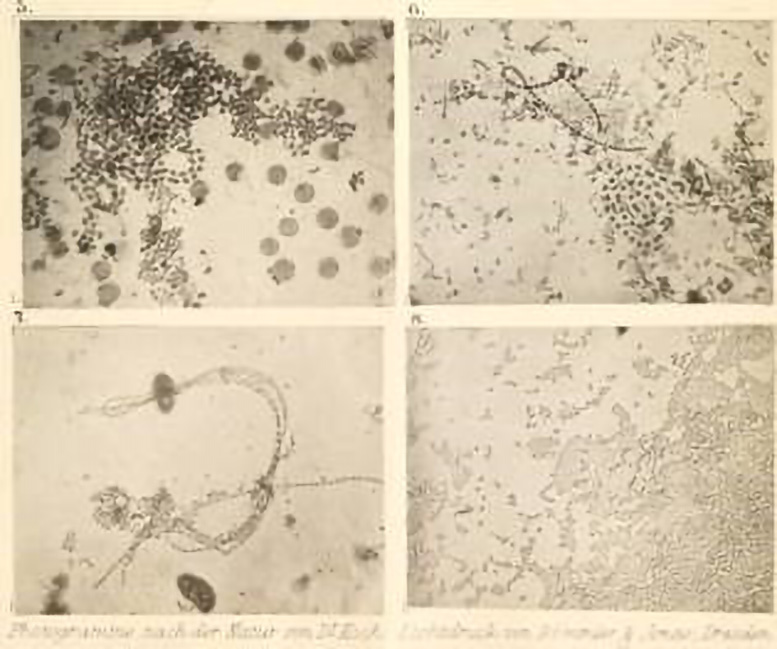
Some of the hundreds of books not previously known to be in Darwin’s library include Sun Pictures, a 1872 coffee table book showcasing photographs of artworks. Another book that the we did not know that the Darwins purchased was a copy of the popular science book on gorillas that was all the rage just after Origin of species was published: Paul Du Chaillu’s Explorations and adventures in equatorial Africa. Of the thousands of shorter items were also found in Darwin’s library, such as an issue of a German scientific periodical sent to him in 1877 that contained the first published photographs of bacteria and another article amusingly entitled The hateful or Colorado grasshopper. In his complete library, Darwin’s eclectic sources are there for all to see.
Click to view The Complete Library of Charles Darwin
Click to view Introduction to the Library by John van Wyhe
Never miss a breakthrough: Join the SciTechDaily newsletter.
Follow us on Google and Google News.
3 Comments
“Charles Darwin – arguably the most influential man of science in history, …”
More influential than Einstein? Well, you did say “arguably.”
Between 1890 and 1913, something “changed” in America, and relativity took over forensics and science, and palliative care took over health vs homeopathic (preventive) care.
I have my suspicions…
Every. Single. Time.
They found he was a big fan of Tom Swift.