
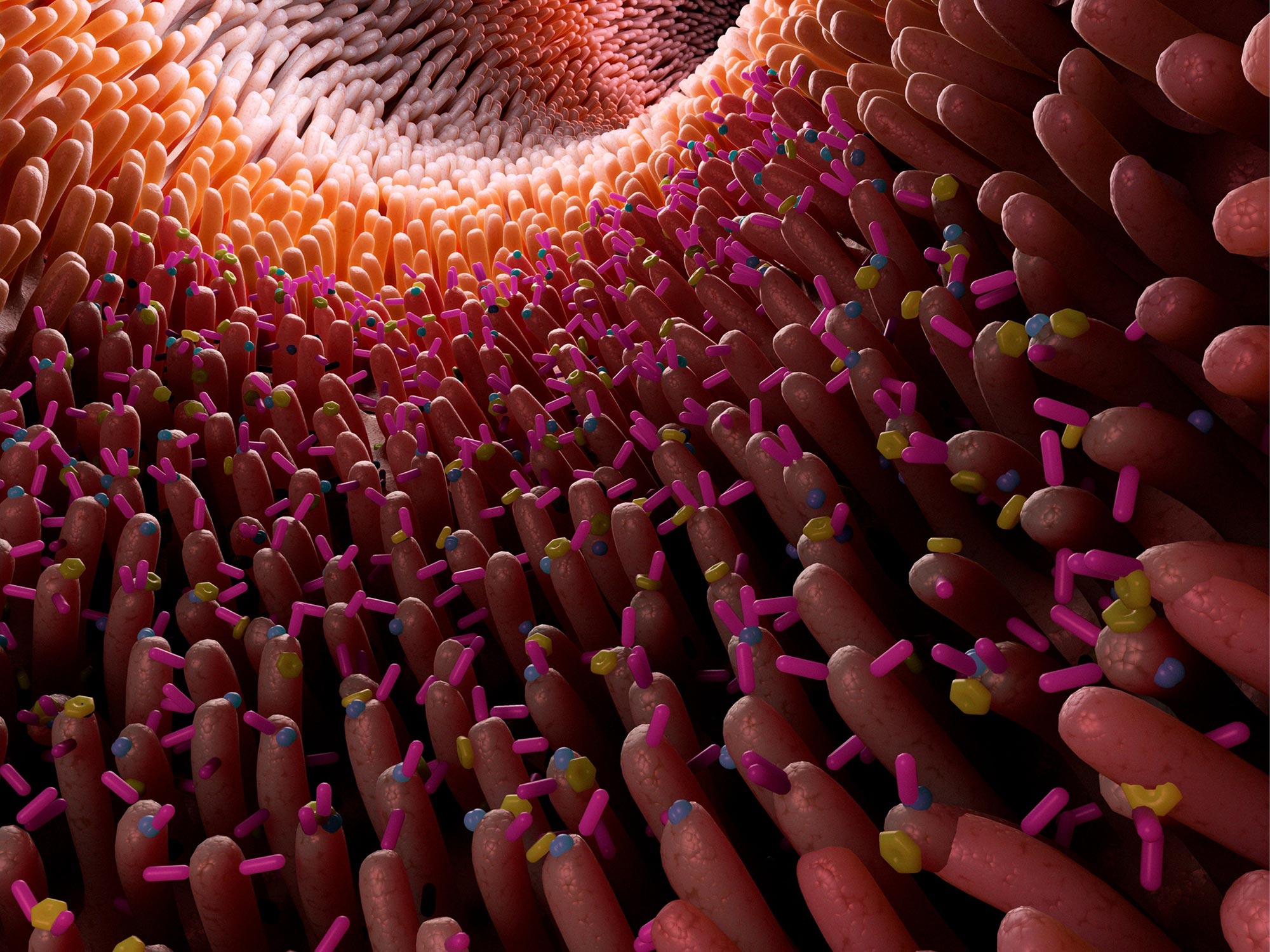
Research identifies multiple types of bacteria that metabolize cholesterol in individuals with reduced cholesterol levels.
Alterations in the gut microbiome are associated with a range of diseases, such as type 2 diabetes, obesity, and inflammatory bowel disease.
Now, a team of researchers at the Broad Institute of MIT and Harvard along with Massachusetts General Hospital has found that microbes in the gut may affect cardiovascular disease as well. In a study published in Cell, the team has identified specific species of bacteria that consume cholesterol in the gut and may help lower cholesterol and heart disease risk in people.
Members of Ramnik Xavier’s lab, Broad’s Metabolomics Platform, and collaborators analyzed metabolites and microbial genomes from more than 1,400 participants in the Framingham Heart Study, a decades-long project focused on risk factors for cardiovascular disease.
The team discovered that bacteria called Oscillibacter take up and metabolize cholesterol from their surroundings, and that people carrying higher levels of the microbe in their gut had lower levels of cholesterol. They also identified the mechanism the bacteria likely use to break down cholesterol. The results suggest that interventions that manipulate the microbiome in specific ways could one day help decrease cholesterol in people. The findings also lay the groundwork for more targeted investigations of how changes to the microbiome affect health and disease.
“Our research integrates findings from human subjects with experimental validation to ensure we achieve actionable mechanistic insight that will serve as starting points to improve cardiovascular health,” said Xavier, who is a core institute member, director of the Immunology Program, and co-director of the Infectious Disease and Microbiome Program at the Broad. He is also a professor at Harvard Medical School and Massachusetts General Hospital.
Postdoctoral researcher Chenhao Li and research scientist Martin Stražar, both in Xavier’s lab, were co-first authors on the study.
Cholesterol Cues
In the past decade, other researchers have uncovered links between the composition of the gut microbiome and elements of cardiovascular disease, such as a person’s triglycerides and blood sugar levels after a meal. But scientists haven’t been able to target those connections with therapies in part because they lack a complete understanding of metabolic pathways in the gut.
In the new study, the Broad team gained a more complete and detailed picture of the impact of gut microbes on metabolism. They combined shotgun metagenomic sequencing, which profiles all of the microbial DNA in a sample, with metabolomics, which measures the levels of hundreds of known and thousands of unknown metabolites. They used these tools to study stool samples from the Framingham Heart Study.
“The project outcomes underline the importance of high-quality, curated patient data,” Stražar said. “That allowed us to note effects that are really subtle and hard to measure and directly follow up on them.”
The approach uncovered more than 16,000 associations between microbes and metabolic traits, including one that was particularly strong: People with several species of bacteria from the Oscillibacter genus had lower cholesterol levels than those who lacked the bacteria. The researchers found that species in the Oscillibacter genus were surprisingly abundant in the gut, representing on average 1 in every 100 bacteria.
The researchers then wanted to figure out the biochemical pathway the microbes use to break down cholesterol. To do this, they first needed to grow the organism in the lab. Fortunately, the lab has spent years collecting bacteria from stool samples to create a unique library that also included Oscillibacter.
After successfully growing the bacteria, the team used mass spectrometry to identify the most likely byproducts of cholesterol metabolism in the bacteria. This allowed them to determine the pathways the bacteria uses to lower cholesterol levels. They found that the bacteria converted cholesterol into intermediate products that can then be broken down by other bacteria and excreted from the body. Next, the team used machine-learning models to identify the candidate enzymes responsible for this biochemical conversion, and then detected those enzymes and cholesterol breakdown products specifically in certain Oscillibacter in the lab.
The team found another gut bacterial species, Eubacterium coprostanoligenes, that also contributes to decreased cholesterol levels. This species carries a gene that the scientists had previously shown is involved in cholesterol metabolism. In the new work, the team discovered that Eubacterium might have a synergistic effect with Oscillibacter on cholesterol levels, which suggests that new experiments that study combinations of bacterial species could help shed light on how different microbial communities interact to affect human health.
Microbial Messages
The vast majority of genes in the human gut microbiome remains uncharacterized, but the team is confident that their success in pinpointing cholesterol-metabolizing enzymes paves the way for the discovery of other similar metabolic pathways impacted by gut microbes, which could be targeted therapeutically.
“There are many clinical studies trying to do fecal microbiome transfer studies without much understanding of how the microbes interact with each other and the gut,” Li said. “Hopefully stepping back by focusing on one particular bug or gene first, we’ll get a systematic understanding of gut ecology and come up with better therapeutic strategies like targeting one or a few bugs.”
“Because of the large number of genes of unknown function in the gut microbiome, there are gaps in our ability to predict metabolic functions,” Li added. “Our work highlights the possibility that additional sterol metabolism pathways may be modified by gut microbes. There are potentially a lot of new discoveries to be made that will bring us closer to a mechanistic understanding of how microbes interact with the host.”
Reference: “Gut microbiome and metabolome profiling in Framingham heart study reveals cholesterol-metabolizing bacteria” by Chenhao Li, Martin Stražar, Ahmed M.T. Mohamed, Julian A. Pacheco, Rebecca L. Walker, Tina Lebar, Shijie Zhao, Julia Lockart, Andrea Dame, Kumar Thurimella, Sarah Jeanfavre, Eric M. Brown, Qi Yan Ang, Brittany Berdy, Dallis Sergio, Rachele Invernizzi, Antonio Tinoco, Gleb Pishchany, Ramachandran S. Vasan, Emily Balskus and Ramnik J. Xavier, 2 April 2024, Cell.
DOI: 10.1016/j.cell.2024.03.014
This work was supported by the National Institutes of Health.
Never miss a breakthrough: Join the SciTechDaily newsletter.
Follow us on Google and Google News.
2 Comments
please help me to get the full paper
Interesting info. How can we get the Oscillibacter.is it available in capsule form. If available, please send the details.