
Close Menu
    Facebook X (Twitter) Instagram
    SciTechDaily
    • Biology
    • Chemistry
    • Earth
    • Health
    • Physics
    • Science
    • Space
    • Technology
    Facebook X (Twitter) Pinterest YouTube RSS
    SciTechDaily
    Home»Space»Russian Mars Moon Probe Phobos-Grunt Crashed In Pacific Ocean
    Space

    Russian Mars Moon Probe Phobos-Grunt Crashed In Pacific Ocean

    By SciTechDailyJanuary 16, 2012No Comments2 Mins Read
    Facebook Twitter Pinterest Telegram LinkedIn WhatsApp Email Reddit
    Share
    Facebook Twitter LinkedIn Pinterest Telegram Email Reddit
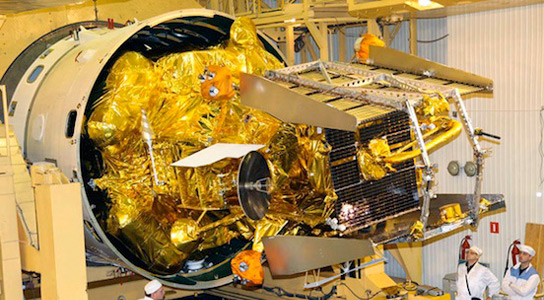
    Russian-phobos-grunt-space-mars-probe
    The Russian Phobos-Grunt spacecraft crashed into the Pacific Ocean.

    The Phobos-Grunt spacecraft, which was supposed to have traveled to Phobos, a moon of Mars, and back, crashed on Earth. The ambitious project crashed into the Pacific Ocean, on January 15th, between 4:59 p.m. and 5:47 p.m. The exact time is still unclear, as the most advanced tracking equipment belongs to the US military, and is not available to astronomers.

    The South Pacific isn’t a good place to crash, as it makes tracking objects hard since it’s basically large and empty. The probe broke up and only 441 lbs (200 kg) made it through the Earth’s atmosphere. The fragments are scattered over an area of thousands of square kilometers of ocean.
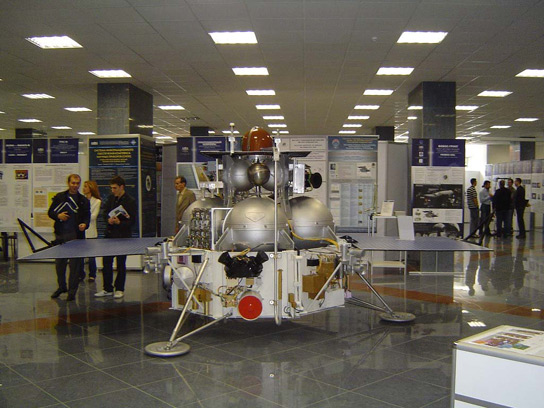
    Full-scale-phobos-grunt-model

    The probe was launched on November 8th of last year and was to make its way to Mars’s moon Phobos to pick up a soil sample and return with it to Earth. Along the way, it was supposed to deliver a small Chinese satellite into orbit around Mars. Something went wrong. The boosters that should have sent the rocket into its Earth-Mars transit course failed to fire, making it crash back to Earth. Astronomers haven’t yet found out why this happened, and they might never find out.

    It could be the onboard computer that didn’t give the command correctly, which suggests a software error, or that the engine didn’t fire at all. Jonathan McDowell, an astronomer at the Harvard-Smithsonian Center for Astrophysics in Cambridge, Massachusetts, states that the entire project aimed too high and that it was improperly managed.

    In 1996, another Russian mission to Mars also failed after its launch. While the Russian space agency hasn’t yet confirmed its next mission to Mars, Russian scientists are in discussion with the ESA and NASA in an effort to join the ExoMars Project, which hopes to send missions to the red planet in 2016 and 2018.

    Never miss a breakthrough: Join the SciTechDaily newsletter.
    Follow us on Google and Google News.

    Mars Moon Probe Russian
    Share. Facebook Twitter Pinterest LinkedIn Email Reddit

    Related Articles

    October 2020 Skywatching Tips From NASA: Harvest Moon, Blue Moon, Mars, and Go Intergalactic With Andromeda

    September 2020 Skywatching Tips From NASA – Mars, Venus and a Star With a Planet…That Wasn’t

    Lava Tubes on Mars and the Moon May Be Suitable for Planetary Bases – Up to 1,000 Times Wider Than Those on Earth

    NASA Wants to Go Nuclear on the Moon and Mars for Astronaut Settlement

    Self-Replicating, Self-Repairing Homes on the Moon and Mars Made of Fungi

    Win for Space Colonization: Soil on Moon and Mars Likely to Support Crops

    NASA’s Exploration Campaign: Back to the Moon and on to Mars

    Phobos May Provide Evidence of Life on Mars

    ESA’s Mars Express MARSIS Radar Explores Martian Oceans

    Leave A Reply Cancel Reply

    • Facebook
    • Twitter
    • Pinterest
    • YouTube

    Don't Miss a Discovery

    Subscribe for the Latest in Science & Tech!

    Trending News

    Even Occasional Binge Drinking May Triple Liver Damage Risk

    Liftoff! NASA’s Artemis II Launch Sends Astronauts Around the Moon for First Time in 50 Years

    Scientists Discover New Way To Eliminate “Zombie Cells” Driving Aging

    This New Quantum Theory Could Change Everything We Know About the Big Bang

    This One Vitamin May Help Protect Your Brain From Dementia Years Later

    Stopping Weight-Loss Drugs Like Ozempic Can Quickly Erase Heart Benefits

    A 500-Million-Year-Old Surprise Is Forcing Scientists to Rethink Spider Evolution

    Coffee and Blood Pressure: What You Need To Know Before Your Next Cup

    Follow SciTechDaily
    • Facebook
    • Twitter
    • YouTube
    • Pinterest
    • Newsletter
    • RSS
    SciTech News
    • Biology News
    • Chemistry News
    • Earth News
    • Health News
    • Physics News
    • Science News
    • Space News
    • Technology News
    Recent Posts
    • Tiny 436-Million-Year-Old Fish Fossil Rewrites the Origins of Vertebrates
    • 1,800 Miles Down: Scientists Uncover Mysterious Movements at the Edge of Earth’s Core
    • Scientists Uncover Earth’s Hidden “Gold Kitchen” Beneath the Ocean Floor
    • You Don’t Need To Be Rich: New Study Reveals a Simple Life Is the Real Secret to Happiness
    • “Crazy Dice” Help Scientists Prove Only One 150-Year-Old Theory About Randomness Works
    Copyright © 1998 - 2026 SciTechDaily. All Rights Reserved.
    • Science News
    • About
    • Contact
    • Editorial Board
    • Privacy Policy
    • Terms of Use

    Type above and press Enter to search. Press Esc to cancel.