

Scientists found that species cluster in core bioregions and spread outward, likely due to environmental filtering, a pattern that could inform conservation and climate planning.
A new study in Nature Ecology & Evolution has identified a simple rule that appears to shape how life is organized across the planet. Researchers believe this rule helps explain global patterns of species distribution and could improve our understanding of how ecosystems respond to environmental changes.
At first, Earth appears to be made up of vastly different environments, each with its own species and conditions. However, new research led by Umeå University reveals an underlying global pattern. This discovery may help scientists better understand how biodiversity has developed over time and how it might respond to future global changes.

Barriers shape unique bioregions
The Earth is divided into large biogeographical regions, known as bioregions, which are separated by natural barriers such as oceans, mountain ranges, and extreme climates. These barriers restrict the movement of species, effectively turning each region into a separate experiment in evolution where unique groups of species have developed under different environmental conditions, time periods, and historical influences.
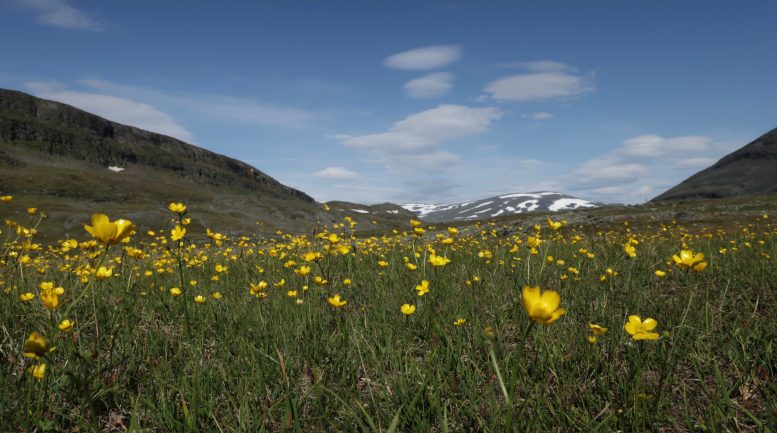
In this study, researchers from institutions in Sweden, Spain, and the UK worked together to examine a wide range of species across global bioregions, including amphibians, birds, dragonflies, mammals, marine rays, reptiles, and trees.
Despite the major differences in how these organisms live—some fly, others crawl, swim, or stay rooted—and the diverse environmental and historical contexts of each bioregion, the researchers expected species distribution patterns to differ significantly. To their surprise, they observed the same consistent pattern across all bioregions.
Biodiversity radiates from ecological cores
“In every bioregion, there is always a core area where most species live. From that core, species expand into surrounding areas, but only a subset manages to persist. It seems these cores provide optimal conditions for species survival and diversification, acting as a source from which biodiversity radiates outward,” explains Rubén Bernardo-Madrid, lead author and researcher at Umeå University.

These findings support the disproportionate ecological role that some small areas play in sustaining the biodiversity of entire bioregions, and their conservation value.
The research also identifies the plausible mechanisms driving this pattern: the environmental filtering – the principle that only species able to tolerate local conditions, like heat or drought, can survive and colonize new areas. While this has long been a central theory in ecology, global empirical evidence has been scarce. This study provides broad confirmation across multiple branches of life and at a planetary scale.
“The predictability of the pattern and its association with environmental filters can help to better understand how biodiversity may respond to global change,” says Joaquín Calatayud, co-author from Rey Juan Carlos University.
Reference: “A general rule on the organization of biodiversity in Earth’s biogeographical regions” by R. Bernardo-Madrid, M. González-Suárez, M. Rosvall, M. Rueda, E. Revilla, M. Carrete, J. L. Tella, J. Astigarraga and J. Calatayud, 4 June 2025, Nature Ecology & Evolution.
DOI: 10.1038/s41559-025-02724-5
Never miss a breakthrough: Join the SciTechDaily newsletter.
Follow us on Google and Google News.
3 Comments
Keep your eyes on the ground floor for a very good morning of the day, and I am letting you know that it’s a lot of soul searching for me to eat it and not your mom and my 6th sense of life
If you stopped the urge (and utter egotism) of trying to plan everything and control everything, you’d find the 4 Billion year old trial-by-error accomplishment of nature would take care of everything. The key here is, human invariably screw up, not seeing the obvious til it bites and nature invariably fixes everything.
Unfortunately, there are no ‘buts’
Hello friends namaste god bless all family members danke fur god.bitte climate change the nature selbe.wir members nur sturion the nature.das alls gods auf gabe .wir konnte ganze welt sauberkeit haltenund mear flanze umzetzen.schone gruss Rajveer Singh sun of karnail singh batth village kotala bet po chhourian district Ludhiana Punjab India thanks for alls.