
Close Menu
    Facebook X (Twitter) Instagram
    SciTechDaily
    • Biology
    • Chemistry
    • Earth
    • Health
    • Physics
    • Science
    • Space
    • Technology
    Facebook X (Twitter) Pinterest YouTube RSS
    SciTechDaily
    Home»Biology»New Research Reveals Scale is a Key Ingredient When Tracking Biodiversity
    Biology

    New Research Reveals Scale is a Key Ingredient When Tracking Biodiversity

    By Jim Shelton, Yale UniversityJuly 3, 2018No Comments3 Mins Read
    Facebook Twitter Pinterest Telegram LinkedIn WhatsApp Email Reddit
    Share
    Facebook Twitter LinkedIn Pinterest Telegram Email Reddit
    Scale Is A Key Ingredient When Tracking Biodiversity
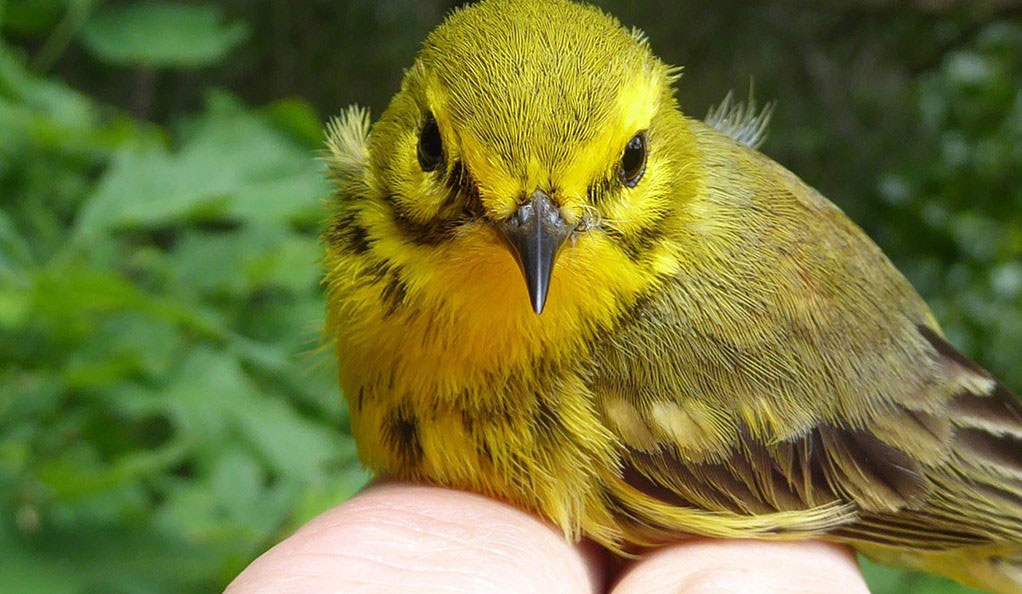
    Insectivorous birds such as this Prairie warbler (Setophaga discolor) showed the most drastic declines across all geographic scales, from local to continental. (Photo credit: Julie Hart)

    To fully understand biodiversity and how it is changing, you need to look near, far, and in-between, according to a new study.

    Researchers at Yale University studied 50 years of data about nesting birds in North America and tracked biodiversity changes on a local, regional, and continental scale. They found significant differences in how much change had occurred, based upon how wide a geographic net they cast.

    The findings have implications for how to assess biodiversity in a rapidly changing world, as well as how biodiversity information should be presented. The study appears on July 2 in the journal Nature Communications.

    “Biodiversity is changing all around us and worldwide. Local species disappear and sometimes other species invade,” said co-author Walter Jetz, professor of ecology and evolutionary biology and co-director of the Max Planck-Yale Center for Biodiversity Movement and Global Change. “Studying birds in the U.S. and worldwide, we show that patterns and implications of this ongoing change vary strongly with the scale.”

    This means a minor loss or gain of species richness or functional diversity at the local or county level can look like a major gain at the state or national level, and yet be a net loss when viewed at a global scale.

    “Any reporting and interpretation of biodiversity change thus needs scale as a key qualifier,” said Marta Jarzyna, the study’s first author and a postdoctoral researcher at Yale. “Better yet, researchers and practitioners of biodiversity science should adopt a multi-scale framework and consider all geographic scales simultaneously.”

    Grants from the Yale Climate and Energy Institute, the National Science Foundation, and NASA supported the research. The researchers also acknowledged thousands of volunteers who participated in the North American Breeding Bird Survey from 1969 to 2013.

    A Yale committee on science priorities recently named environmental and evolutionary sciences as a top priority for science investment in the next decade. In addition, Yale has partnered with the Max Planck Society to launch the Max Planck-Yale Center for Biodiversity Movement and Global Change, which will channel new resources, technology, and expertise into advancing scientific knowledge of species movement through time.

    Reference: “Taxonomic and functional diversity change is scale dependent” by Marta A. Jarzyna and Walter Jetz, 2 July 2018, Nature Communications.
    DOI: 10.1038/s41467-018-04889-z

    Never miss a breakthrough: Join the SciTechDaily newsletter.
    Follow us on Google and Google News.

    Biodiversity Ecology Evolutionary Biology Yale University
    Share. Facebook Twitter Pinterest LinkedIn Email Reddit

    Related Articles

    Study Projects How Climate Change Will Affect the Functions Birds in Ecosystems Worldwide

    Barb Geometry of Asymmetrical Feathers Sheds Light on Evolution of Flight

    Yale Study Details Recent Shifts in Occurrence, Cause, and Magnitude of Mass Animal Die-Offs

    Scientists Detail the Evolutionary Success of Spiny-Rayed Fishes

    Antibiotics Might Contribute to the Health Problems of the Bee Colonies

    Genetic Analysis Reveals New Family Tree for Ray-Finned Fish

    Extinctions Due to Habitat Loss are Proportional to the Area Destroyed

    Evolution Shapes Ecology of Dammed Connecticut Lakes

    “Map of Life” to Illustrate All Living Things Geographically

    Leave A Reply Cancel Reply

    • Facebook
    • Twitter
    • Pinterest
    • YouTube

    Don't Miss a Discovery

    Subscribe for the Latest in Science & Tech!

    Trending News

    Scientists Call for a Complete Rethink of Alzheimer’s Treatment

    Scientists Identify Molecular Switch That Lets Exercise Reverse Muscle Aging

    Why Your Most Vivid Dreams Might Be the Key to Deep, Restful Sleep

    A Bright Star Hid a Massive Secret for 50 Years: Mystery of Gamma Cassiopeiae Finally Solved

    Scientists Identify Protein That Slows Key Effects of Aging

    Revolutionary Submarine Mysteriously Disappears Without a Trace – Scientists Are Now Preparing for a Bold Return

    Why Drinking More Water Isn’t Enough To Stop Kidney Stones

    New Study Reveals Surprising Effect of Drinking Coffee at Night

    Follow SciTechDaily
    • Facebook
    • Twitter
    • YouTube
    • Pinterest
    • Newsletter
    • RSS
    SciTech News
    • Biology News
    • Chemistry News
    • Earth News
    • Health News
    • Physics News
    • Science News
    • Space News
    • Technology News
    Recent Posts
    • Scientists Uncover Unexpected Behavior Deep Inside Earth’s Mantle
    • 3.5-Billion-Year-Old Rocks Rewrite the Story of Plate Tectonics
    • “These Wrinkles Shouldn’t Exist” – A Geologist’s Hike Uncovers a 180-Million-Year-Old Mystery
    • Why Aging Lungs Turn Mild Infections Into Life-Threatening Illness
    • Lost Bronze Age Mines Unearthed in Spain Transform Bronze Age History
    Copyright © 1998 - 2026 SciTechDaily. All Rights Reserved.
    • Science News
    • About
    • Contact
    • Editorial Board
    • Privacy Policy
    • Terms of Use

    Type above and press Enter to search. Press Esc to cancel.