
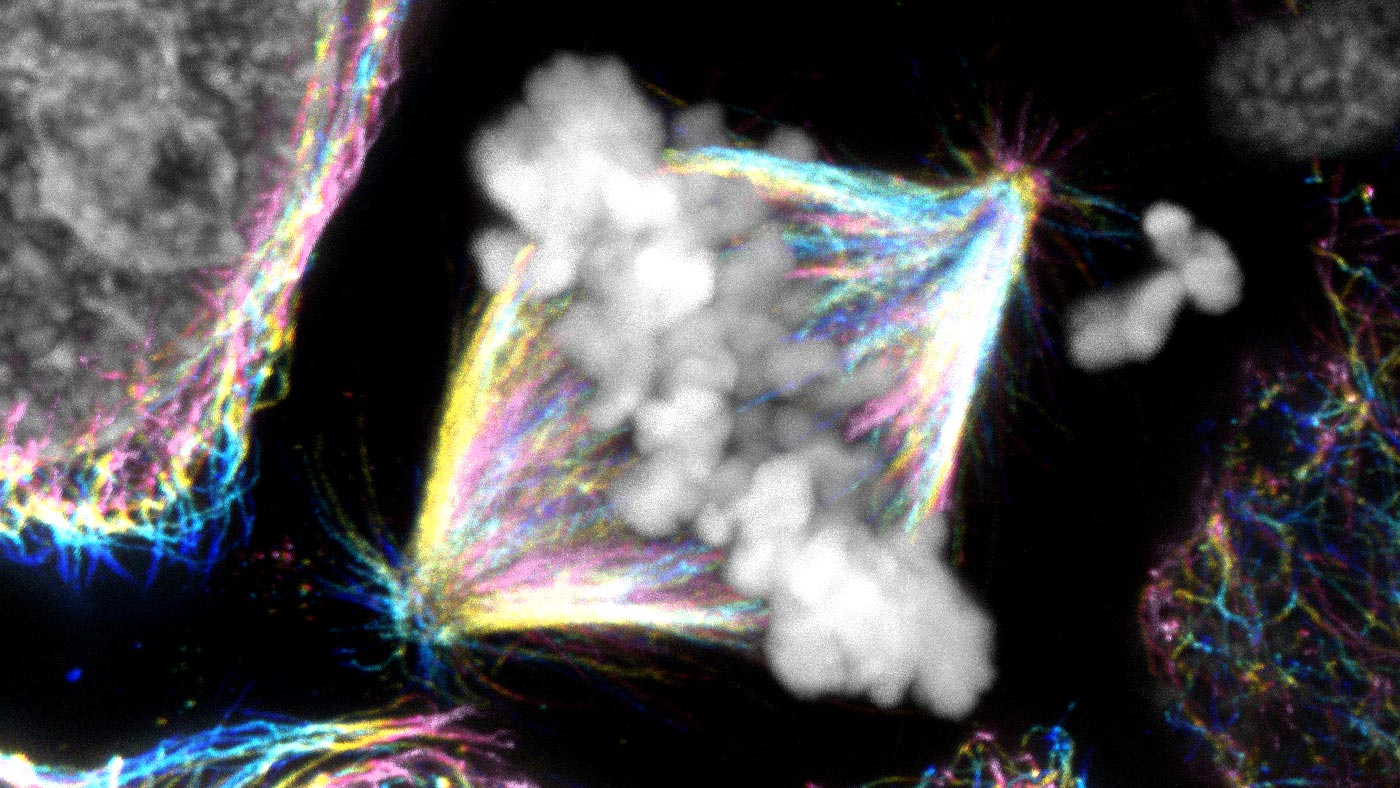
Scientists have uncovered an unexpected function for a crucial protein involved in cell division. Reported in two consecutive publications, the finding challenges long-accepted models and standard descriptions found in biology textbooks.
Researchers at the Ruđer Bošković Institute (RBI) in Zagreb, Croatia, have uncovered that the protein CENP-E, once thought to function as a motor pulling chromosomes into position during cell division, actually serves a different purpose. Rather than dragging chromosomes, CENP-E stabilizes their initial connections to the cell’s internal “tracks,” ensuring they are properly aligned before being separated.
In a complementary study, scientists also discovered that centrosomes—small structures within cells once believed to work independently—actually guide this essential protein to help maintain accurate cell division. These findings overturn more than twenty years of established textbook knowledge and have major implications for the life sciences, as mistakes in this process are linked to cancer and genetic disorders.
Every second, trillions of times over, the human body performs an extraordinary feat. A single cell prepares to divide, containing three billion DNA letters, and somehow guarantees that both daughter cells inherit precise copies of this genetic code.
When that precision falters, the outcome can be devastating. Even one misplaced chromosome can disrupt development, lead to infertility, or trigger cancer. Cell division is among the most exacting processes in biology.
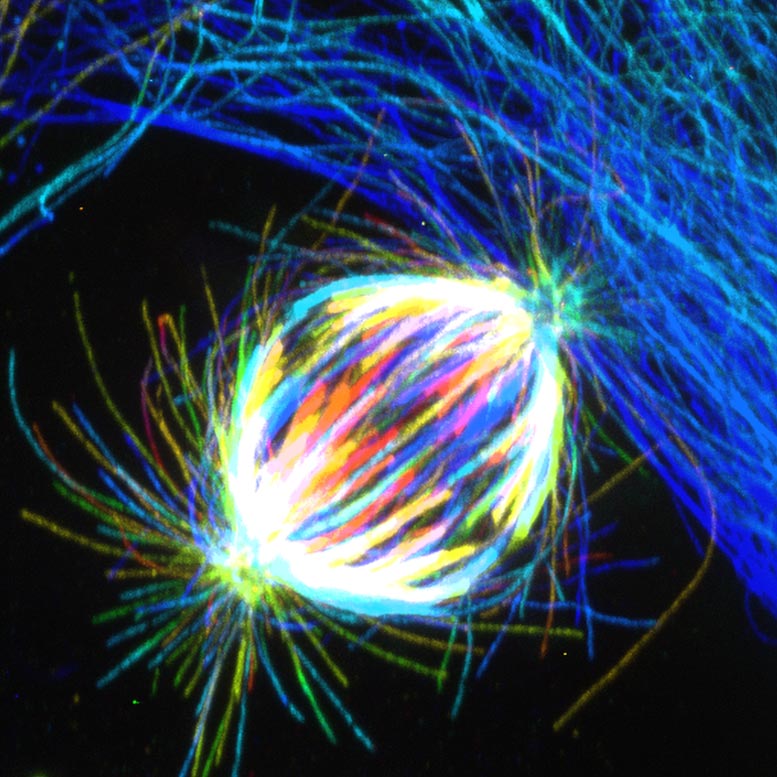
For decades, researchers believed they understood at least one of the key components involved: CENP-E, described as a molecular motor responsible for pulling stray chromosomes to the center of the cell to ensure proper division. The explanation was tidy, convincing, and ultimately incorrect.
Two new studies from RBI, published in Nature Communications and led by Dr. Kruno Vukušić and Professor Iva Tolić, have redefined that understanding and proposed new mechanisms for how CENP-E functions. Dr. Vukušić, a leading young researcher in cell biology, completed his postdoctoral work within an elite ERC Synergy team and is now preparing to form his own research group at RBI. Professor Tolić, an internationally recognized cell biologist who heads the Laboratory for Cell Biophysics at RBI, has received two ERC grants and is a member of EMBO and Academia Europaea. Together, their combined expertise revealed that CENP-E is not the system’s motor but its regulator—the crucial switch that activates at just the right time to ensure flawless coordination of chromosome movement.
“CENP-E is not the engine pulling chromosomes to the center,” Vukušić says. “It is the factor that ensures they can attach properly in the first place. Without that initial stabilization, the system stalls.”
A City of Infinite Traffic
Imagine rush hour in the largest city, you can picture millions of cars, millions of intersections. One mistake can gridlock the entire system.
Now shrink that image to the micrometer scale of a cell. Chromosomes are trains, each one carrying DNA cargo. Microtubules, the thin fibers of the cell’s skeleton, are the rails. For division to succeed, every train must lock onto the tracks coming from the right direction and line up at the central station.
The old model cast CENP-E as the locomotive, dragging stragglers into place. The Zagreb team found something subtler: CENP-E is not the train but the missing coupling element, the mechanism ensuring the hitch is strong enough to hold. Without it, trains stall at the edge of the station, unable to move forward.
When the Lights Refuse to Change
Why do chromosomes hesitate at the edges? The answer lies in Aurora kinases, a family of proteins that act like overzealous traffic lights. They flood the cell with “red” signals, destabilizing early attachments and preventing chromosomes from locking on too soon in the wrong place.
This safeguard prevents errors near the poles of the cell but also risks producing too much red and not enough green. Here, CENP-E steps in. By modulating the signals, it eases the light to green just enough for chromosomes to catch hold. Once that first stable connection forms, the rest follows naturally: chromosomes align in the middle, guided by spindle geometry and microtubule dynamics.
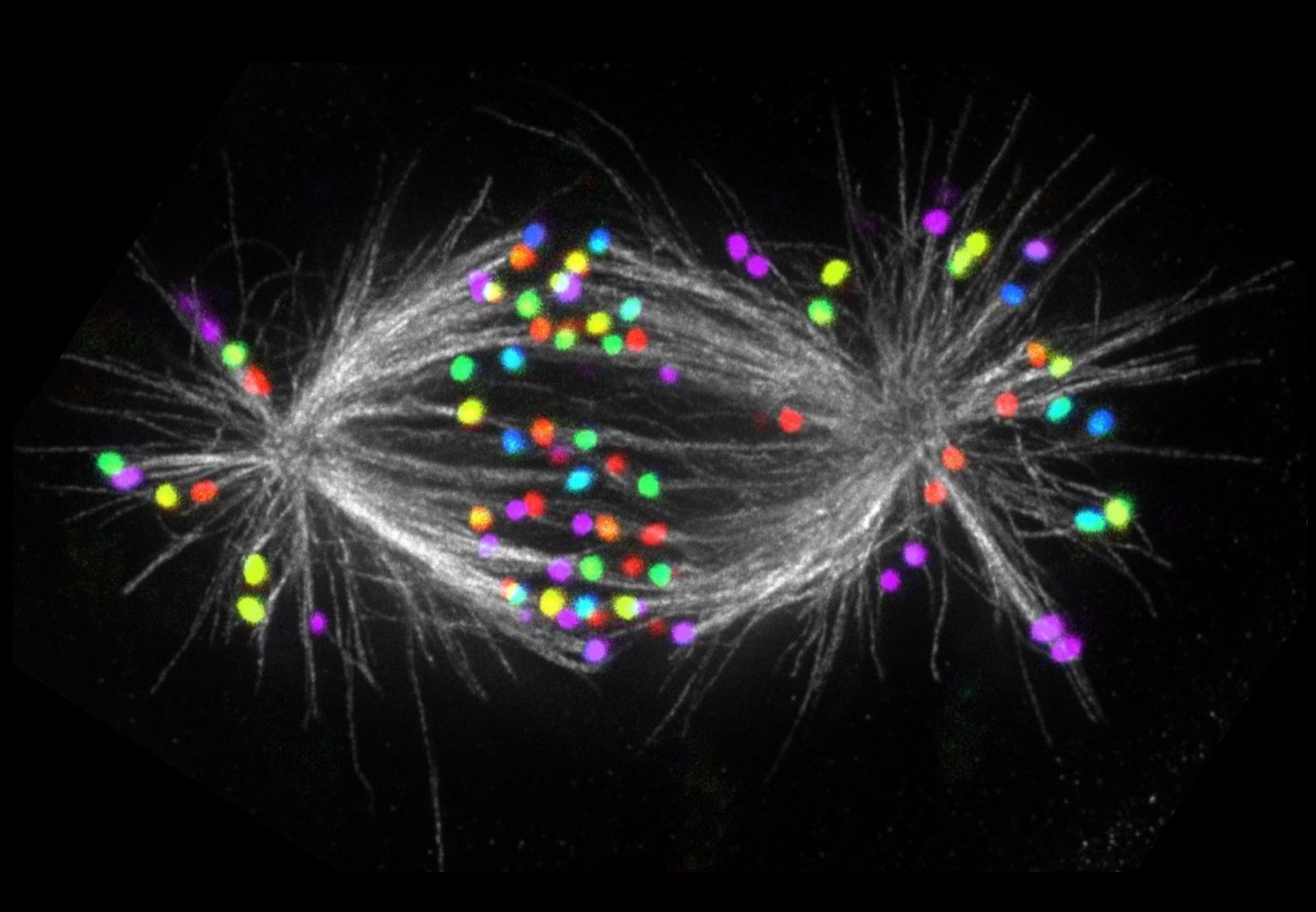
“It’s not about brute force,” Tolić explains. “It’s about creating the conditions for the system to run smoothly. CENP-E’s key role is to stabilize the start, and once that happens, the rest of mitosis unfolds correctly.”
A Textbook Story Unravels
For nearly twenty years, biology textbooks taught the simpler story of CENP-E as a motor protein pulling cargo to the metaphase plate. The Zagreb study forces a rewrite.
“Congression, the alignment of chromosomes, is intrinsically linked to biorientation,” says Tolić. “What we show is that CENP-E doesn’t contribute significantly to the movement itself. Its crucial role is stabilizing end-on attachments at the start. That is what allows the system to proceed correctly.”
It is a fundamental shift in framing: away from force and motion, toward regulation and timing. And that shift has consequences well beyond the classroom.
Why It Matters
To outsiders, the distinction may seem subtle. In biology, details matter. Errors in chromosome segregation are a defining feature of cancer. Tumor cells are patchworks of duplications and deletions of entire chromosomes or their segments, each tracing back to a failure in the cellular traffic system.
By showing that CENP-E’s primary role is to regulate the first attachments—and tying this regulation to Aurora kinase activity, the Zagreb team has not just linked two processes once thought to act independently but has mapped a critical vulnerability. This insight could inspire drugs that fine-tune the balance, suppressing runaway divisions or rescuing stalled ones.
“This isn’t just about rewriting a model,” Vukušić says. “It’s about identifying a mechanism that directly links to disease. That opens doors for diagnostics and for thinking about new therapies.”
Europe’s Backing, Croatia’s Infrastructure
The research was powered by one of the world’s most competitive awards, the European Research Council’s Synergy Grant, alongside support from the Croatian Science Foundation, Swiss Croatian bilateral projects, and EU development funds.
It also relied on advanced computing infrastructure at the University of Zagreb’s SRCE center. “Modern biology isn’t just microscopes and test tubes,” notes Tolić. “It’s also computation and collaboration across disciplines and borders.”
The Order in Apparent Chaos
At its heart, the discovery is about finding order in chaos. Each day, trillions of cells divide into the human body, each gambles against entropy. The work from Zagreb illuminates one of the hidden rules of that gambling. By redefining the role of CENP-E, and linking it to other processes inside cells, the team has given biology a clearer blueprint of how cells keep their traffic moving under impossible pressure.
“By uncovering how these microscopic regulators cooperate,” Tolić says, “we are not only deepening our understanding of biology but also moving closer to correcting the failures that underlie disease.”
References: “CENP-E initiates chromosome congression by opposing Aurora kinases to promote end-on attachments” by Kruno Vukušić, and Iva M. Tolić, 21 October 2025, Nature Communications.
DOI: 10.1038/s41467-025-64148-w
“Kinetochore-centrosome feedback linking CENP-E and Aurora kinases controls chromosome congression” by Kruno Vukušić, and Iva M. Tolić, 21 October 2025, Nature Communications.
DOI: 10.1038/s41467-025-64804-1
Funding: European Research Council, European Regional Development Fund, European Regional Development Fund, The Croatian Science Foundation
Never miss a breakthrough: Join the SciTechDaily newsletter.
Follow us on Google and Google News.
8 Comments
Good humanthing improve to deep sales and following objects etc
Good enovermental experience progress any scaninse projects
“…both daughter cells inherit precise copies of this genetic code.” No, there are dozens of errors every time, but only a maximum of 15% (generous, most likely 8%) of it does anything, and any particular tissue is only going to have a small subset of that, that is active, so most of those errors are no big deal. Sometimes an error even on a gene in use does not matter because the same protein is still made even with the letter change. Then they talk about missing a whole chromosome? Yeah, duh, that would be a big problem.
But the little stuff adds up too and is one of the reasons we age. Division is a particularly vulnerable time, but errors that are not repaired (most are) can happen any time.
This may seem childish but am I the only one who noticed the human skull like pattern in the top left of the very first picture? Idk it just sorta jumped out at me and felt like it was at home right there being that it’s a picture of a human ovarian cancer cell and the skull is usually used to symbolize death idk you do the math…
“Every second, trillions of times over, the human body performs an extraordinary feat. A single cell prepares to divide…”
Translation error?
Wowwww
Anyone still believes this all happened by chance?
Clearly designed by our creator.
Anyone still believes this all happened by chance?
Clearly designed by our creator.