
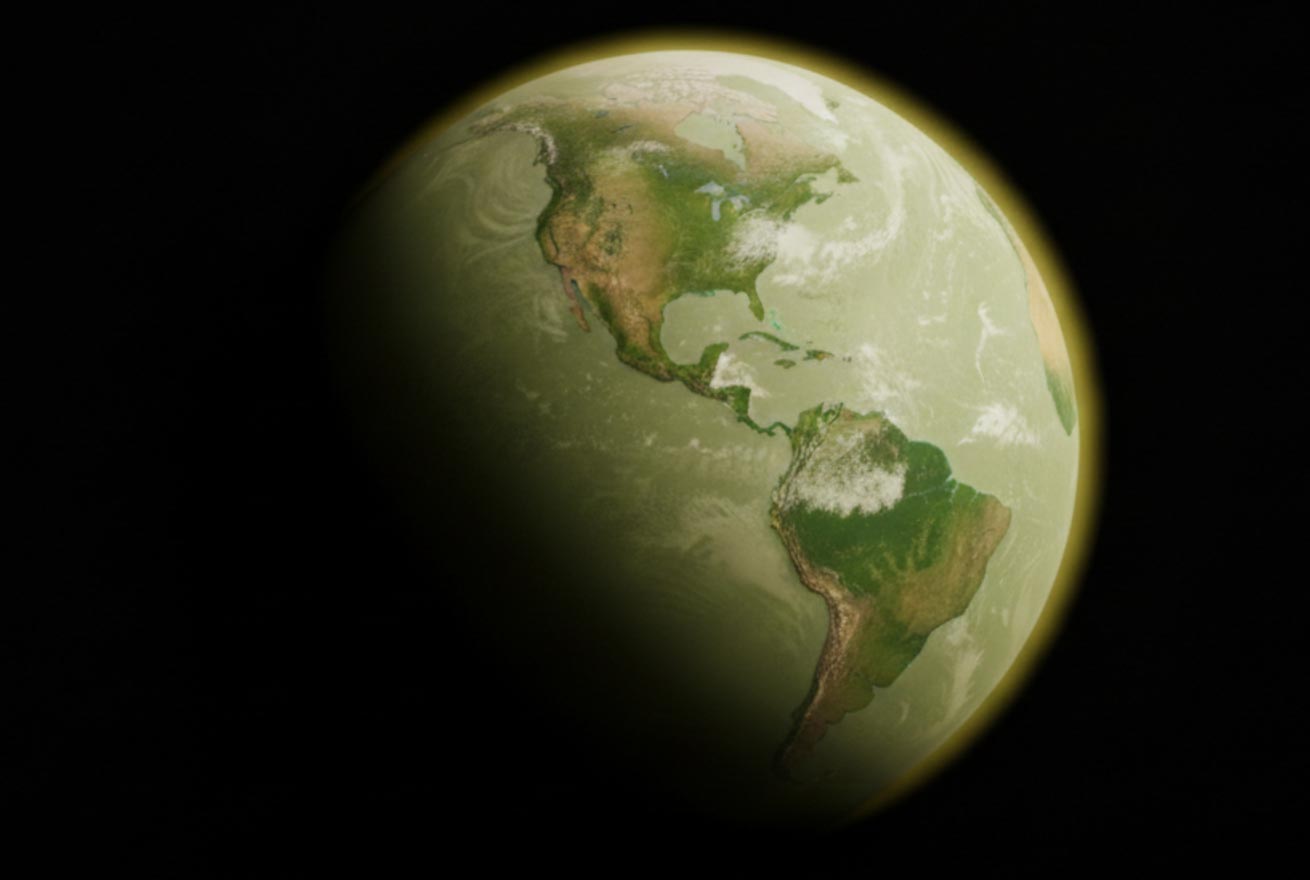
Scientists have uncovered a surprising mechanism that may explain how Earth cooled dramatically after the age of dinosaurs.
Scientists have solved a 66 million-year-old mystery, explaining how Earth shifted from a warm, tropical greenhouse planet to the ice-capped world we know today.
The study suggests that Earth’s long-term cooling was influenced by a steady decline in calcium dissolved in seawater. An international research team led by the University of Southampton found that ocean calcium levels dropped by more than 50 percent over the past 66 million years, a shift large enough to alter how the oceans interact with the atmosphere.
According to the findings, published in Proceeding of the National Academy of Sciences (PNAS), this chemical evolution of seawater may have reduced the amount of carbon dioxide circulating in the air. Because carbon dioxide traps heat, removing it from the atmosphere would have gradually weakened the planet’s greenhouse effect, allowing global temperatures to fall.
Linking Calcium to Climate Change
Lead author Dr David Evans, an ocean and earth scientist from Southampton, said the results highlight seawater chemistry as an active force in shaping Earth’s climate. Rather than simply responding to climate shifts, changes in the oceans themselves may have helped drive them.
He added: “Our results show that dissolved calcium levels were twice as high at the start of the Cenozoic Era, shortly after dinosaurs roamed the planet, compared to today.
“When these levels were high, the oceans worked differently, acting to store less carbon in seawater and releasing carbon dioxide into the air.
“As those levels decreased, CO2 was sucked out of the atmosphere, and the Earth’s temperature followed, dropping our climate by as much as 15 to 20 degrees Celsius.”
The Southampton researchers behind the study worked in collaboration with scientists from China, the USA, Israel, Denmark, Germany, Belgium, and the Netherlands.
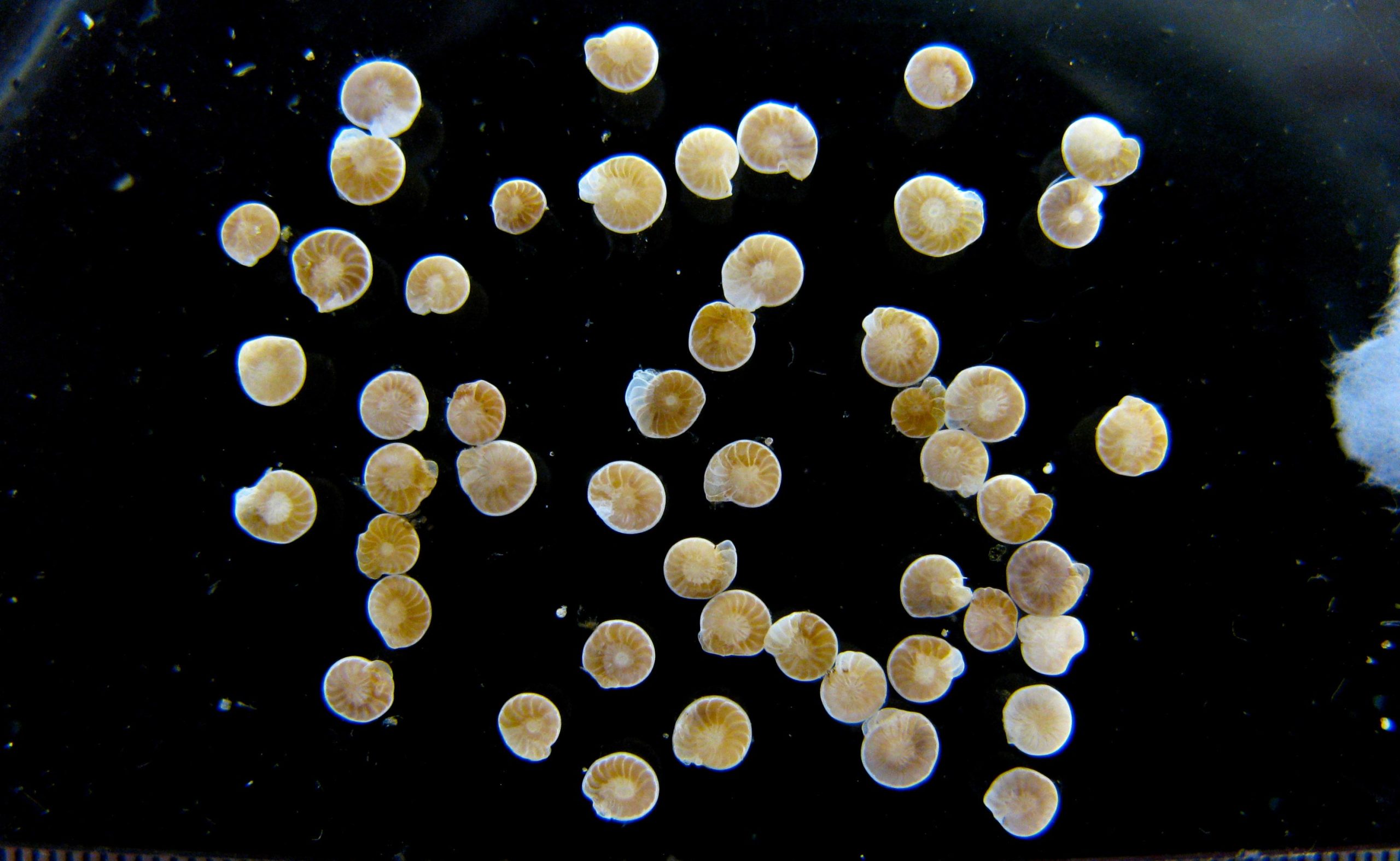
They used fossilized remains of tiny sea creatures dug up from sediments at the seafloor to construct the most detailed record of ocean chemistry to date.
Fossils Reveal Carbon-Cycle Clues
The chemical composition of the fossils, called foraminifera, showed a close link between the amount of calcium in seawater and the level of carbon dioxide in the air.
Using computer-made models, the team showed that high levels of calcium change how much carbon is “fixed” by marine life, such as corals and plankton, said Dr Evans.
This effectively locked it away from the ocean and atmosphere by storing it in sediments on the seafloor.
As dissolved calcium levels decreased across millions of years, it altered how these organisms produced and buried calcium carbonate on the seafloor, added co-author Dr Xiaoli Zhou of Tongji University in China.
She added: “The process effectively pulls carbon dioxide out of the atmosphere and locks it away.
“This shift could have changed the composition of the atmosphere, effectively turning down the planet’s thermostat.”
Deep Earth Processes at Work
The experts also revealed that the drop in calcium closely matched the slowing down of seafloor spreading – the volcanic process that continuously creates new ocean floors.
As the rate of seafloor production slowed, the chemical exchange between the rocks and seawater changed, leading to a gradual decline in dissolved calcium concentrations, said co-author Professor Yair Rosenthal from Rutgers University, USA.
He added: “Seawater chemistry is typically viewed as something that responds to other factors that lead to changes in our climate, rather than being the cause itself.
“But our new evidence suggests that we must look to changing seawater chemistry to understand our planet’s climate history.
“It may be that changes in these deep Earth processes are ultimately responsible for much of the large climatic shifts that have taken place over geological time.”
Reference: “The major ion chemistry of seawater was closely coupled to the long-term carbon cycle during the Cenozoic” by David Evans, Yair Rosenthal, Jonathan Erez, Hagar Hauzer, Laura J. Cotton, Xiaoli Zhou, Romi Nambiar, Peter Stassen, Paul N. Pearson, Willem Renema, Pratul Kumar Saraswati, Jonathan A. Todd, Wolfgang Müller and Hagit P. Affek, 9 January 2026, Proceedings of the National Academy of Sciences.
DOI: 10.1073/pnas.2511781122
Never miss a breakthrough: Join the SciTechDaily newsletter.
Follow us on Google and Google News.
8 Comments
Im not a Republican, and it sucks to be forced to say that as a disclosure i. Today’s society. How many natural causes of climate change do they need to find in order to realize that Earth’s climate changed whether or not we are on its surface. We absolutely do not help, but we also dont contribute near as much as they want us to think.
You raise an important point. If past variations in climate, more extreme than what are happening today, occurred without contributions from humans, what are the functional consequences of anthropogenic contributions that are relatively constant and a small fraction of the seasonal variations in atmospheric concentration? Why should we expect the climate changes that happened in the past to stop just because humans start releasing carbon sequestered millions of years ago? What is the optimal temperature of Earth? How do we achieve that when there isn’t agreement on the Climate Sensitivity to a doubling of CO2 concentration? There are so many questions that get passed over because climate alarmists assume that the climate optimum was what existed before the Industrial Revolution and that therefore any change is bad.
WTH are you talking about, show us some scientific proof of your claim. What does someone’s politics have to do with climate change. Pls. read something besides your bible!
Please start reading a Bible.
If you do, you will notice how science proves the Bible and God.
“Scientists have SOLVED a 66 million-year-old mystery, explaining how Earth shifted from a warm, tropical greenhouse planet to the ice-capped world we know today.”
Not quite “solved.” From the original article, “Although our record cannot determine whether CO2 is causally driven by [Ca2+sw], carbon cycle box modeling identifies that this MAY have been the case.” They are speculating on the interpretation of the results of a model with little supporting evidence for causality. Correlation alone does NOT establish causation.
This press release states, “This effectively locked it [calcium as calcium cabonate, with the associated carbonate derived from carbon dioxide] away from the ocean and atmosphere by storing it in sediments on the seafloor. If the carbon dioxide is sequestered as calcium carbonate, suggests an ocean chemistry more alkaline than what we currently observe. The geologic record is characterized by huge volumes of carbonates, thousands of feet thick throughout geologic time, ever since calcifiers first evolved. If one only presents half the facts, then one plays ‘half-fast’ with the truth.
Wow, can you say Chicxulub impact?
What does Chicxulub have to do with the hypothesis that carbon dioxide, particularly anthropogenic CO2, is the primary driver for recent warming? The bolide apparently released a lot of sulfate aerosols and soot that resulted in short-term cooling, and a pulse of CO2 from the burning forests that resulted in slightly longer lasting warming. The article postulates that biogenic carbonates, extracted and sequestered CO2 from the atmosphere, is an important player. Where is the evidence that Cretaceous limestones and dolostones are rare? What caused the PETM warming pulse? Is there evidence for reduced limestone/dolostone deposition during the Paleocene/Eocene event?
One cannot expect to resolve differences of opinion about how processes work on Earth with only six words! While it is obvious that sometimes catastrophic events like the End-Cretaceous bolide happen, geologists tend to favor slower processes, known as Uniformitarianism, over Catastrophism. Are you suggesting that ALL abrupt changes of climate in the past were the result of some external event? If so, then you need to present a lot of facts — far more than can be encapsulated in six words and a question mark.
Your opinion of whether climate change is beneficial or not really depends on where you live.
Living in the UK a bit warmer would be nice.