
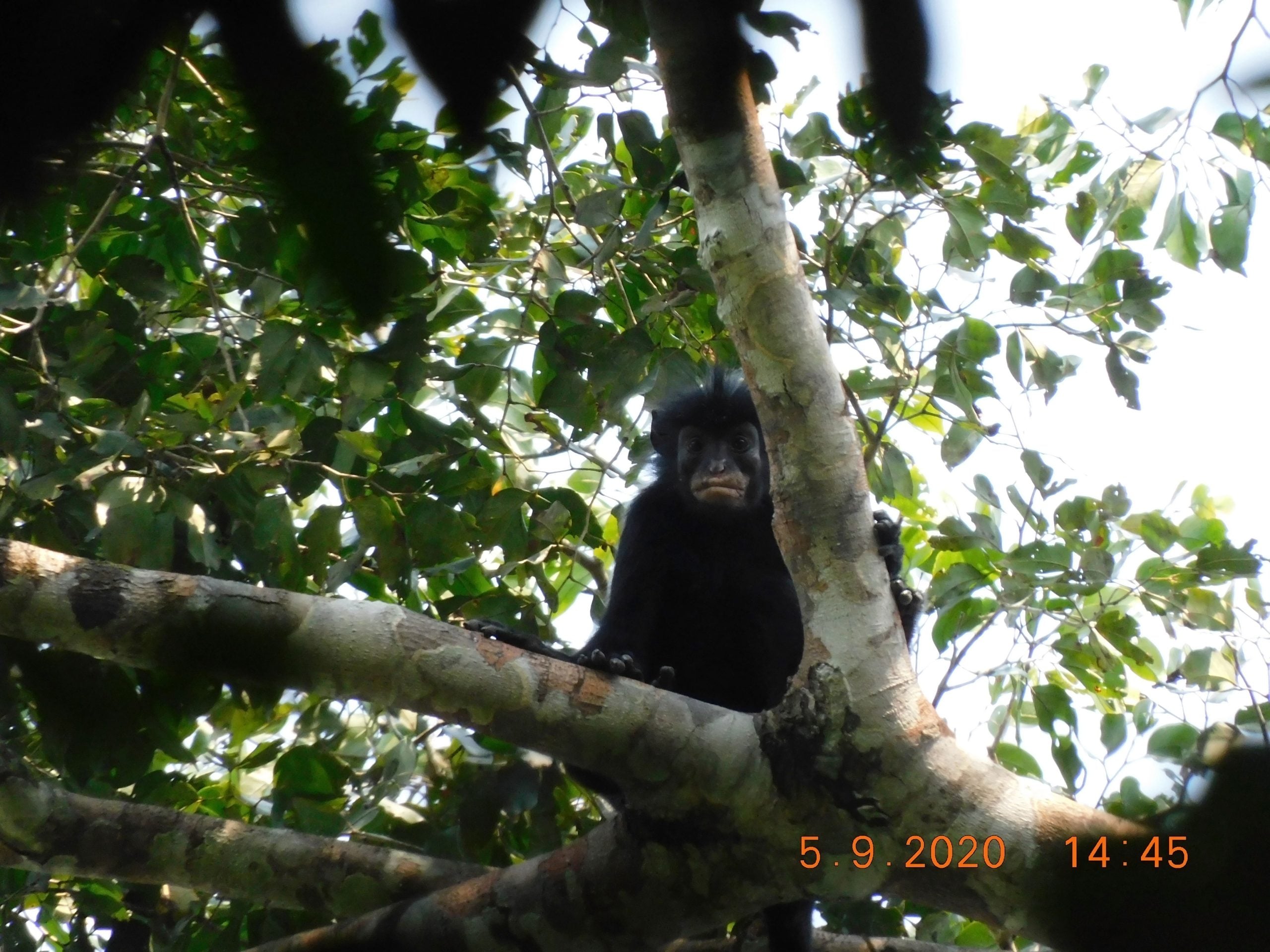
A newly identified Congo monkey represents an ancient evolutionary lineage that may already be endangered.
A partly hidden monkey appeared in a photograph taken deep in the Democratic Republic of Congo (DRC) in 2008. Researchers saw the animal again a decade later, this time clearly enough to begin investigating whether it represented something science had never formally described.
Genetic, anatomical, and acoustic evidence has now confirmed that the elusive primate is a distinct species. Named Colobus congoensis and called “Likweli” by local communities, it is only the fifth new monkey species identified in Africa within the past 75 years, making the discovery an unusually rare event in modern primatology.
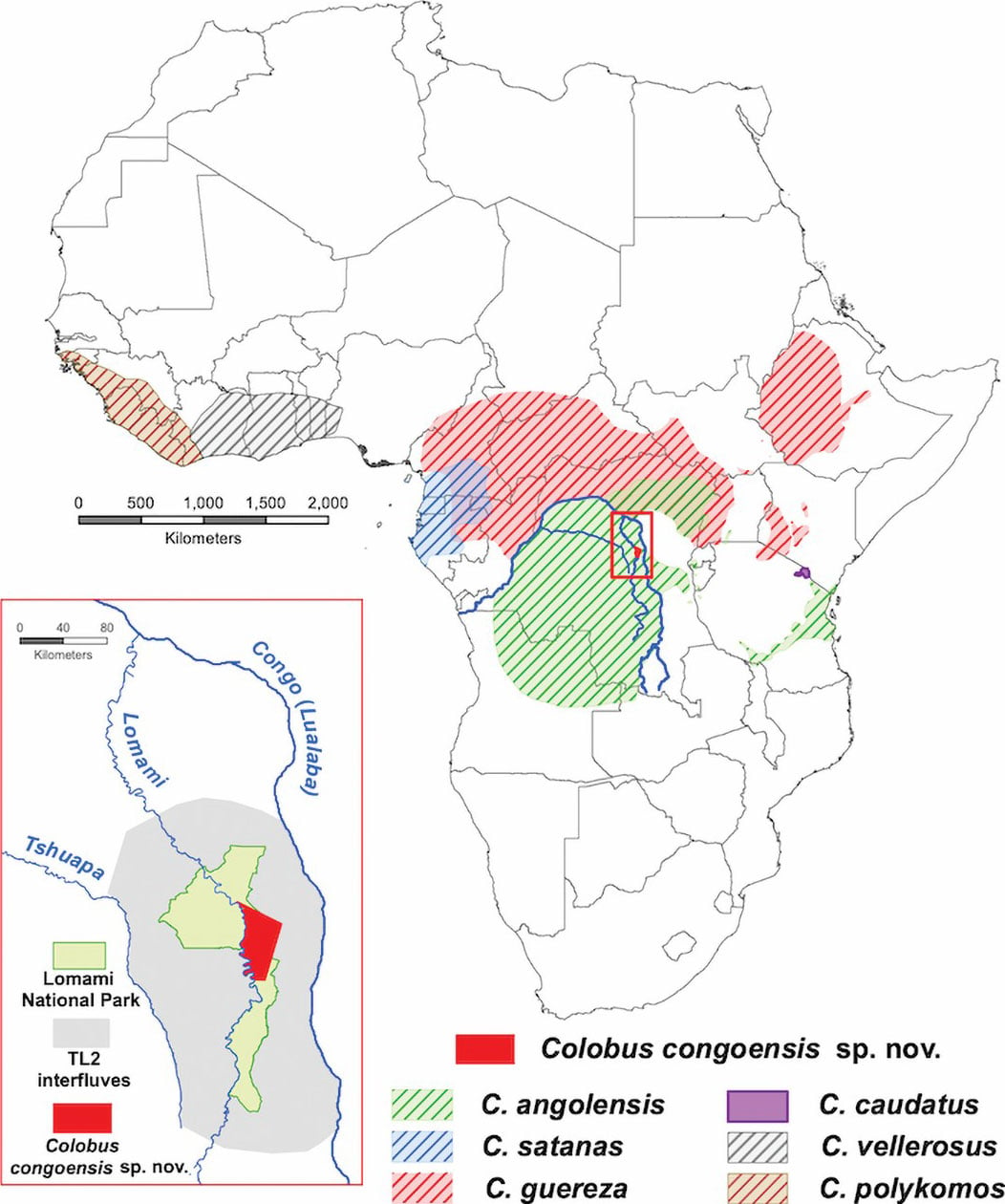
The animal lives in a remote section of the Congo Basin between the Lomami and Congo (Lualaba) rivers in east-central DRC. Despite decades of biological research across Central Africa, this isolated population had remained undocumented.
The first obscured image in 2008 provided little more than a clue. A clearer photograph obtained in 2018 prompted a broader search involving field observations, local knowledge, museum specimens, and laboratory analyses.
The results, published in PLOS One, show that C. congoensis belongs to an evolutionary lineage that separated from its closest known relative roughly 4 to 5 million years ago. They also indicate that the newly recognized species may already face serious pressure from hunting, habitat loss and an exceptionally restricted range.
The international investigation included researchers from Florida Atlantic University, the Lukuru Wildlife Research Foundation, Yale University, the City University of New York, Lomami National Park and the Frankfurt Zoological Society.
“This discovery is both exciting and deeply personal, highlighting the extraordinary biodiversity of my homeland and how much remains undocumented,” said Junior Amboko, co-corresponding author, a Ph.D. student in the Department of Biological Sciences in FAU’s Charles E. Schmidt College of Science and a National Geographic Explorer. “I was honored to name the species ‘Colobus congoensis,’ recognizing the Congo Basin’s remarkable natural heritage and, we believe, marking the first primate named after the Democratic Republic of Congo itself – underscoring both its global importance and local pride.”
A monkey unlike any known colobus
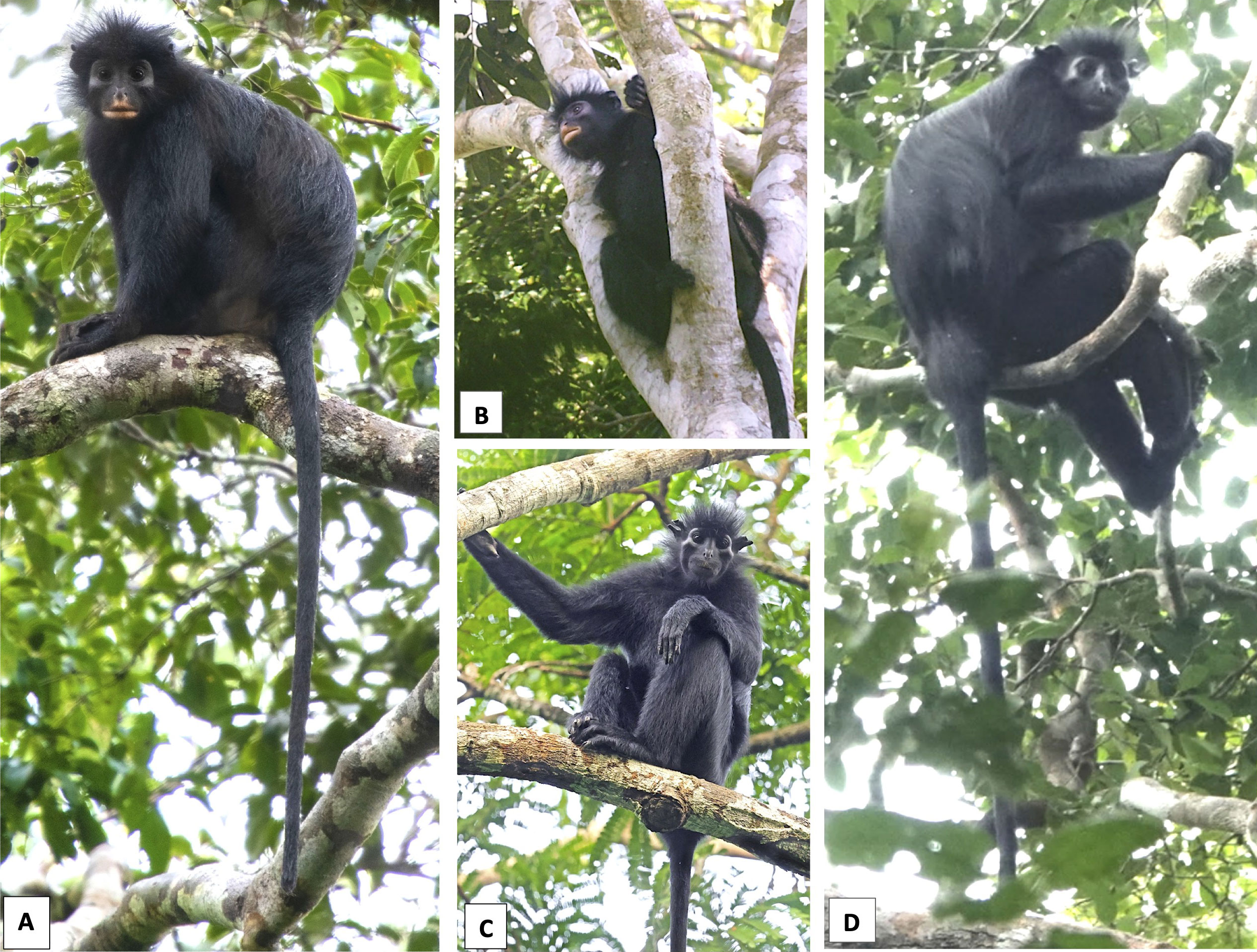
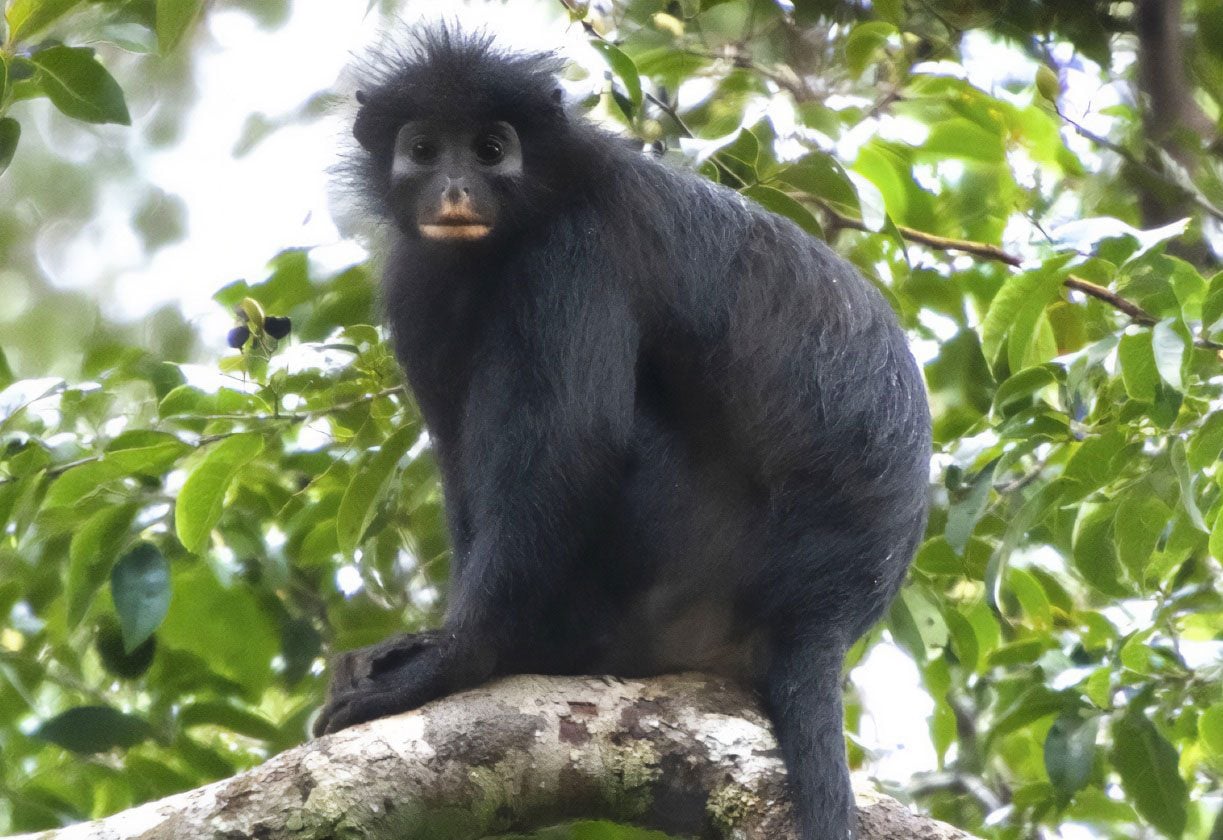
C. congoensis weighs about 15 pounds, making it smaller than related colobus monkeys. Its glossy black coat forms cape-shaped shoulders and extends into a long tail, while an orange cream patch surrounds its mouth and nose.
Long black facial hairs, large folded ears and reflective fur create a distinctive mask-like appearance. White markings around the animal’s rear provide another feature separating it from other known members of the group.
The discovery further establishes Lomami National Park and its surrounding buffer zone as an important center of primate diversity. Several members of the same research collaboration helped identify another previously unknown monkey from the region in 2012, the Lesula (Cercopithecus lomamiensis).
“We continue to be reminded that the Congo Basin remains one of the world’s last great frontiers for mammal discovery,” said John A. Hart, first author and a conservation scientist with the Lukuru Wildlife Research Foundation. “Even in regions that have been scientifically explored, entirely new species are still coming to light. This discovery reinforces how much biodiversity remains undocumented in the Central Congo Basin and how this region continues to reshape our understanding of primate evolution and conservation.”
DNA reveals a four million year split
DNA evidence placed C. congoensis within the genus Colobus, but its closest evolutionary connection was unexpectedly distant in both geography and time.
“The discovery of Colobus congoensis is reshaping our understanding of African monkey evolution,” said Kate Detwiler, Ph.D., senior and corresponding author and an associate professor of biological sciences in FAU’s Charles E. Schmidt College of Science. “Its closest known relative is Colobus satanas, found more than 1,200 kilometers away in west-central Africa. Yet our genetic evidence shows the two species diverged roughly 4 to 5 million years ago, marking one of the oldest known evolutionary splits within the Colobus lineage.”
Researchers also needed physical evidence to establish the animal as a formally recognized species. They compared its skull, teeth, face and pelt with those of other African colobine monkeys, looking for a combination of features that could not be explained as ordinary variation within an existing species.
“We compared the skulls and pelts of C. congoensis with other species of African colobines, which underscored how unique this new species is,” said Julia L. Arenson, Ph.D., co-author and a postdoctoral associate at the Yale Institute for Biospheric Studies, who had a very large collection of skeletal data related to her Ph.D. thesis on colobus monkeys. “At the same time, despite being much smaller in body size, we also demonstrated it shares features of the teeth, skull and face with Colobus to the exclusion of other African colobines.”
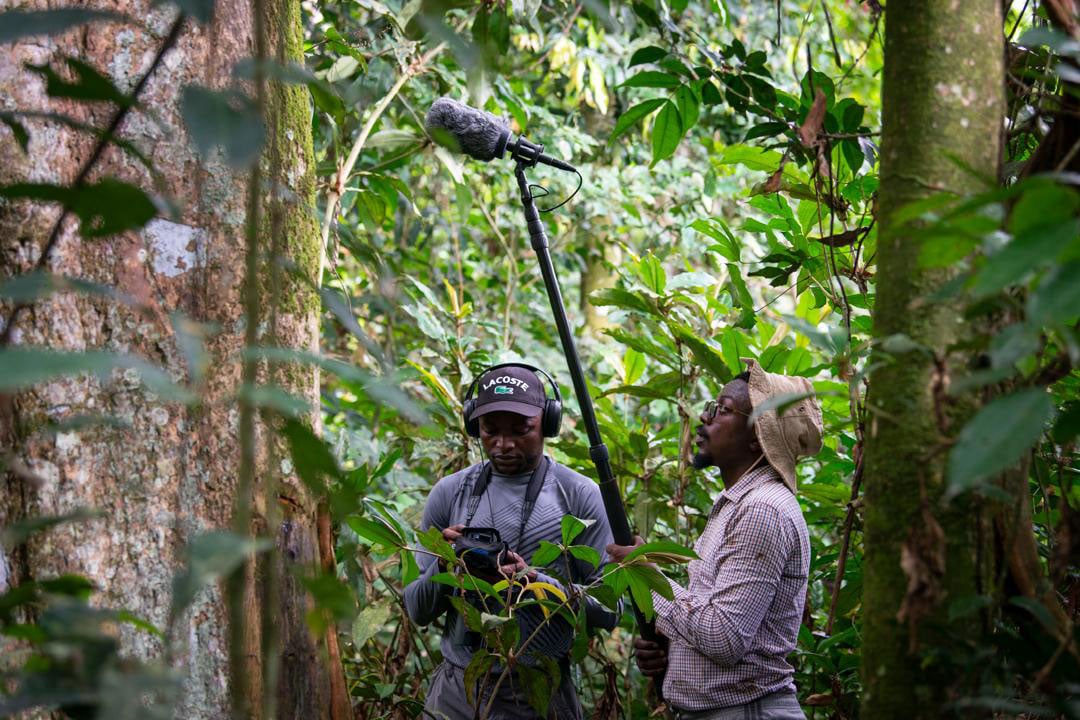
Colobus congoensis, known locally as “likweli,” has deep resonant roaring calls that resemble those of related Colobus species but possesses a distinct acoustic structure. Credit: Bernard Bonanga
These cranial and dental comparisons supported the DNA results and supplied the anatomical diagnosis required to validate C. congoensis scientifically.
“In order to name a new species, you have to be able to prove it,” said Christopher Gilbert, Ph.D., co-author and an anthropology professor with the City University of New York Graduate Center and Hunter College. “We used extensive museum collections including specimens housed at the Yale Peabody Museum and the American Museum of Natural History, and comparative datasets to compare the skulls and pelts with known African colobus monkeys. This robust pool of information allowed us to pretty quickly and conclusively confirm C. congoensis as a new species.”
Its calls provided another line of evidence. Although the monkey produces the deep roaring vocalizations typical of related Colobus species, recordings revealed an acoustic structure distinct from those of its relatives.
Local knowledge reveals a tiny range
To determine where the monkey lives and how often it is encountered, researchers spoke with hunters and other residents in villages surrounding Lomami National Park. Only people in eight villages recognized the animal or described it accurately.
Residents called it “Likweli” and “kasaba nkoni,” which means “the branch shaker.” Their accounts consistently portrayed it as an elusive monkey that is rarely observed.
Fieldwork from 2018 through 2022 produced 114 sightings within an estimated area of only 1,700 square kilometers. That is an unusually restricted distribution for a colobus monkey.
The species appears confined by major rivers, forest barriers, and its reliance on scattered patches of upland forest. These natural boundaries may help explain how the population remained separated long enough to follow its own evolutionary path.
Discovery comes with an extinction warning
Formal recognition has also exposed how vulnerable C. congoensis may be. Its known population occupies a very small region already affected by forest loss and increasing hunting pressure.
Researchers are proposing that the species be listed as Endangered on the IUCN Red List because of its restricted range, apparently small population, and continuing threats to its habitat. Most confirmed locations fall within Lomami National Park, making continued protection of the park and its forests especially important.
“The discovery of Colobus congoensis is both a scientific triumph and a sobering reminder that some of Earth’s rarest creatures may vanish before the world even knows they exist,” said Detwiler.
Reference: “Likweli: A remarkable new species of Colobus monkey from the Lomami National Park, Democratic Republic of Congo” by John A. Hart, Junior D. Amboko, Julia L. Arenson, Emma R. Horton, Kathryn F. Coates, Jean-Pierre I. Kapale, Mardoché B. Koko, Terese B. Hart, Christopher C. Gilbert, Eric J. Sargis and Kate M. Detwiler, 15 July 2026, PLOS ONE.
DOI: 10.1371/journal.pone.0349857
Never miss a breakthrough: Join the SciTechDaily newsletter.
Follow us on Google and Google News.
1 Comment
Each species is valuable and precious, even for reasons we may have not yet suspected. How well we can coexist with and at the same time protect a gem like Colobus congoensis (“Likweli”, “kasaba nkoni”) becomes a measure, indicator, or litmus test of how mature we ourselves as humans are at overcoming our more basal and self-centered tendencies and ambitions. And at this present time, even humanity’s own survival hangs in the balance, for known reasons.