
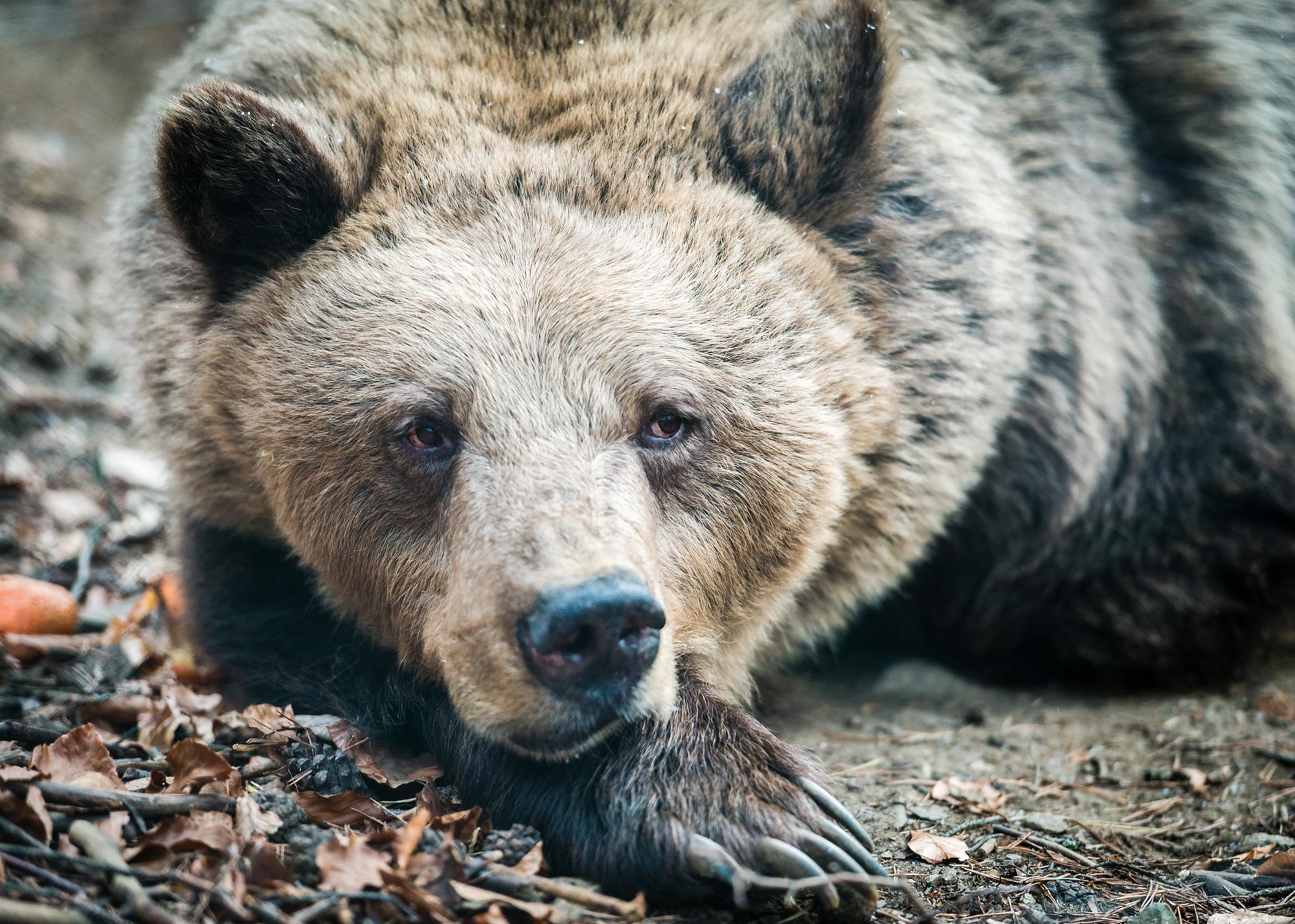
Summary: Researchers found that Italian brown bears living near humans evolved unique genetic and behavioral traits. The study suggests that prolonged human presence can quietly reshape how wild species adapt and survive.
New research reports that an isolated population of Italian brown bears shows distinctive physical and behavioral traits compared with other bears.
A study recently published in the journal Molecular Biology and Evolution finds that brown bears in Italy that live close to villages have evolved to be smaller in size and less aggressive over time.
Human activity has long altered natural landscapes, with wide-ranging effects on ecosystems and biodiversity. Changes such as habitat modification and intensive land use place strong pressures on wildlife populations, often reducing their numbers and altering the traits that are favored by natural selection. Over generations, these pressures can shape how a species evolves.
A bear population shaped by isolation
The Apennine brown bear, Ursus arctos marsicanus, is a rare and geographically restricted population that lives only in Central Italy and has coexisted closely with people for centuries. Earlier studies show that this group split from other European brown bears around 2000-3000 years ago and has remained fully isolated since the Roman era.
“One major cause of decline and isolation,” said the study’s lead author, Andrea Benazzo, “was probably forest clearance associated with the spread of agriculture and increasing human population density in Central Italy.”
Today, these bears differ noticeably from other brown bear populations. Compared with bears in Europe, North America, and Asia, Apennine brown bears tend to be smaller, show distinct head and facial traits, and display less aggressive behavior.
Genomic evidence of human driven selection
The researchers examined how recent human pressures may have influenced the evolution of this endangered population. They produced a high-quality, chromosome-level reference genome for the Apennine brown bear and analyzed whole-genome sequences from several individuals. These data were then compared with genomes from a larger European bear population in Slovakia, along with previously published genomes from American brown bears.
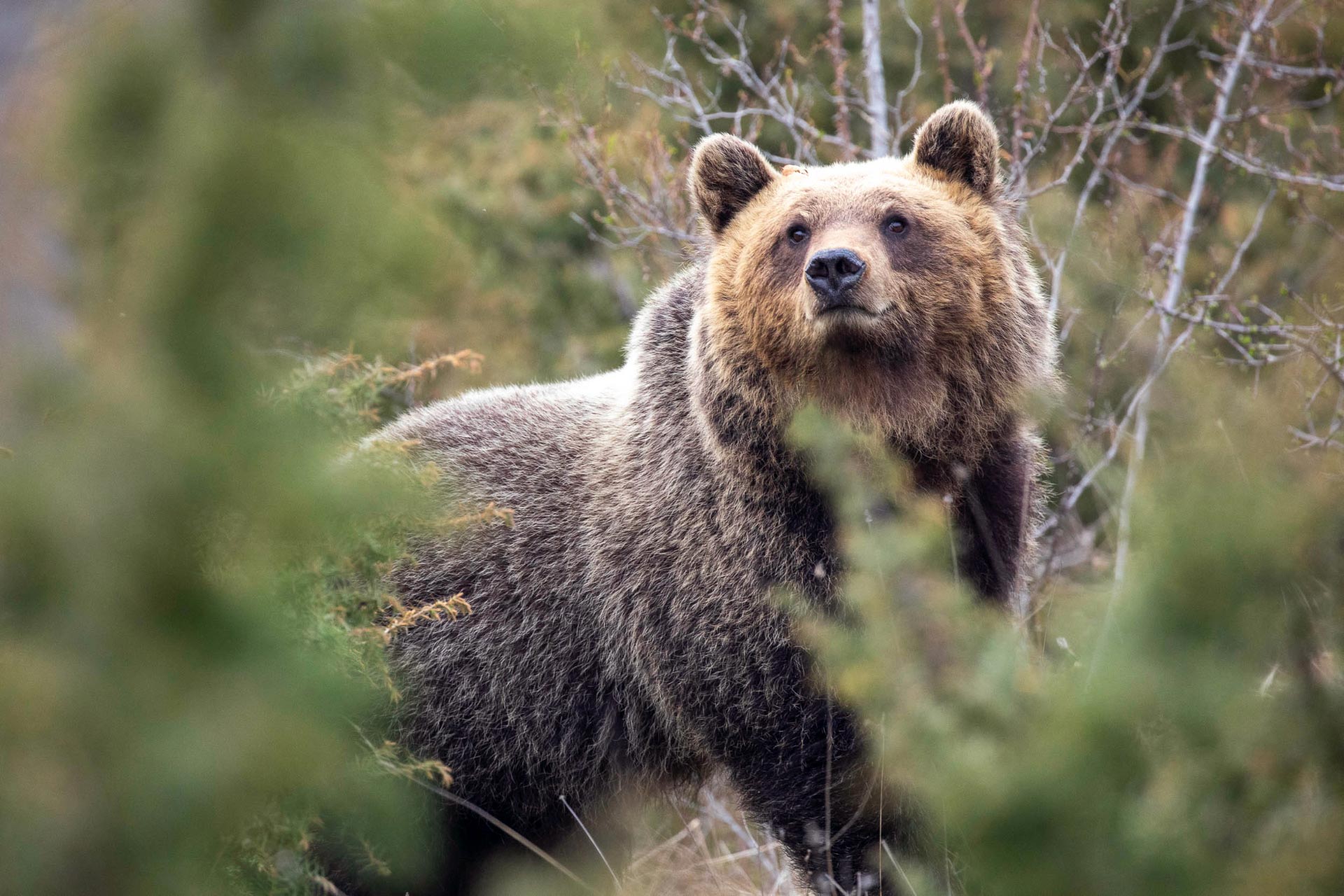
They characterized genomic diversity and identified adaptation signals distinctive to this population. As expected, Apennine brown bears exhibited reduced genomic diversity and higher inbreeding compared to other brown bears.
“More interestingly, however,“ added Giulia Fabbri, another author of the study, “we showed that Apennine brown bears also possess selective signatures at genes associated with reduced aggressiveness.”
Conflict reduction comes at a genetic cost
The findings suggest that selection on behavior-related genetic variants, likely driven by the human removal of more aggressive bears, resulted in the emergence of a much less aggressive bear population. This illustrates how human encroachment into natural areas led to demographic decline and genomic erosion, increasing extinction risk, yet unintentionally promoting the evolution of a less conflictual relationship between humans and bears.
“The general implications of our findings are clear,” concluded Giorgio Bertorelle, another researcher involved in the study, “human-wildlife interactions are often dangerous for the survival of a species, but may also favor the evolution of traits that reduce conflict. This means that even populations that have been heavily and negatively affected by human activities may harbor genetic variants that should not be diluted, for example, by restocking.”
Reference: “Coexisting With Humans: Genomic and Behavioral Consequences in a Small and Isolated Bear Population” by Giulia Fabbri, Roberto Biello, Maëva Gabrielli, Sibelle Torres Vilaça, Beatrice Sammarco, Silvia Fuselli, Patrícia Santos, Lorena Ancona, Laura Peretto, Giada Padovani, Marco Sollitto, Alessio Iannucci, Ladislav Paule, Dario Balestra, Marco Gerdol, Claudio Ciofi, Paolo Ciucci, Carolyn G Mahan, Emiliano Trucchi, Andrea Benazzo and Giorgio Bertorelle, 15 December 2025, Molecular Biology and Evolution.
DOI: 10.1093/molbev/msaf292
This work was supported by the University of Ferrara (Italy) and funded by the MIUR PRIN 2017 grant 201794ZXTL to G.B.; S.T.V. was supported by a Young Researchers (Marie Skłodowska-Curie winners) grant awarded by the Italian Ministry for Universities and Research. P.C. was supported by the European Union—NextGenerationEU National Biodiversity Future Center.
Never miss a breakthrough: Join the SciTechDaily newsletter.
Follow us on Google and Google News.
1 Comment
Is human involvement automatically an evolutionary catastrophe, or are humans a integral part of the ecology?