
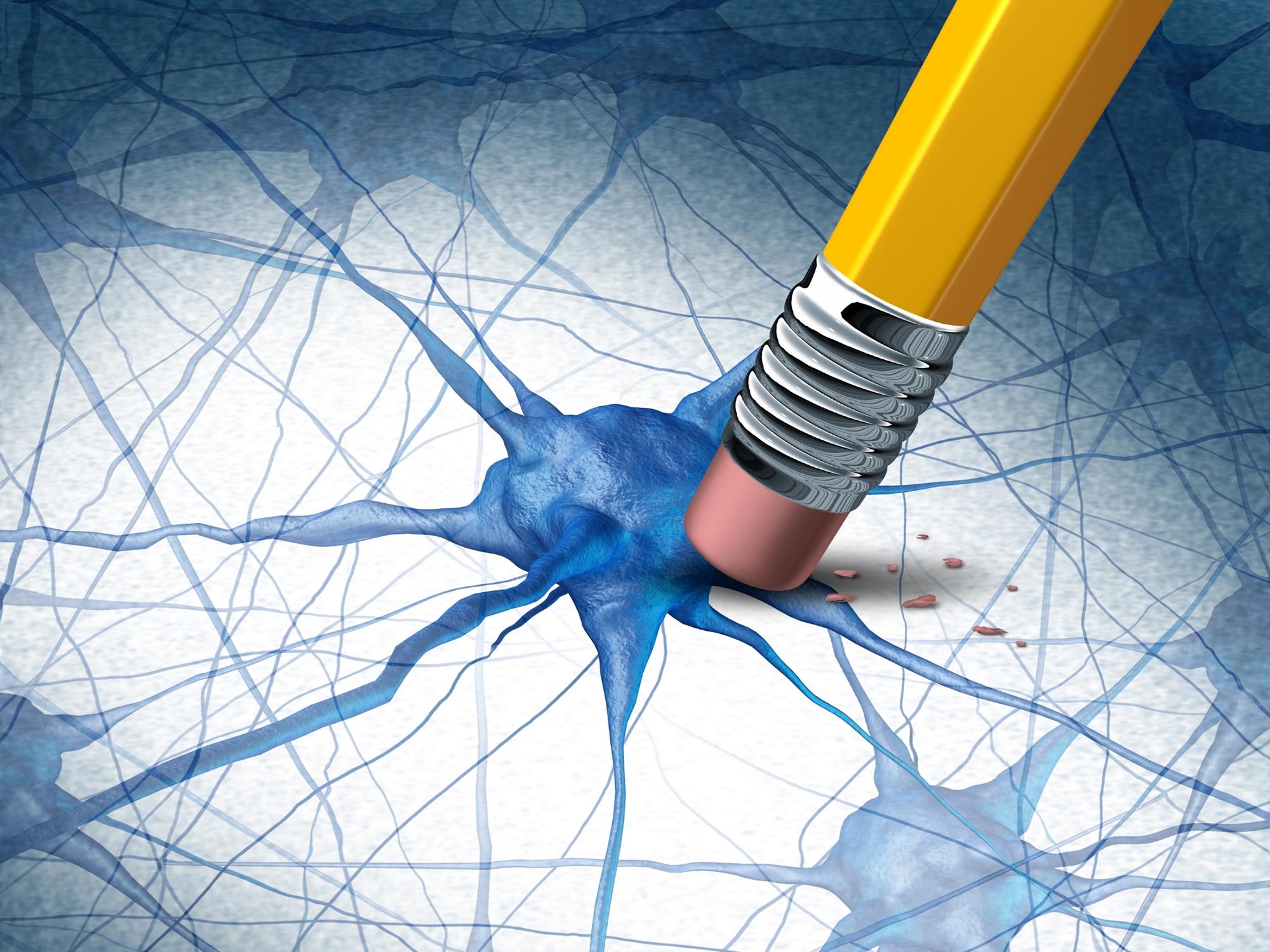
MRI findings uncover an unexpected mismatch between Alzheimer’s pathology and cognitive function in a unique case study.
Studies show that individuals with Down syndrome (DS) have a lifetime risk of over 90% for developing dementia due to Alzheimer’s disease (AD) as they age. Research from the University of Pittsburgh’s Swanson School of Engineering seeks to understand why some people with DS develop dementia while others do not—insights that could ultimately benefit the entire DS community.
A recent study published in Alzheimer’s & Dementia: The Journal of the Alzheimer’s Association documented an unusual progression of Alzheimer’s disease in a woman with Down syndrome, highlighting unexpected findings in the disease’s development.
For ten years, a woman with Down syndrome participated in the Alzheimer Biomarker Consortium – Down syndrome Research Study (ABC-DS) with a team of investigators including Elizabeth Head, professor in the department of pathology and laboratory medicine at the University of California, Irvine. At the time of her passing, investigators were grateful for her gift of brain donation, and her brain was shared with the University of Pittsburgh’s 7T Bioengineering Research Program radiofrequency research facility, where Jr-Jiun Liou, postdoctoral scholar in the department of bioengineering, imaged her brain using the team’s high-resolution 7 Tesla MRI scanner.
Surprising Findings in Neuroimaging and Neuropathology
“We are interested in trying to link neuroimaging with neuropathology, because we want to use information from neuropathology datasets to inform diagnostic and therapeutic criteria for individuals with Down syndrome before they pass away,” Liou said.
The final neuroimages that Liou reviewed surprised her. Although the participant was cognitively stable at the time of death, MRI imaging revealed the presence of neuropathology indicative of Alzheimer’s disease in her brain. This finding highlighted a discrepancy between her lived experience and clinical diagnosis compared to her underlying biological pathology.
“Before she passed away, all the clinical assessments in our years of studying her indicated that she was cognitively stable, which is why this case is so fascinating,” Liou said. “Despite her brain’s pathology indicating Alzheimer’s, we think that her cognitive stability could have been attributed to her high education level or underlying genetic factors.”
Liou and Head hope that this case study will help improve existing diagnostic tools and expand the inclusion criteria for therapeutic drug trials targeting Alzheimer’s disease and dementia. Clinical trials typically have narrow criteria for acceptance, but if more individuals with this type of “hidden” pathology for Alzheimer’s are included, the treatments could become more effective.
The data also presents a rare opportunity to uncover genetic or lifestyle factors that may contribute to cognitive preservation—insights that could ultimately benefit not only individuals with Down syndrome but the broader population.
“If we can identify the genetic underpinnings or lifestyle factors that allowed her brain to function well despite the pathology, we may uncover strategies that could benefit others,” Head said. “This study shows how just one person’s participation in research can lead to profound discoveries.”
Reference: “A neuropathology case report of a woman with Down syndrome who remained cognitively stable: Implications for resilience to neuropathology” by Jr-Jiun Liou, Jerry Lou, Lisi Flores-Aguilar, Jamie Nakagiri, William Yong, Christy L. Hom, Eric W. Doran, Minodora O. Totoiu, Ira Lott, Mark Mapstone, David B. Keator, Adam M. Brickman, Sierra T. Wright, Brittany Nelson, Florence Lai, Laura Xicota, Lam-Ha T. Dang, Jinghang Li, Tales Santini, Joseph M. Mettenburg, Milos D. Ikonomovic, Julia Kofler, Tamer Ibrahim, Elizabeth Head and , 27 January 2025, Alzheimer’s & Dementia.
DOI: 10.1002/alz.14479
Never miss a breakthrough: Join the SciTechDaily newsletter.
Follow us on Google and Google News.