

For the first time, scientists have experimentally confirmed that electrons can form tornado-like structures in momentum space, a revolutionary finding that could lead to new quantum technologies.
The breakthrough demonstrates the interplay of orbital angular momentum and electron motion, laying the groundwork for orbitronics, a field that could reduce energy loss in electronic components.
Quantum Tornadoes: A Groundbreaking Discovery
Scientists have long understood that electrons can form vortices in quantum materials. However, what’s truly groundbreaking is the recent proof that these tiny particles create tornado-like structures in momentum space—a discovery now confirmed experimentally in the lab. This breakthrough was led by Dr. Maximilian Ünzelmann, a group leader at ct.qmat – Complexity and Topology in Quantum Matter at the Universities of Würzburg and Dresden.
This breakthrough marks a significant advancement in quantum materials research. The researchers believe that the vortex-like behavior of electrons in momentum space could open the door to new quantum technologies, particularly in orbitronics. Unlike traditional electronics, which rely on an electron’s charge to transmit information, orbitronics would use electrons’ orbital motion—a property that could drastically reduce energy loss in electronic devices.
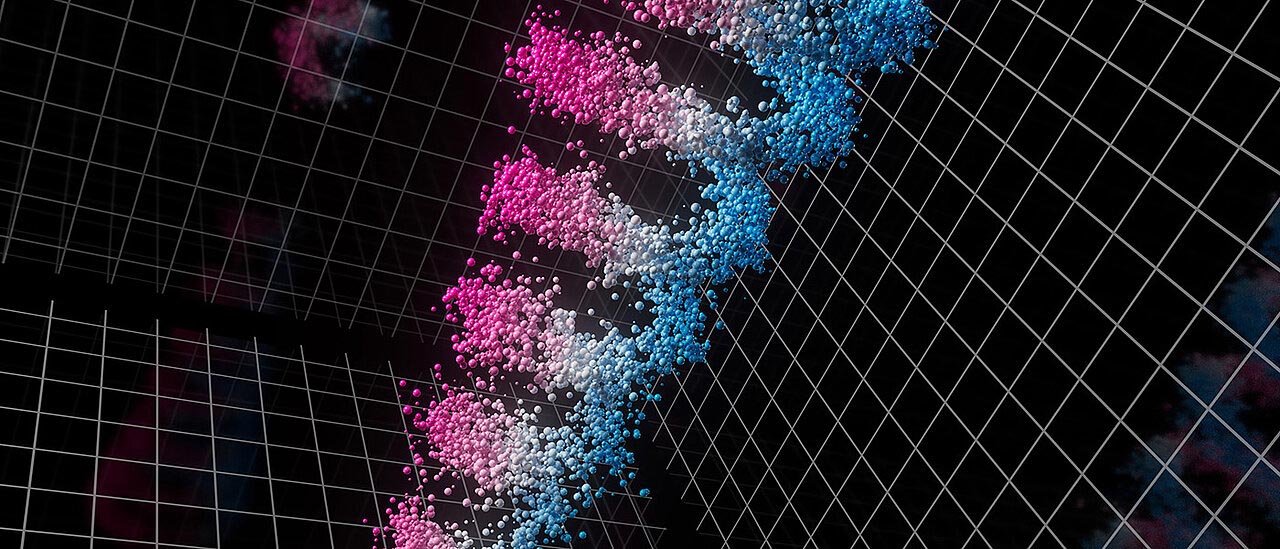
Momentum Space vs. Position Space
In physics, momentum space describes the movement of electrons in terms of their energy and direction rather than their exact location. In contrast, position space—the realm of everyday physics—is where we observe familiar vortex-like patterns, such as hurricanes or water spirals. Until now, even in quantum materials, researchers had only observed quantum vortices in position space.
A few years ago, another ct.qmat research team made headlines when they captured the first-ever three-dimensional image of a vortex-like magnetic field inside a quantum material’s position space (Nature Nanotechnology 17 (2022) 250–255). Now, with the discovery of quantum tornadoes in momentum space, scientists have unlocked an entirely new dimension of electron behavior—bringing us closer to next-generation quantum technologies.
Theory Confirmed: A Long-Awaited Breakthrough
Eight years ago, Roderich Moessner theorized that a quantum tornado could also form in momentum space. At the time, the Dresden-based ct.qmat co-founder described the phenomenon as a “smoke ring” because, like smoke rings, it consists of vortices. However, until now, no one knew how to measure them. The breakthrough experiments revealed that the quantum vortex is created by orbital angular momentum – electrons’ circular motion around atomic nuclei. “When we first saw signs that the predicted quantum vortices actually existed and could be measured, we immediately reached out to our Dresden colleague and launched a joint project,” recalls Ünzelmann.
Quantum Tornado Discovered by Refining a Standard Method
To detect the quantum tornado in momentum space, the Würzburg team enhanced a well-known technique called ARPES (angle-resolved photoemission spectroscopy). “ARPES is a fundamental tool in experimental solid-state physics. It involves shining light on a material sample, extracting electrons, and measuring their energy and exit angle. This gives us a direct look at a material’s electronic structure in momentum space,” explains Ünzelmann. “By cleverly adapting this method, we were able to measure orbital angular momentum. I’ve been working with this approach since my dissertation.”
Quantum Tomography: Seeing the Invisible
ARPES is rooted in the photoelectric effect, first described by Albert Einstein and taught in high school physics. Ünzelmann had already refined the method in 2021, gaining international recognition for detecting orbital monopoles in tantalum arsenide. Now, by integrating a form of quantum tomography, the team has taken the technique a step further to detect the quantum tornado – another major milestone. “We analyzed the sample layer by layer, similar to how medical tomography works. By stitching together individual images, we were able to reconstruct the three-dimensional structure of the orbital angular momentum and confirm that electrons form vortices in momentum space,” Ünzelmann explains.
Würzburg-Dresden Network: A Global Collaboration
“The experimental detection of the quantum tornado is a testament to ct.qmat’s team spirit,” says Matthias Vojta, Professor of Theoretical Solid-State Physics at TU Dresden and ct.qmat’s Dresden spokesperson. “With our strong physics hubs in Würzburg and Dresden, we seamlessly integrate theory and experiment. Additionally, our network fosters teamwork between leading experts and early-career scientists – an approach that fuels our research into topological quantum materials. And, of course, almost every physics project today is a global effort – this one included.”
The tantalum arsenide sample was grown in the US and analyzed at PETRA III, a major international research facility at the German Electron Synchrotron (DESY) in Hamburg. A scientist from China contributed to the theoretical modeling, while a researcher from Norway played a key role in the experiments. Looking ahead, the ct.qmat team is exploring whether tantalum arsenide could be used in the future to develop orbital quantum components.
Reference: “Imaging Orbital Vortex Lines in Three-Dimensional Momentum Space” by T. Figgemeier, M. Ünzelmann, P. Eck, J. Schusser, L. Crippa, J. N. Neu, B. Geldiyev, P. Kagerer, J. Buck, M. Kalläne, M. Hoesch, K. Rossnagel, T. Siegrist, L.-K. Lim, R. Moessner, G. Sangiovanni, D. Di Sante, F. Reinert and H. Bentmann, 13 February 2025, Physical Review X.
DOI: 10.1103/PhysRevX.15.011032
Never miss a breakthrough: Join the SciTechDaily newsletter.
Follow us on Google and Google News.