
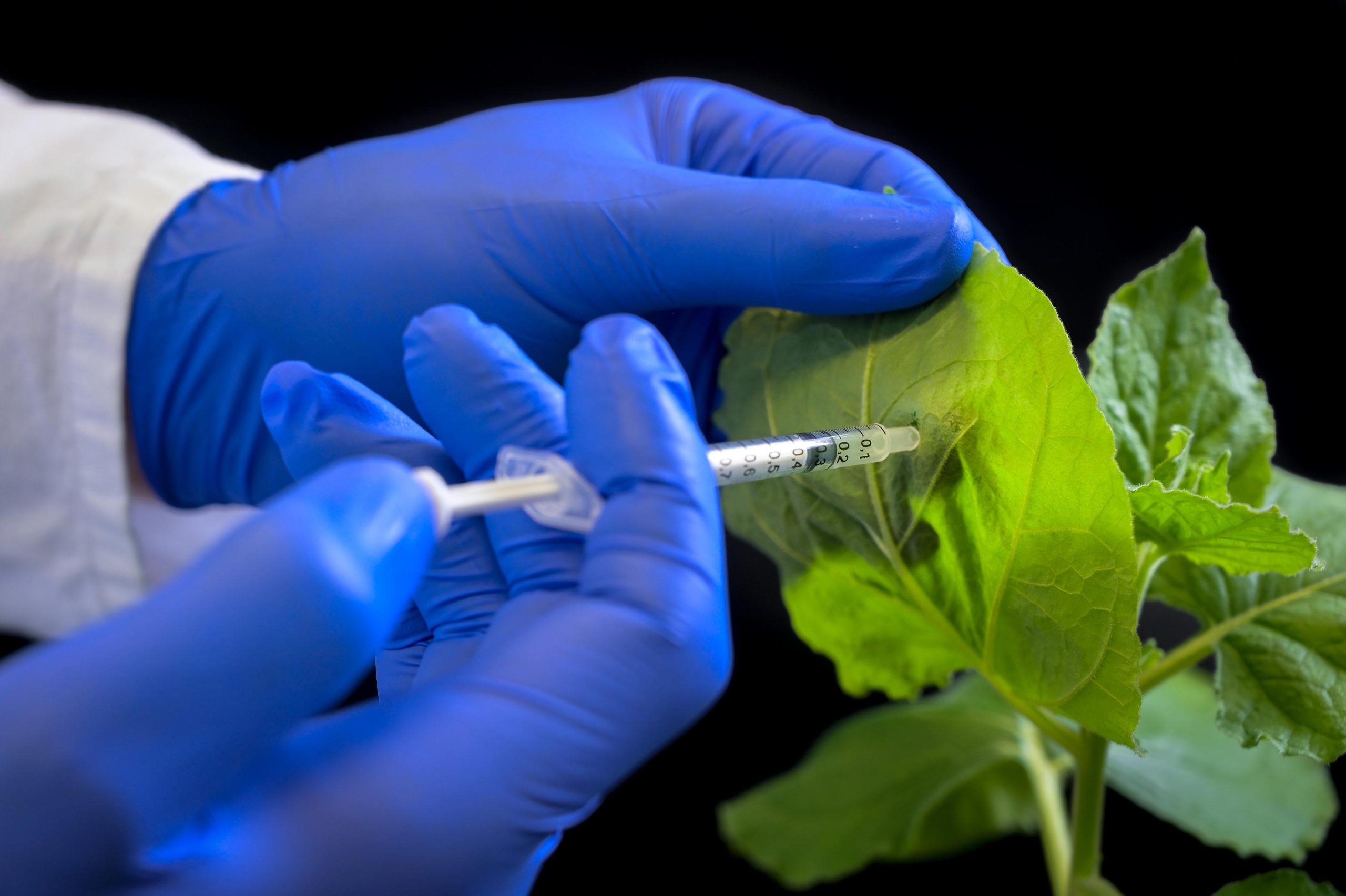
Researchers at Martin Luther University have developed groundbreaking RNA-based agents that offer high levels of protection against the Cucumber mosaic virus, a major agricultural threat.
These agents harness the plant’s immune response, enhancing its ability to combat the virus effectively. Impressively, up to 100% of treated plants in laboratory settings survived despite heavy viral infections.
RNA-Based Plant Protection
Researchers at Martin Luther University Halle-Wittenberg (MLU) have developed new RNA-based agents that effectively protect plants from the Cucumber mosaic virus (CMV), one of the most widespread and damaging viruses in agriculture and horticulture. These agents work by enhancing the plant’s natural immune system using a combination of RNA molecules.
In laboratory tests, 80 to 100 percent of treated plants survived even when exposed to a high viral load, according to a study published today (March 18) in Nucleic Acids Research. The journal recognized the research as a “breakthrough article,” highlighting its significance. The team is now focused on transitioning this discovery from the lab to real-world applications.
Challenges of the Cucumber Mosaic Virus
CMV is a highly destructive virus that threatens more than 1,200 plant species, including essential crops like squash, cucumbers, cereals, and medicinal plants. It spreads rapidly through approximately 90 species of aphids and is easily recognizable by the distinctive mosaic-like discoloration on infected leaves. Once a plant is infected, it struggles to grow, and its fruit becomes unsellable.
Currently, there are no approved treatments for CMV. However, MLU researchers aim to change that by leveraging the plant’s own defense mechanisms, guiding them more effectively to combat the virus.

The Role of siRNA in Plant Immunity
When a virus infects a plant, it uses the plant’s cells as a host. The virus multiplies via its genetic material in the form of ribonucleic acid (RNA) molecules in the plant cells. Once injected, these foreign RNA molecules trigger an initial response from the plant’s immune system. Special enzyme scissors recognize and cut the viral RNA molecules.
This process produces small interfering RNAs (siRNAs), which spread throughout the plant and trigger a second step of the immune response. The siRNA molecules bind to special protein complexes and guide them to the RNA molecules of the virus. Once there, the proteins begin to break down the harmful RNA molecules of the virus by converting them into harmless, degradable fragments.
Enhancing Plant Defense with edsRNA
“In general, this defense process is not very effective. A viral infection produces many different siRNA molecules, but only a few have a protective effect,” says Professor Sven-Erik Behrens from the Institute of Biochemistry and Biotechnology at MLU.
His team has developed a method to identify siRNA molecules that are highly efficient in the process. In a further important step, they were now able to combine several of these siRNA molecules into so-called efficient double-stranded RNA molecules (edsRNAs), which are particularly suitable for use in plants.
These edsRNAs act as a kind of “package” that is broken down into the siRNAs soon after entering the plant cells. In this way, a large number of highly effective siRNA molecules can exert a protective, antiviral effect on the spot.
Effective Protection in Lab Conditions
The team conducted numerous laboratory experiments on the model plant Nicotania benthamiana and was able to show that edsRNA-based active agents reliably protect against the Cucumber mosaic virus.
“The plants in our experiments were infected with a very high viral load: all of our untreated plants died,” explains Behrens. In contrast, 80 to 100 percent of the treated plants survived. There’s another special advantage of edsRNA agents: when the package is broken down, a bunch of efficient siRNA molecules is produced that exclusively attack the virus at different sites. This significantly increases the protective effect.
“RNA viruses such as the Cucumber mosaic virus are dangerous because they can evolve rapidly. In addition, the genetic material of this virus is made up of three separate parts, which can get mixed up, further increasing the chance of new mutations. To achieve maximum protection against the virus, our active ingredients target different parts of the genome,” says Behrens.
The team has also optimized the process of screening for efficient siRNAs and can adapt the procedure to target new viral mutations within two to four weeks. “Time is an important factor: when a new virus variant emerges, we can very quickly modify the active agent accordingly,” Behrens explains. The approach may also be applied to other pathogens and pests.
Future Directions and Commercialization
Until now, the substances have been administered manually in the laboratory, either by injection or by rubbing them into the plant leaves. The team is working with pharmacist and drug delivery specialist Professor Karsten Mäder at MLU to make the RNA-based substances more durable and easier to apply to plants. For example, they could be sprayed on.
At the same time, the researchers are planning field trials to test the RNA-based substances under real conditions. And they are talking to companies about future industrial production. In addition, potential new crop protection products still have to go through an approval process, so it will be some time before a product to combat the Cucumber mosaic virus enters the market.
“However, we are convinced that our approach is feasible. The first crop protection product with an RNA-based active ingredient was recently approved in the USA,” says Behrens.
Reference: “A new level of RNA-based plant protection: dsRNAs designed from functionally characterized siRNAs highly effective against Cucumber mosaic virus” by Marie Knoblich, Torsten Gursinsky, Selma Gago-Zachert, Claus Weinholdt, Jan Grau and Sven-Erik Behrens, 19 March 2025, Nucleic Acids Research.
DOI: 10.1093/nar/gkaf136
The editors of “Nucleic Acids Research” selected the paper by the MLU researchers as a “breakthrough article.” Only two to three per cent of the articles published in “Nucleic Acids Research” receive this special designation every year. Around 1,300 articles appeared in the journal in 2024.
The work was funded by the German Research Foundation (DFG), the Federal Ministry of Education and Research (BMBF), and the state of Saxony-Anhalt.
Never miss a breakthrough: Join the SciTechDaily newsletter.
Follow us on Google and Google News.
2 Comments
Hope that if this ever makes it to mass market use there is some kind of law requiring product at retail to disclose these genetic “agents” were used.
how many centuries away is it to be available to the public for trials of there own, Instead of letting it out to billionaire big pharma. ? for them to squeeeze out a unaffordanle product