
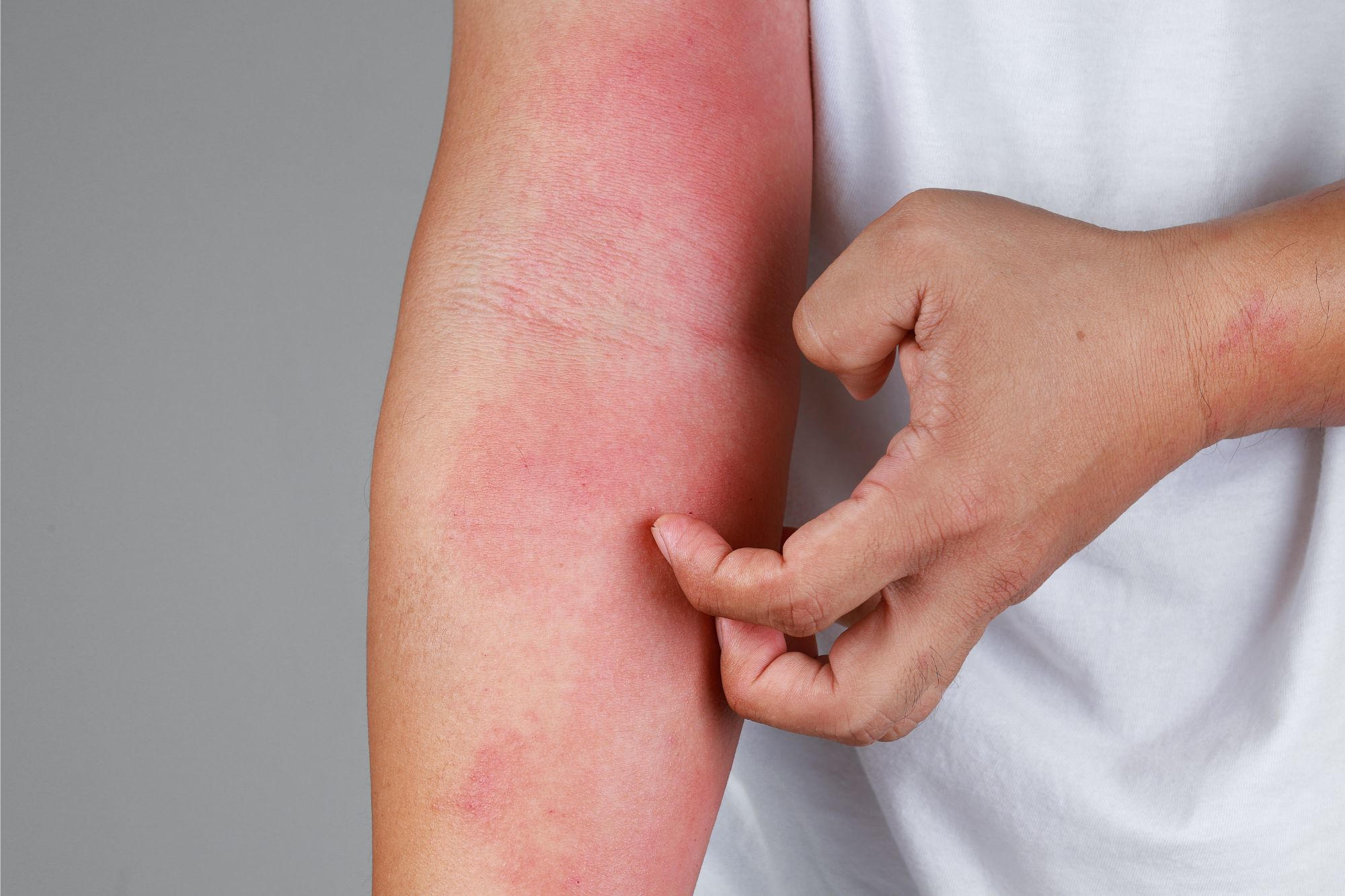
Oral antihistamines are commonly used to relieve eczema symptoms, but new research from McMaster University found that they provide only limited benefit.
For people dealing with eczema, antihistamines may seem like an obvious way to ease itching and improve sleep. But a large review from McMaster University found that oral antihistamines provide little meaningful relief for eczema, and some commonly used versions may also cause cognitive side effects.
Many antihistamines are available without a prescription and are widely kept in households. They are often taken in hopes of reducing the itching and sleep disruption associated with eczema, also known as atopic dermatitis. Yet clinical guidelines have differed over whether to recommend them because the evidence for benefit has remained unclear.
Researchers addressed that uncertainty with a systematic review of 47 randomized trials involving 6,230 children and adults with mild to severe eczema. The analysis, published in the BMJ, was the most comprehensive examination of the question to date. It found that oral antihistamines do not meaningfully improve the outcomes considered most important for controlling eczema and, in some cases, can increase the risk of cognitive impairment.
“Eczema care increasingly focuses on controlling skin and immune inflammation with moisturizers, topical anti-inflammatory treatments, and whole-body treatments like phototherapy, biologics, and oral JAK inhibitors. That makes it important to know whether antihistamines add important benefit or mostly add treatment burden and harm,” says senior author Derek Chu, associate professor with McMaster’s Department of Medicine, Canadian Institutes of Health Research Chair in Allergy, and Lead of Canada’s Allergy Clinical Trials Network.
Antihistamines offered little meaningful relief
The researchers separated the medications into two groups: newer, second-generation antihistamines and older, first-generation antihistamines.
Second-generation drugs – sold under brand names including Reactine, Claritin, Aerius, Allegra, Rupall, and Blexten – produced only small improvements in eczema severity and itching. Those changes were not large enough to meet what patients and clinicians would generally consider an important improvement.
The results were less favorable for first-generation antihistamines – commonly sold as Benadryl, Chlor-Tripolon and Polaramine – which produced no noticeable improvement in eczema symptoms. These older drugs, however, likely increase cognitive impairment, including drowsiness, confusion, slower thinking, and poorer performance at school or work. Evidence increasingly suggests that some of these effects can persist into the days after use.
Cognitive effects were much lower with newer second-generation antihistamines and varied by medication (bilastine, desloratadine, and fexofenadine being least sedating).
Findings challenge routine antihistamine use
“The findings support moving away from routine antihistamine use in atopic dermatitis care and toward treatments that are more effective, less likely to cause harm, and are more certain to control eczema inflammation. This may also help keep eczema control as simple and straightforward as possible, with patients focusing on high-value treatments,” says Chu, who holds a joint appointment with McMaster’s Department of Health Research Methods, Evidence and Impact.
The researchers emphasize that oral antihistamines still have an important role in treating allergic conditions such as hay fever, seasonal allergies, and hives.
Reference: “Antihistamines for atopic dermatitis (eczema): systematic review and network meta-analysis of randomised trials” by Alexandro W L Chu, Aaron Wen, Gordon H Guyatt, Muhammad Rao, Layla Bakaa, Irene X Zhao, Yetiani Roldan, Jonathan M Spergel, Jennifer LeBovidge, Mark Boguniewicz, Stephen A Martin, Mary Laura Lind, Jonathan I Silverberg, Peter A Lio, Rachel N Asiniwasis, Julie Wang, Anna De Benedetto, Matthew Greenhawt, Kathryn E Wheeler, Peck Y Ong, Winfred T Frazier, Harrison Nelson, Monica O’Brien, Korey Capozza, Wendy Smith Begolka, Donna D Gardner, Lynda C Schneider and Derek K Chu, 29 July 2026, BMJ.
DOI: 10.1136/bmj-2026-100163
The work was commissioned by the American Academy of Allergy, Asthma & Immunology and American College of Allergy, Asthma and Immunology through the Joint Task Force on Practice Parameters for Atopic Dermatitis.
Never miss a breakthrough: Join the SciTechDaily newsletter.
Follow us on Google and Google News.