
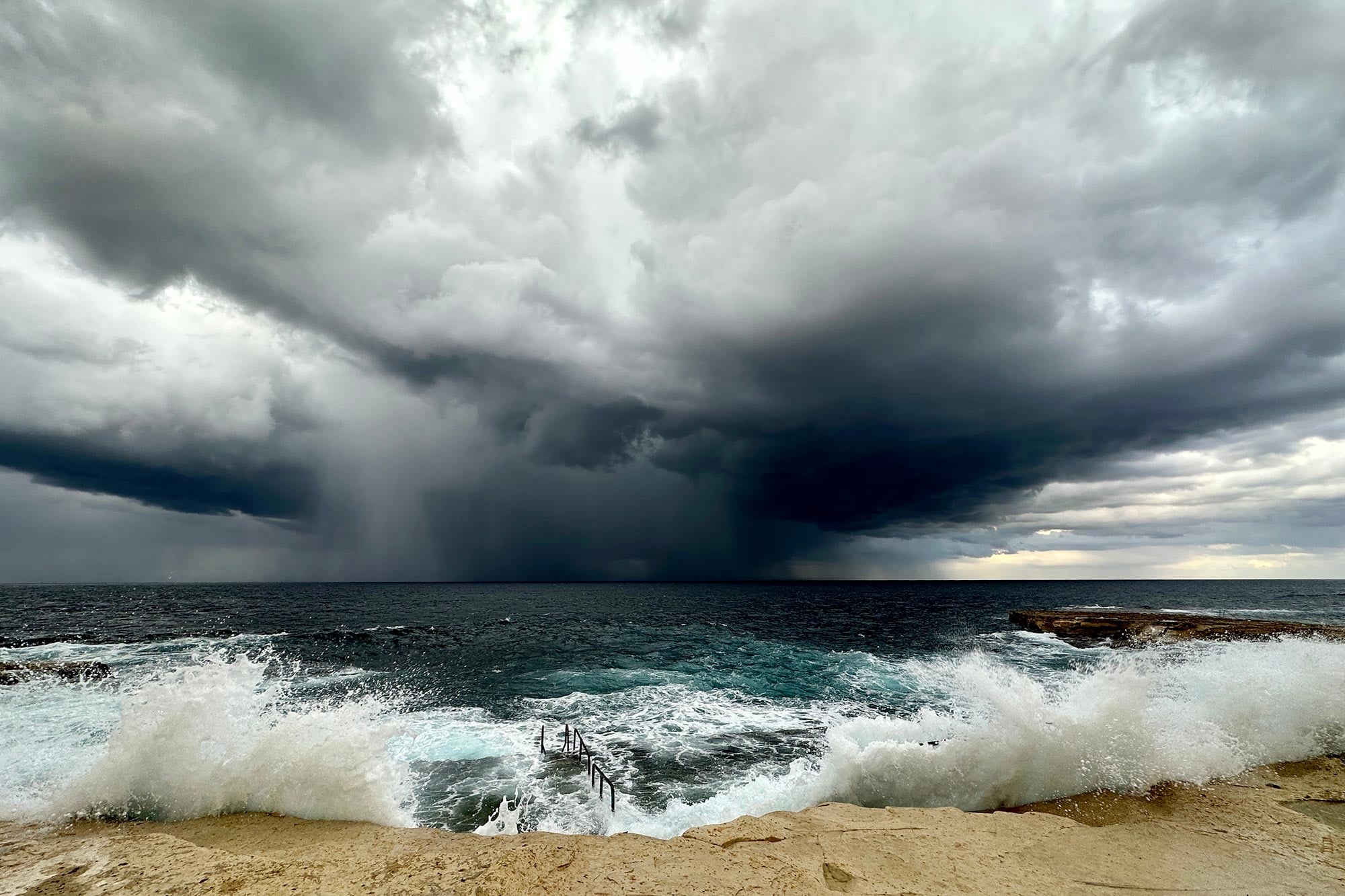
Coastal ecosystems are being crushed by rising sea levels linked to urbanization.
Beaches across the globe are experiencing a form of “crushing,” a process driven by rising sea levels linked to climate change, along with the growing development of coastal regions. These pressures disrupt the wide variety of species that live in sandy environments, reduce opportunities for tourism and fishing, and increase the risk faced by coastal cities as the ocean moves inland.
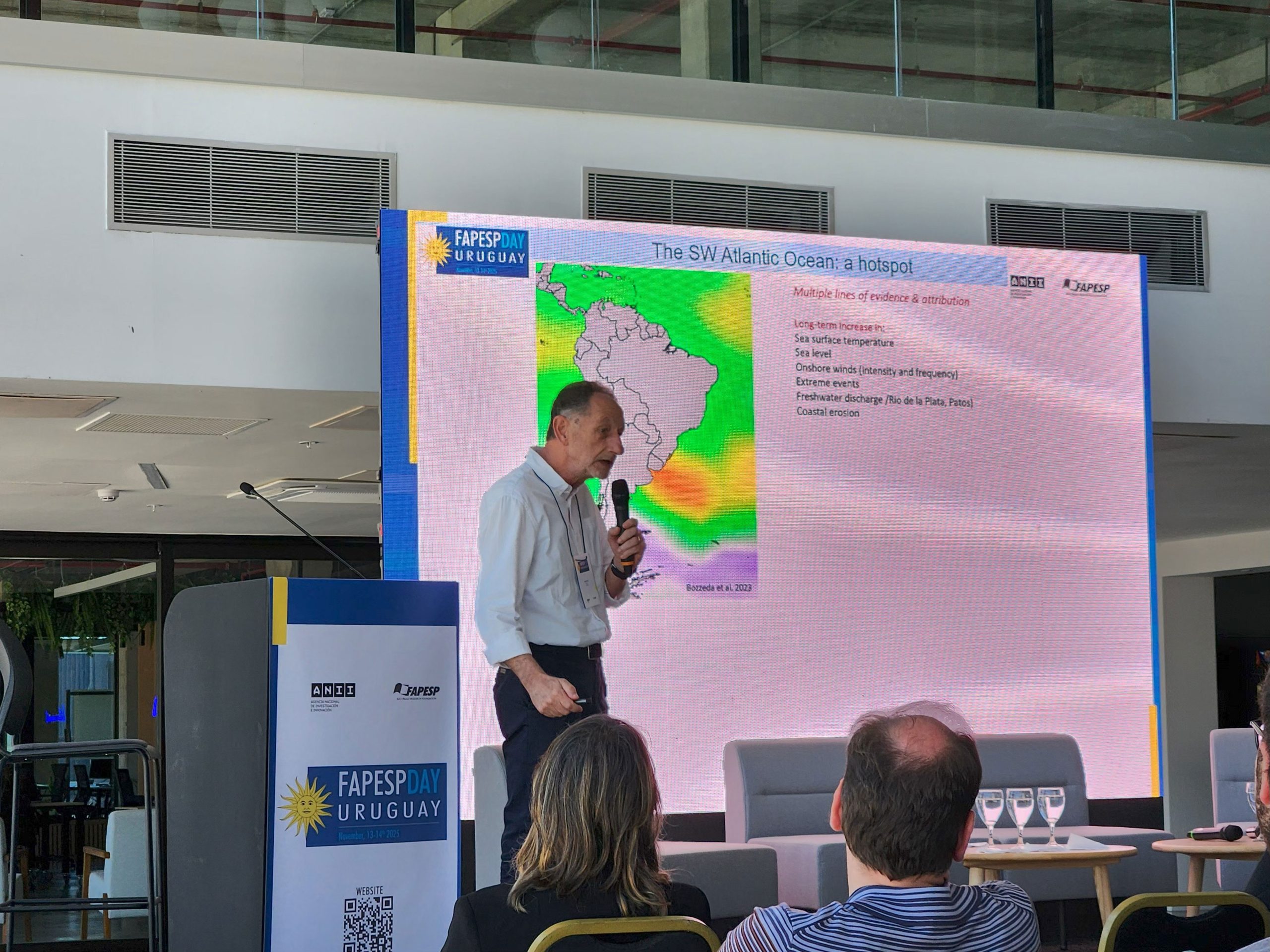
This concern was highlighted by Uruguayan marine scientist Omar Defeo, a professor at Uruguay’s University of the Republic (UdelaR), during the FAPESP Day Uruguay symposium, which opened on November 13 in Montevideo.
“Almost half of the beaches will disappear by the end of the century. We in Uruguay, Brazil, and Argentina share these resources. Therefore, we must work in partnership with Brazilian scientists to manage and conserve coastal ecosystems,” Defeo said in his presentation.
Defeo explained that coastal environments include three interconnected areas. The first is the dune (post-beach), located above the high tide line where wind builds up sand into ridges or “sand mountains.” The second is the beach (beach face), a sandy stretch that is uncovered during low tide and covered again at high tide. The third is the submerged part (foreshore), which runs from the lowest point of the tide to the place where waves begin to break.
An Interconnected System at Risk
“These zones form an interconnected coastal ecosystem that’s essential for environmental balance. How are they interconnected? The wind carries sand from the dry area to the surf zone [the submerged part]. And when the waves advance, they bring the sediment back to the beach. This bidirectional movement generates a constant exchange in which one zone feeds the other. When a storm comes, the dune acts as a buffer. So when urbanization eliminates the dune, the result can be the destruction of seaside homes,” said the scientist.
In a study conducted in collaboration with Brazilian researchers supported by FAPESP, Defeo’s team found that disturbances in any one of the three coastal zones caused by urban development can lead to negative consequences throughout the entire system. The research, directed by Brazilian scientist Guilerme Corte, examined biodiversity at 90 sites across 30 beaches on the northern coast of São Paulo, Brazil.
The findings, reported in the journal Marine Pollution Bulletin, indicate that the volume of visitors is the strongest urbanization factor influencing beach ecosystems. Higher numbers of beachgoers are linked to declines in both species diversity and biomass, with the steepest reductions occurring in submerged zones. Construction directly on the sand and the use of mechanical cleaning equipment were also shown to lower biomass and species richness.
However, the study noted that overall abundance (number of individuals) tended to increase in areas located near urban centers. The researchers explain that this pattern is driven by the growth of opportunistic organisms, including polychaetes, which thrive on the additional organic material introduced through human activity.
“Above all, the study showed that human impacts aren’t restricted to the place where they occur [on dry sand]. Stressors such as construction and high numbers of visitors on the upper part of the beach negatively affect biodiversity in the lower and submerged areas,” he said.
Global Patterns of Erosion
Another study conducted by Defeo in partnership with Brazilian scientists and published in the journal Frontiers in Marine Science showed that one-fifth of the 315 beaches analyzed around the globe have intense, extreme, or severe erosion rates. The group analyzed the various factors behind the phenomenon, including sea level rise, wind patterns, and waves.
“We observed that human activities play a significant role, particularly on reflective beaches [with a steep slope that causes waves to dissipate their energy abruptly on the beach] and intermediate beaches [which have characteristics of both reflective beaches and calm or dissipative beaches],” he pointed out.
Reference: “Evaluation of the effects of urbanization and environmental features on sandy beach macrobenthos highlights the importance of submerged zones” by Guilherme N. Corte, Helio H. Checon, Yasmina Shah Esmaeili, Omar Defeo and Alexander Turra, 23 July 2022, Marine Pollution Bulletin.
DOI: 10.1016/j.marpolbul.2022.113962
Defeo’s presentation took place during the first scientific session of the symposium, which was dedicated to oceanographic sciences. Other participants included Marcelo Dottori from the University of São Paulo (USP), who moderated the panel; Cristiana Seixas from the State University of Campinas (UNICAMP); and Natália Venturini from UdelaR.
Never miss a breakthrough: Join the SciTechDaily newsletter.
Follow us on Google and Google News.
19 Comments
Models all the way down. Observations don’t matter anymore … it’s not science, it’s religion and frustrating that a science website is promoting religion.
What utterly absurd nonsense. Get a proper job.
#eijitt
It’s all guess work by scientists as they said those exact words 10 years ago and 10 years prior to that also …..I’ve seen satalite pictures of hightide on a beach (papamoa) nz today and 10 years ago and if anything it’s lowerd not rising so yea I think scientists are p.ssing into the wind ….
Total BS!! 15 years ago they said that most of Florids would be under water!! No such thing, these guys are truly dumb people!!!
Now, where have I heard this before? That’s right, everywhere since 1980. Number of beaches lost to date…..Zero!
Funny, Obama night a mansion in Martha’s Vineyard. He must not be worried.
What utter funking nonsense. Get a real job.
#FOOL
Time to invest in Arizona beach property to which you can gain access by purchasing the Brooklyn Bridge from Professor Harold Hill.
Blah blah blah. According to you hacks we should all be dead by now
No. They won’t. They’ve been saying this for centuries. Just more rhetoric to pour money into green deals so individuals get rich. Water lines across the world haven’t moved. At all.
Tired of these ridiculous predictions. I think we need to publish all the fake predictions made by climate scientists since 1980…. and then we can all safely ignore them.
This is a good start: https://wattsupwiththat.com/failed-prediction-timeline/
Hopefully. All alarmist scientists will disappear long before end of century
Oddly enough beaches do change and not for the better. Sea-walls lead to scouring both in front of the sea-wall and at its ends People trampling through sand-dunes enable tracks that lower the the sand-level to enable high tides to breach the first row of dunes, or more causing flooding be and the dune, and as for the incomprehensibly foolish who build their houses/ high rise apartment units on the first or second row of dunes they should be uninsurable. I won’t add more as I haven’t read the paper documenting the conclusions, and wasting my time time in replying any more to idiots is not worth the bother.
SciTech obviously doesn’t mean science, because not one inch has the sea risen in the last 20.years of my markers, over 50 years for several other people’s markers.
Rising sea levels is the false statement here.
Sea level rise is not seen in observations.
Beach erosion is a different dynamic, usually due to lack of sand replenishment.
Lack of new sand supplies probably due to dams upstream capturing sediment.
The Atchafalaya River diversion is a case study.
Not Credible
Does not line up with the obvious evidence of the tidal records
Pathetic. Only tbe looney left eat up this crap.
So… the sky is falling! the sky is falling! Please do not discourage the climate scientists, I recommend they continue to be funded by tax dollars paid by hard working law abiding citizens. Where else are you folks going to get such high comedy for your money. Besides, the more silly predictions they crank out the more money they receive and there is not a thing you can do about it. That’s all, TWS.