
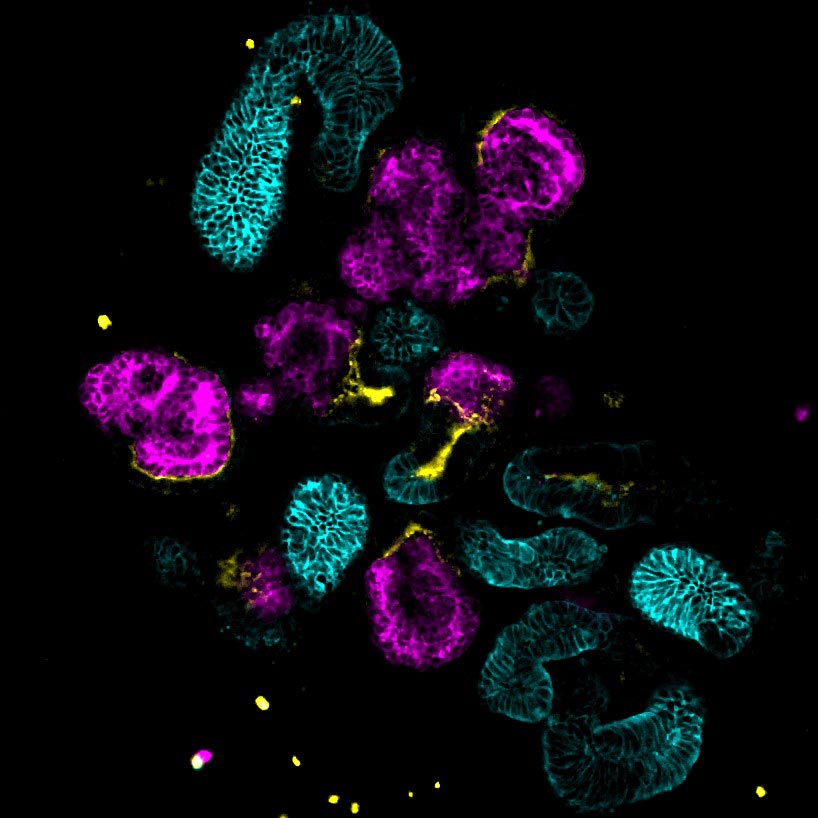
Researchers have discovered that Schwann Cell Precursors are the origin of kidney tumors in patients with tuberous sclerosis complex (TSC), a rare genetic disease.
Scientists have solved a medical mystery in a rare, poorly understood disease by uncovering which cells cause tumors in patients with tuberous sclerosis complex (TSC). They did this by creating genetically engineered kidney organoids, or “mini-kidneys” grown from human tissue, as described in a paper published on July 5 in the journal Cell Reports.
“The cells at the origin of tuberous sclerosis tumors have been a mystery for decades,” said senior author Dr. Bill Stanford, senior scientist at The Ottawa Hospital and professor at the University of Ottawa. “Our results can help find possible treatment targets for this challenging disease.”
TSC is a rare genetic disease that causes the growth of benign tumors in the skin, brain, heart, kidneys, or lungs. TSC tumors are remarkably diverse, arising in children or adults with a range of symptoms from mild to life-threatening and often include seizures and kidney problems. Treatment options are limited and there is no cure.
Kidney Disease in TSC Patients
“Kidney disease is the leading cause of death in patients with TSC. Around 60 to 80 percent of patients develop tumors in their kidneys, often reducing kidney function and sometimes leading to catastrophic bleeding,” said lead Dr. Adam Pietrobon, MD-PhD student at The Ottawa Hospital and the University of Ottawa. “There were no adequate lab models to study how TSC affects the kidney, so we made one ourselves.”
Mutations in the TSC1 or TSC2 gene are the root cause of TSC. Rather than being inherited from their parents, these mutations arise spontaneously during development or early life for most patients. This makes TSC a difficult disease to research. Lab researchers typically use animals to study human diseases, however, there was no animal model that fully captured TSC’s impact on the kidneys.
TSC tumors in the kidney have baffled experts because they are incredibly diverse in size, cellular makeup, and gene expression, even within the same patient. What causes this wide diversity was unknown, and it makes treatment challenging.
To better understand the impact of TSCs on the kidneys, the team grew 3D kidney tissue in the lab from human stem cells that were genetically engineered to have a TSC1 or TSC2 mutation. Known as organoids, these miniature, simplified versions of kidneys had a genetic profile similar to TSC tumors found in patients. The researchers then took single cells from these kidney organoids and injected them into the kidneys of mice, where they grew into human TSC tumors.
Schwann Cell Precursors: The Origin of TSC Kidney Tumors
Using these organoids, the scientists revealed that cells called Schwann Cell Precursors are where TSC tumors start in the kidney. They also discovered this single mutation affects the development of many different kinds of cells, which explains the variation in kidney tumors even within the same person.
“Not only can these ‘mini-kidneys’ help us to better understand this disease, they can also be used to test new therapies,” said Dr. Pietrobon.
Reference: “Renal organoid modeling of tuberous sclerosis complex reveals lesion features arise from diverse developmental processes” by Adam Pietrobon, Julien Yockell-Lelièvre, Trevor A. Flood and William L. Stanford, 5 July 2022, Cell Reports.
DOI: 10.1016/j.celrep.2022.111048
Never miss a breakthrough: Join the SciTechDaily newsletter.
Follow us on Google and Google News.