
Close Menu
    Facebook X (Twitter) Instagram
    SciTechDaily
    • Biology
    • Chemistry
    • Earth
    • Health
    • Physics
    • Science
    • Space
    • Technology
    Facebook X (Twitter) Pinterest YouTube RSS
    SciTechDaily
    Home»Biology»Self-Assembly Biomaterial Discovery Enables 3D Printing of Tissue-Like Vascular Structures
    Biology

    Self-Assembly Biomaterial Discovery Enables 3D Printing of Tissue-Like Vascular Structures

    By University of NottinghamMarch 4, 2020No Comments3 Mins Read
    Facebook Twitter Pinterest Telegram LinkedIn WhatsApp Email Reddit
    Share
    Facebook Twitter LinkedIn Pinterest Telegram Email Reddit
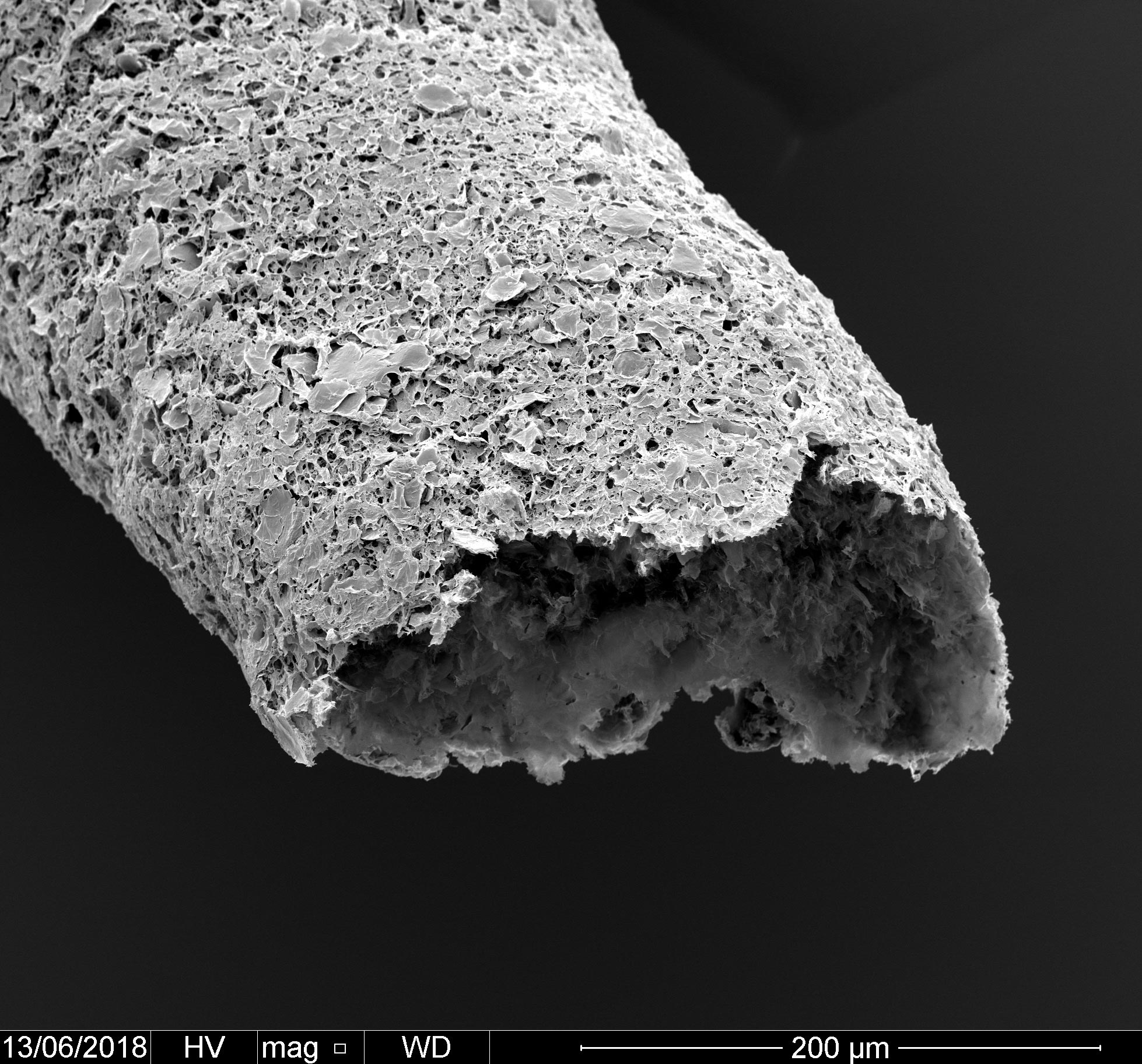
    Tubular Structure Close up
    Close-up of a tubular structure made by simultaneous printing and self-assembling between graphene oxide and a protein. Credit: Professor Alvaro Mata

    An international team of scientists have discovered a new material that can be 3D printed to create tissue-like vascular structures.

    In a new study published today (March 4, 2020) in Nature Communications, led by Professor Alvaro Mata at the University of Nottingham and Queen Mary University London, researchers have developed a way to 3D print graphene oxide with a protein which can organize into tubular structures that replicate some properties of vascular tissue.
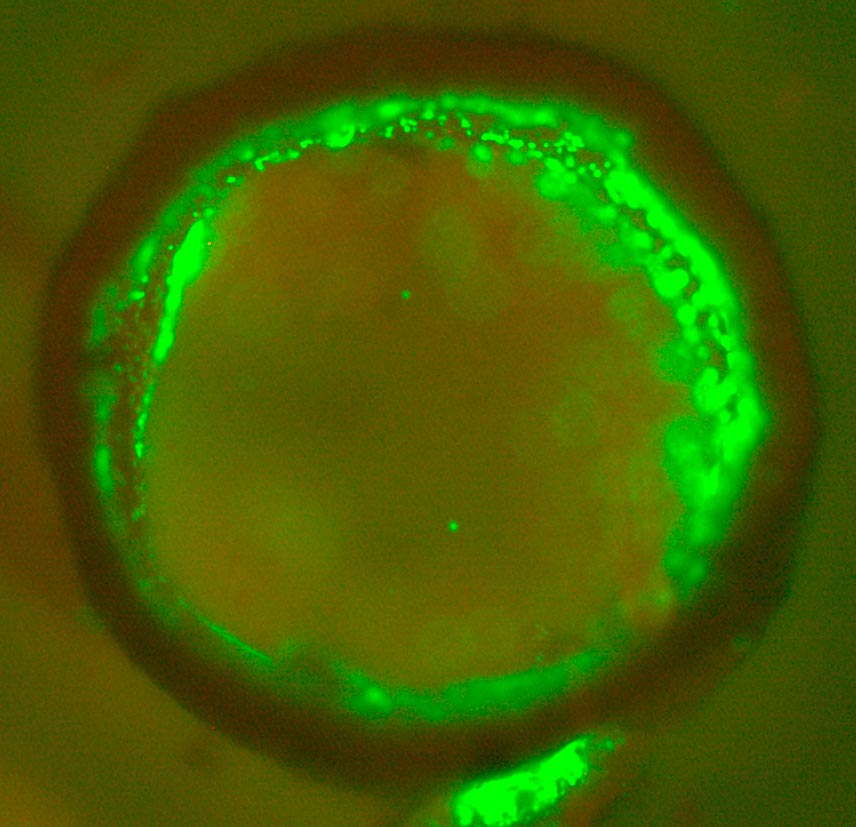
    Bioprinted Tubular Structure Cross section
    Cross-section of a bioprinted tubular structure with endothelial cells (green) on and embedded within the wall. Credit: Professor Alvaro Mata

    Professor Mata said: “This work offers opportunities in biofabrication by enabling simultaneous top-down 3D bioprinting and bottom-up self-assembly of synthetic and biological components in an orderly manner from the nanoscale. Here, we are biofabricating micro-scale capillary-like fluidic structures that are compatible with cells, exhibit physiologically relevant properties, and have the capacity to withstand flow. This could enable the recreation of vasculature in the lab and have implications in the development of safer and more efficient drugs, meaning treatments could potentially reach patients much more quickly.”

    Material with remarkable properties

    Self-assembly is the process by which multiple components can organize into larger well-defined structures. Biological systems rely on this process to controllably assemble molecular building-blocks into complex and functional materials exhibiting remarkable properties such as the capacity to grow, replicate, and perform robust functions.
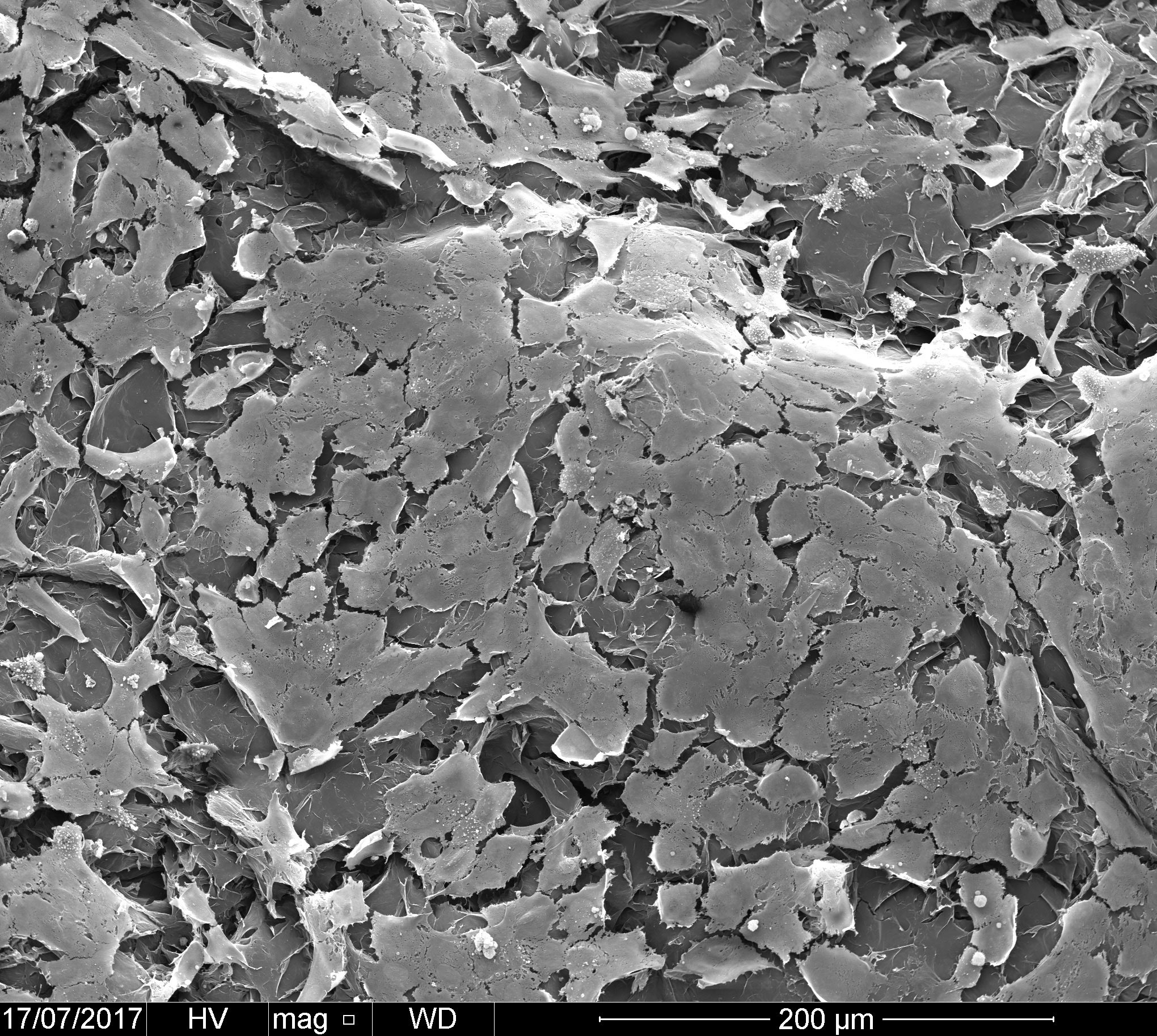
    Endothelial Cells on Printed Tubular Structures
    Scanning electron microscopy image depicting endothelial cells growing on the surface of the printed tubular structures. Credit: Professor Alvaro Mata

    The new biomaterial is made by the self-assembly of a protein with graphene oxide. The mechanism of assembly enables the flexible (disordered) regions of the protein to order and conform to the graphene oxide, generating a strong interaction between them. By controlling the way in which the two components are mixed, it is possible to guide their assembly at multiple size scales in the presence of cells and into complex robust structures.

    The material can then be used as a 3D printing bio-ink to print structures with intricate geometries and resolutions down to 10 ?m. The research team have demonstrated the capacity to build vascular-like structures in the presence of cells and exhibiting biologically relevant chemical and mechanical properties.

    Dr. Yuanhao Wu is the lead researcher on the project, she said: “There is a great interest to develop materials and fabrication processes that emulate those from nature. However, the ability to build robust functional materials and devices through the self-assembly of molecular components has until now been limited. This research introduces a new method to integrate proteins with graphene oxide by self-assembly in a way that can be easily integrated with additive manufacturing to easily fabricate biofluidic devices that allow us to replicate key parts of human tissues and organs in the lab.”

    Reference: “Disordered protein-graphene oxide co-assembly and supramolecular biofabrication of functional fluidic devices” by Yuanhao Wu, Babatunde O. Okesola, Jing Xu, Ivan Korotkin, Alice Berardo, Ilaria Corridori, Francesco Luigi Pellerej di Brocchetti, Janos Kanczler, Jingyu Feng, Weiqi Li, Yejiao Shi, Vladimir Farafonov, Yiqiang Wang, Rebecca F. Thompson, Maria-Magdalena Titirici, Dmitry Nerukh, Sergey Karabasov, Richard O. C. Oreffo, Jose Carlos Rodriguez-Cabello, Giovanni Vozzi, Helena S. Azevedo, Nicola M. Pugno, Wen Wang and Alvaro Mata, 4 March 2020, Nature Communications.
    DOI: 10.1038/s41467-020-14716-z

    Never miss a breakthrough: Join the SciTechDaily newsletter.
    Follow us on Google and Google News.

    Biomechanics Biomedical Engineering Bionanotechnology Biotechnology Cell Biology University of Nottingham
    Share. Facebook Twitter Pinterest LinkedIn Email Reddit

    Related Articles

    NIRVANA: Fast, Portable Test Can Diagnose COVID-19 and Track Variants

    Winner-Takes-All Synthetic Gene Circuit Process Opens New Pathways to Treat Cancer and Other Diseases

    New Method of 3D-Printing Soft Materials Could Jump-Start Creation of Tiny Medical Devices for the Body

    New Genetic Systems Created by Biologists to Neutralize Gene Drives

    Cells Communicate by Doing the ‘Wave’ – Scientists Reverse Engineer Cellular Mechano-Chemical Feedback System

    Programmable DNA Technique ‘Prints’ Cells to Create Diverse Biological Environments

    Video Shows Single-Cell Organism Making Complex Decisions – Resolves Century-Old Scientific Debate

    3D-Printing Living Skin With Blood Vessels Included [Video]

    MIT Develops a Synthetic Gene Circuit to Trigger Immune System Attack on Cancer

    Leave A Reply Cancel Reply

    • Facebook
    • Twitter
    • Pinterest
    • YouTube

    Don't Miss a Discovery

    Subscribe for the Latest in Science & Tech!

    Trending News

    Millions of People Have Osteopenia Without Realizing It – Here’s What You Need To Know

    Researchers Discover Boosting a Single Protein Helps the Brain Fight Alzheimer’s

    World-First Study Reveals Human Hearts Can Regenerate After a Heart Attack

    Why Your Dreams Feel So Real Sometimes and So Strange Other Times

    This Simple Home Device May Boost Brain Power in Adults Over 40

    Enormous Prehistoric Insects Puzzle Scientists

    Scientists Develop Bioengineered Chewing Gum That Could Help Fight Oral Cancer

    After 37 Years, the World’s Longest-Running Soil Warming Experiment Uncovers a Startling Climate Secret

    Follow SciTechDaily
    • Facebook
    • Twitter
    • YouTube
    • Pinterest
    • Newsletter
    • RSS
    SciTech News
    • Biology News
    • Chemistry News
    • Earth News
    • Health News
    • Physics News
    • Science News
    • Space News
    • Technology News
    Recent Posts
    • Researchers Identify the Most Common Recessive Neurodevelopmental Disorder Ever Discovered
    • This Is What Makes You Irresistible to Mosquitoes
    • Shockingly Powerful Giant Octopuses Ruled the Seas 100 Million Years Ago
    • After 100 Years, Scientists Uncover Hidden Rule Governing Cosmic Rays
    • The Milky Way Has a Hidden Edge and Scientists Finally Mapped It
    Copyright © 1998 - 2026 SciTechDaily. All Rights Reserved.
    • Science News
    • About
    • Contact
    • Editorial Board
    • Privacy Policy
    • Terms of Use

    Type above and press Enter to search. Press Esc to cancel.