

A rare policy quirk in Wales offered scientists an accidental natural experiment—and what they found could reshape how we prevent dementia.
Researchers discovered that people eligible for the shingles vaccine were 20% less likely to develop dementia years later. It’s the clearest link yet between a common virus and cognitive decline, and it might mean that a safe, already-available vaccine holds unexpected power against one of aging’s most feared conditions.
Vaccine Shows Unexpected Dementia Protection
A unique public health policy in Wales has provided some of the strongest evidence yet that a vaccine might reduce the risk of dementia. In a new study led by Stanford Medicine, researchers analyzed health records from older adults in Wales and found that those who received the shingles vaccine were 20% less likely to develop dementia over the following seven years compared to those who did not.
The study, published on April 2 in Nature, adds weight to a growing theory: that certain viruses affecting the nervous system could contribute to dementia risk. If confirmed by further research, the findings suggest a potential path toward preventing dementia may already be available.
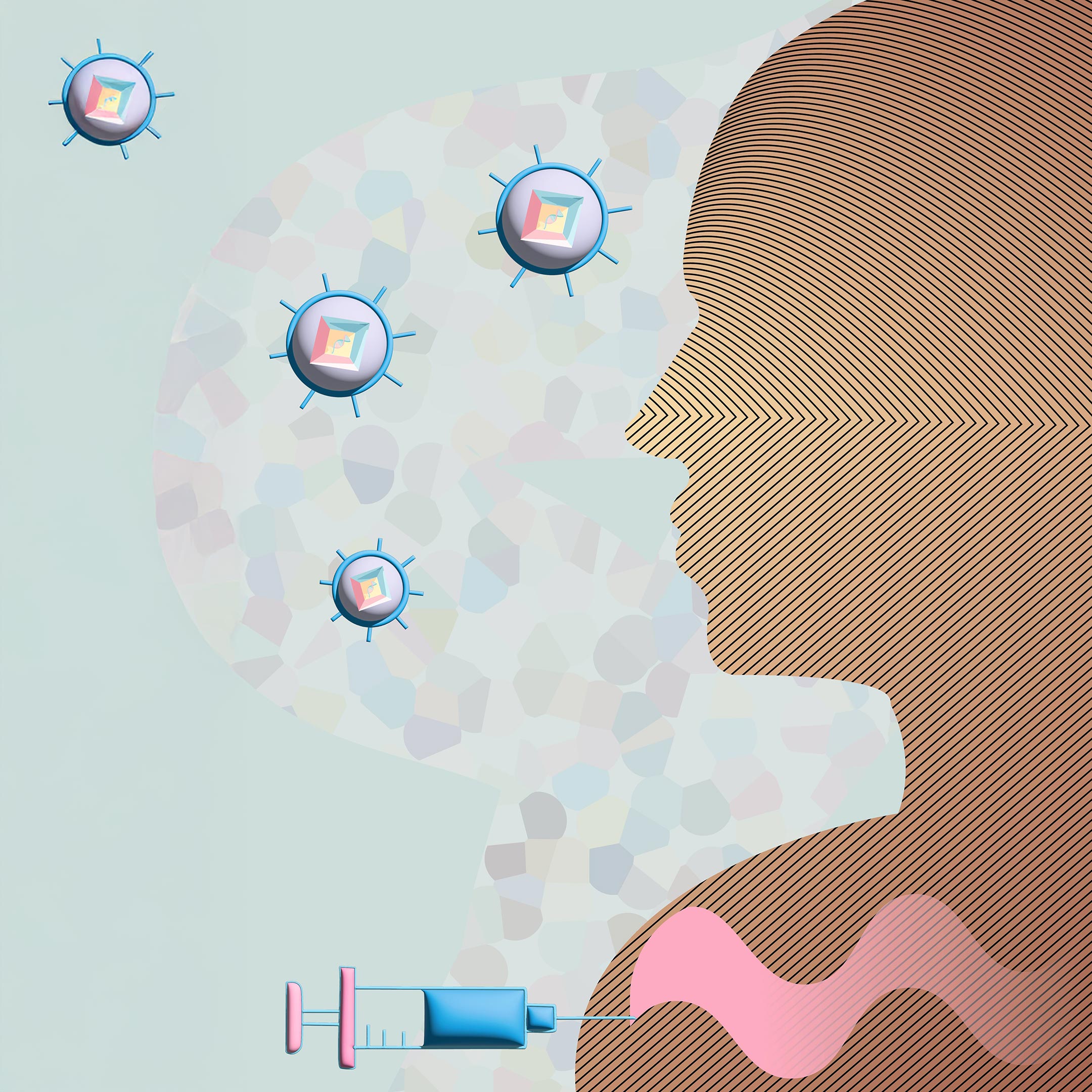
The Lingering Virus Behind Shingles and Dementia
Shingles is a painful viral infection caused by the varicella-zoster virus, the same virus responsible for chickenpox. After a person recovers from chickenpox, typically in childhood, the virus remains dormant in their nerve cells. As people age or their immune systems weaken, the virus can reactivate and cause shingles.
Dementia currently affects over 55 million people worldwide, with around 10 million new cases each year. While most dementia research has focused on the buildup of plaques and tangles in the brain, hallmarks of Alzheimer’s disease, progress in prevention and treatment has been limited. As a result, scientists are increasingly exploring other potential causes, including the role of viral infections.
Previous studies based on health records have linked the shingles vaccine with lower dementia rates, but they could not account for a major source of bias: People who are vaccinated also tend to be more health conscious in myriad, difficult-to-measure ways. Behaviors such as diet and exercise, for instance, are known to influence dementia rates, but are not included in health records.
“All these associational studies suffer from the basic problem that people who get vaccinated have different health behaviors than those who don’t,” said Pascal Geldsetzer, MD, PhD, assistant professor of medicine and senior author of the new study. “In general, they’re seen as not being solid enough evidence to make any recommendations on.”
A Rare Opportunity: Natural Experiment in Wales
But two years ago, Geldsetzer recognized a fortuitous “natural experiment” in the rollout of the shingles vaccine in Wales that seemed to sidestep the bias. The vaccine used at that time contained a live-attenuated, or weakened, form of the virus.
The vaccination program, which began Sept. 1, 2013, specified that anyone who was 79 on that date was eligible for the vaccine for one year. (People who were 78 would become eligible the next year for one year, and so on.) People who were 80 or older on Sept. 1, 2013, were out of luck — they would never become eligible for the vaccine.
These rules, designed to ration the limited supply of the vaccine, also meant that the slight difference in age between 79- and 80-year-olds made all the difference in who had access to the vaccine. By comparing people who turned 80 just before Sept. 1, 2013, with people who turned 80 just after, the researchers could isolate the effect of being eligible for the vaccine.
The circumstances, well-documented in the country’s health records, were about as close to a randomized controlled trial as you could get without conducting one, Geldsetzer said.
A Near-Perfect Study Design
The researchers looked at the health records of more than 280,000 older adults who were 71 to 88 years old and did not have dementia at the start of the vaccination program. They focused their analysis on those closest to either side of the eligibility threshold — comparing people who turned 80 in the week before with those who turned 80 in the week after.
“We know that if you take a thousand people at random born in one week and a thousand people at random born a week later, there shouldn’t be anything different about them on average,” Geldsetzer said. “They are similar to each other apart from this tiny difference in age.”
The same proportion of both groups likely would have wanted to get the vaccine, but only half, those almost 80, were allowed to by the eligibility rules.
“What makes the study so powerful is that it’s essentially like a randomized trial with a control group — those a little bit too old to be eligible for the vaccine — and an intervention group — those just young enough to be eligible,” Geldsetzer said.
Big Results: Lower Dementia and Shingles Rates
Over the next seven years, the researchers compared the health outcomes of people closest in age who were eligible and ineligible to receive the vaccine. By factoring in actual vaccination rates — about half of the population who were eligible received the vaccine, compared with almost none of the people who were ineligible — they could derive the effects of receiving the vaccine.
As expected, the vaccine reduced the occurrence over that seven-year period of shingles by about 37% for people who received the vaccine, similar to what had been found in clinical trials of the vaccine. (The live-attenuated vaccine’s effectiveness wanes over time.)
By 2020, one in eight older adults, who were by then 86 and 87, had been diagnosed with dementia. But those who received the shingles vaccine were 20% less likely to develop dementia than the unvaccinated.
“It was a really striking finding,” Geldsetzer said. “This huge protective signal was there, any which way you looked at the data.”
No Other Explanation Fits
The scientists searched high and low for other variables that might have influenced dementia risk but found the two groups to be indistinguishable in all characteristics. There was no difference in the level of education between the people who were eligible and ineligible, for example. Those who were eligible were not more likely to get other vaccinations or preventive treatments, nor were they less likely to be diagnosed with other common health conditions, such as diabetes, heart disease, and cancer.
The only difference was the drop in dementia diagnoses.
“Because of the unique way in which the vaccine was rolled out, bias in the analysis is much less likely than would usually be the case,” Geldsetzer said.
Nevertheless, his team analyzed the data in alternate ways — using different age ranges or looking only at deaths attributed to dementia, for example — but the link between vaccination and lower dementia rates remained.
“The signal in our data was so strong, so clear and so persistent,” he said.
Stronger Protection for Women
In a further finding, the study showed that protection against dementia was much more pronounced in women than in men. This could be due to sex differences in immune response or in the way dementia develops, Geldsetzer said. Women on average have higher antibody responses to vaccination, for example, and shingles is more common in women than in men.
Whether the vaccine protects against dementia by revving up the immune system overall, by specifically reducing reactivations of the virus or by some other mechanism is still unknown.
What We Still Don’t Know
Also unknown is whether a newer version of the vaccine, which contains only certain proteins from the virus and is more effective at preventing shingles, may have a similar or even greater impact on dementia.
Geldsetzer hopes the new findings will inspire more funding for this line of research.
“At least investing a subset of our resources into investigating these pathways could lead to breakthroughs in terms of treatment and prevention,” he said.
In the past two years, his team has replicated the Wales findings in health records from other countries, including England, Australia, New Zealand, and Canada, that had similar rollouts of the vaccine. “We just keep seeing this strong protective signal for dementia in dataset after dataset,” he said.
Pushing for a Definitive Trial
But Geldsetzer has set his sights on a large, randomized controlled trial, which would provide the strongest proof of cause and effect. Participants would be randomly assigned to receive the live-attenuated vaccine or a placebo shot.
“It would be a very simple, pragmatic trial because we have a one-off intervention that we know is safe,” he said.
Geldsetzer is seeking philanthropic funding for the trial as the live-attenuated vaccine is no longer manufactured by pharmaceutical companies.
And such a trial might not take long to see results. He pointed to a graph of the Wales data tracking the dementia rates of those who were eligible and ineligible for the vaccine. The two curves began to separate in about a year and a half.
Reference: “A natural experiment on the effect of herpes zoster vaccination on dementia” by Markus Eyting, Min Xie, Felix Michalik, Simon Heß, Seunghun Chung and Pascal Geldsetzer, 2 April 2025, Nature.
DOI: 10.1038/s41586-025-08800-x
A researcher from the Vienna University of Economics and Business also contributed to the work.
The study received funding from The Phil & Penny Knight Initiative for Brain Resilience, the National Institute on Aging (grant R01AG084535), the National Institute of Allergy and Infectious Diseases (grant DP2AI171011), and Chan Zuckerberg Biohub.
Never miss a breakthrough: Join the SciTechDaily newsletter.
Follow us on Google and Google News.
2 Comments
You can easily and naturally lower your Dementia rate far better than any “vaccine” can.
Stop basing your diet on processed foods and sugars.
Get exercise (and that means your brain too)
Fasting, this is a big one that the medical industry wont tell you about. Why? Because it takes money right out of their pockets.
And get 7+ hours of quality sleep every day.