
Close Menu
    Facebook X (Twitter) Instagram
    SciTechDaily
    • Biology
    • Chemistry
    • Earth
    • Health
    • Physics
    • Science
    • Space
    • Technology
    Facebook X (Twitter) Pinterest YouTube RSS
    SciTechDaily
    Home»Biology»Shocking Scientists: Spotted Hyena Found in Egypt for the First Time in 5,000 Years
    Biology

    Shocking Scientists: Spotted Hyena Found in Egypt for the First Time in 5,000 Years

    By De GruyterJanuary 24, 2025No Comments3 Mins Read
    Facebook Twitter Pinterest Telegram LinkedIn WhatsApp Email Reddit
    Share
    Facebook Twitter LinkedIn Pinterest Telegram Email Reddit
    Spotted Hyena
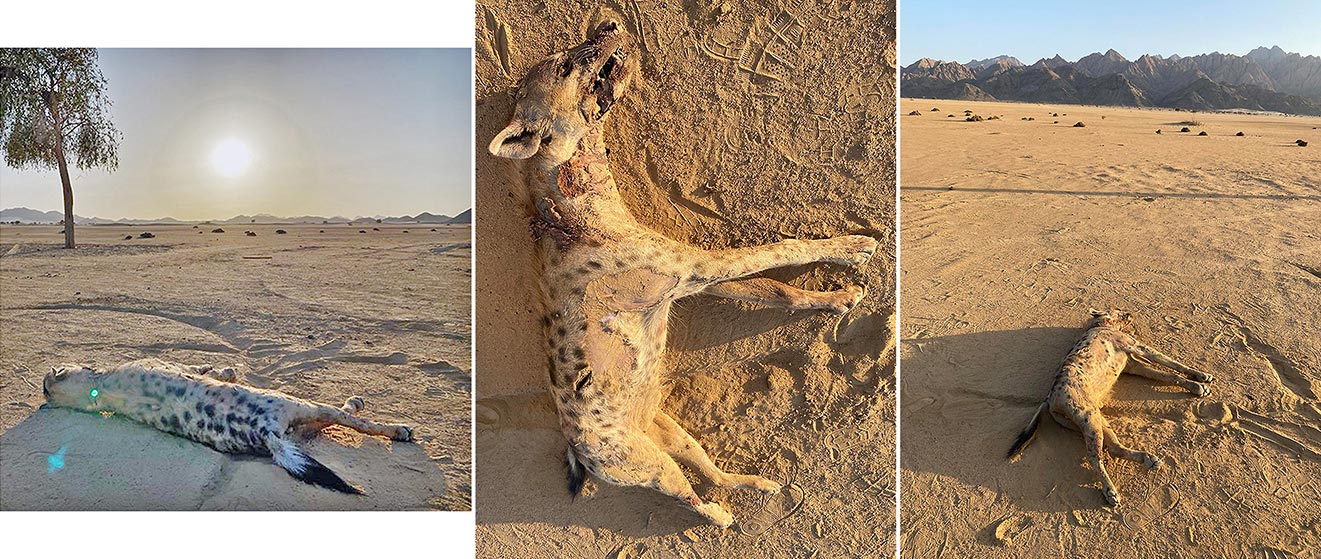
    The spotted hyena’s cadaver in Elba Protected Area. Credit: Courtesy of the Author. Mammalia/De Gruyter Brill.

    Climatic conditions, shifts in livestock grazing, and human activities in the region may have contributed to a doomed journey.

    A spotted hyena (Crocuta crocuta) has been spotted in southeastern Egypt for the first time in thousands of years, marking a significant event in the region’s wildlife history.

    According to a study published in Mammalia by De Gruyter, the hyena was a lone individual and was captured and killed by locals approximately 30 kilometers from the Sudanese border.

    “My first reaction was disbelief until I checked the photos and videos of the remains,” said the study’s lead author, Dr. Adbullah Nagy from Al-Azhar University, Egypt. “Seeing the evidence, I was completely taken aback. It was beyond anything we had expected to find in Egypt.”

    Hyena Sighted Far from Known Range

    The sighting took place some 500km north of the known range of spotted hyenas in neighboring Sudan. The researchers theorized that a regional, decadal weather cycle, part of the Active Red Sea Trough phenomenon, could have resulted in increased rainfall and plant growth, opening up a migration corridor for the hyena where better grazing opportunities supported sufficient prey.

    New Spotted Hyena Record in Egypt Graphic
    New spotted hyena record in Egypt (triangle) in relation to the known distributional range (hashed) and potential corridor area (bold dashed line) in which NDVI values were calculated between 1984 and 2022. Credit: Courtesy of authors. Mammalia/De Gruyter Brill

    To test this idea, they used a normalized difference vegetation index (NDVI) as a measure of precipitation and corresponding pastoral grazing opportunity, with NDVI values obtained from Landsat 5 and 7 satellite images between 1984 and 2022. Analysis revealed multi-year droughts with shorter relatively wet periods. The last five years had higher NVDI values than the previous two decades, suggesting increased plant growth could support prey for a curious spotted hyena on the move.

    “The fact that the corridor area has become less environmentally harsh, offering easier passage along ‘the highway’, may explain how the hyena reached this far north,” says Nagy. “However, the motivation for its extensive journey into Egypt is still a mystery that demands further research.”

    Spotted hyenas are successful pack predators, usually found in a variety of habitats in sub-Saharan Africa. They can travel up to 27km in a day, shadowing semi-nomadic, human-managed livestock migrations and subsisting on occasional kills.

    Incident in Wadi Yahmib

    The individual described in this study killed two goats herded by people in Wadi Yahmib in the Elba Protected Area, and was subsequently tracked, spotted, chased, and killed in late February 2024. The kill was photographed and geolocated, giving animal ecologists the opportunity to follow up on the sighting.

    The study’s findings force a rethink of the agreed distribution of spotted hyenas and add to the available data on how regional climate change can affect animal migration.

    Reference: “First record of the spotted hyena Crocuta crocuta in Egypt during the past 5,000 years” by Abdullah Nagy, Said El-Kholy, Alaaeldin Soultan and Omar Attum, 15 November 2024, Mammalia.
    DOI: 10.1515/mammalia-2024-0031

    Never miss a breakthrough: Join the SciTechDaily newsletter.
    Follow us on Google and Google News.

    De Gruyter Ecology Wildlife
    Share. Facebook Twitter Pinterest LinkedIn Email Reddit

    Related Articles

    Personality Matters, Even for Wildlife: Social Skills Give Ground Squirrels an Advantage

    Biodiversity and Wildlife of Angola Threatened by Illegal Hunting and Bushmeat Trade

    New Study Links Expanding Human Population to Threats of Animal Extinction

    Elephants Make the Long Trek Across Deserts for Survival

    Birdsongs Elicit “Emotional” Response From Birds

    Periodical Cicadas Manipulate the Populations of Predatory Birds

    Humans Are a Greater Disturbance to Elk Than Natural Predators

    Hunters Kill Yellowstone Park Research Wolves

    Blood-Thinning Rodenticide is Killing Birds

    Leave A Reply Cancel Reply

    • Facebook
    • Twitter
    • Pinterest
    • YouTube

    Don't Miss a Discovery

    Subscribe for the Latest in Science & Tech!

    Trending News

    Millions Take These IBS Drugs, But a New Study Finds Serious Risks

    Scientists Unlock Hidden Secrets of 2,300-Year-Old Mummies Using Cutting-Edge CT Scanner

    Bread Might Be Making You Gain Weight Even Without Eating More Calories

    Scientists Discover Massive Magma Reservoir Beneath Tuscany

    Europe’s Most Active Volcano Just Got Stranger – Here’s Why Scientists Are Rethinking It

    Alzheimer’s Symptoms May Start Outside the Brain, Study Finds

    Millions Take This Popular Supplement – Scientists Discover a Concerning Link to Heart Failure

    The Universe Is Expanding Too Fast and Scientists Can’t Explain Why

    Follow SciTechDaily
    • Facebook
    • Twitter
    • YouTube
    • Pinterest
    • Newsletter
    • RSS
    SciTech News
    • Biology News
    • Chemistry News
    • Earth News
    • Health News
    • Physics News
    • Science News
    • Space News
    • Technology News
    Recent Posts
    • Doctors Surprised by the Power of a Simple Drug Against Colon Cancer
    • Why Popular Diabetes Drugs Like Ozempic Don’t Work for Everyone: The “Genetic Glitch”
    • Scientists Create Improved Insulin Cells That Reverse Diabetes in Mice
    • Scientists Stunned After Finding Plant Thought Extinct for 60 Years
    • A Common Diabetes Drug May Hold the Key to Stopping HIV From Coming Back
    Copyright © 1998 - 2026 SciTechDaily. All Rights Reserved.
    • Science News
    • About
    • Contact
    • Editorial Board
    • Privacy Policy
    • Terms of Use

    Type above and press Enter to search. Press Esc to cancel.