
Close Menu
    Facebook X (Twitter) Instagram
    SciTechDaily
    • Biology
    • Chemistry
    • Earth
    • Health
    • Physics
    • Science
    • Space
    • Technology
    Facebook X (Twitter) Pinterest YouTube RSS
    SciTechDaily
    Home»Biology»Elephants Make the Long Trek Across Deserts for Survival
    Biology

    Elephants Make the Long Trek Across Deserts for Survival

    By SciTechDailyJanuary 7, 20131 Comment2 Mins Read
    Facebook Twitter Pinterest Telegram LinkedIn WhatsApp Email Reddit
    Share
    Facebook Twitter LinkedIn Pinterest Telegram Email Reddit
    Elephants Make the Long Trek Across Deserts For Survival
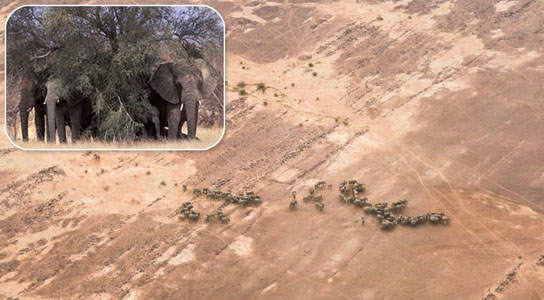
    Gourma elephants cover an extensive home range, the largest ever reported for elephants, as they seek food and water. Credit: Chyulu Smith; (inset) Carlton Ward/WILD Foundation

    Elephants need to consume a minimum of 100 liters (26 gallons) of water and 100 kilograms (220 pounds) of vegetation daily, yet a small population of 350 manages to survive in the harsh Gourma region of Mali, south of the Niger River, where temperatures spike to 50˚C (122˚F) and vegetation is sparse.

    The scientists published their findings in the journal Biological Conservation. Rainfall is also limited, with an annual accumulation of 110 mm (4.3 in) in the north and 600 mm (24 in) in the south. Researchers equipped GPS collars to nine of the animals, four females in four separate herds, and five randomly selected males. Their movements were tracked for two years.

    The data revealed that the Gourma elephants traverse a vast home range of 32,000 square kilometers (12,000 square miles), the largest ever reported for elephants, in their search for food and water. The Gourma elephants’ range is 150% larger than ranges reported for desert elephants in Namibia.

    The elephants follow a circular route through the desert, heading south at the beginning of the rainy season in April or May, and returning north later in the year, in the search of specific plants. The male and female elephants journeyed on such different routes that they only shared a quarter of their ranges. The Gourma elephants are believed to be the last of the herds that ranged across northern Africa and into the Atlas Mountains.

    The findings could help conservationists, as the elephants face new pressures from climate change and human settlements.

    Reference: “Characterizing properties and drivers of long distance movements by elephants (Loxodonta africana) in the Gourma, Mali” by Jake Wall, George Wittemyer, Brian Klinkenberg, Valerie LeMay and Iain Douglas-Hamilton, 27 November 2012, Biological Conservation.
    DOI: 10.1016/j.biocon.2012.07.019

    Never miss a breakthrough: Join the SciTechDaily newsletter.
    Follow us on Google and Google News.

    Behavioral Science Ecology Wildlife
    Share. Facebook Twitter Pinterest LinkedIn Email Reddit

    Related Articles

    Birdsongs Elicit “Emotional” Response From Birds

    Homosexual Behavior Among Fish Increases Attractiveness to Females

    European Catfish Learn to Catch Pigeons

    Urban Birds Use Cigarette Butts to Get Rid of Pests

    Eurasian Jays Aware When Others Are Listening

    Humans Are a Greater Disturbance to Elk Than Natural Predators

    Hunters Kill Yellowstone Park Research Wolves

    Blood-Thinning Rodenticide is Killing Birds

    Bonobo Great Apes Are Domesticating Themselves

    1 Comment

    1. Irene on January 29, 2013 2:32 am

      Poor animals, something is happening with climate, a lot of animals dying…

      Reply
    Leave A Reply Cancel Reply

    • Facebook
    • Twitter
    • Pinterest
    • YouTube

    Don't Miss a Discovery

    Subscribe for the Latest in Science & Tech!

    Trending News

    Popular Sugar-Free Sweetener Linked to Liver Disease, Study Warns

    What Is Hantavirus? The Deadly Disease Raising Alarm Worldwide

    Scientists Just Discovered How the Universe Builds Monster Black Holes

    Scientists Unveil New Treatment Strategy That Could Outsmart Cancer

    A Simple Vitamin May Hold the Key to Treating Rare Genetic Diseases

    Scientists Think the Real Fountain of Youth May Be Hiding in Your Gut

    Ravens Don’t Follow Wolves, They Predict Them

    This Common Knee Surgery May Be Doing More Harm Than Good

    Follow SciTechDaily
    • Facebook
    • Twitter
    • YouTube
    • Pinterest
    • Newsletter
    • RSS
    SciTech News
    • Biology News
    • Chemistry News
    • Earth News
    • Health News
    • Physics News
    • Science News
    • Space News
    • Technology News
    Recent Posts
    • Why Are So Many New Fathers Dying? Scientists Say the U.S. Has a Dangerous Blind Spot
    • Scientists Identify Simple Supplement That Greatly Reduces Alzheimer’s Damage
    • You May Have a Dangerous Type of Cholesterol Even if Your Tests Look Normal
    • Study Reveals Dangerous Flaw in AI Symptom Checkers
    • New MRI Breakthrough Captures Stunningly Clear Images of the Eye and Brain
    Copyright © 1998 - 2026 SciTechDaily. All Rights Reserved.
    • Science News
    • About
    • Contact
    • Editorial Board
    • Privacy Policy
    • Terms of Use

    Type above and press Enter to search. Press Esc to cancel.