
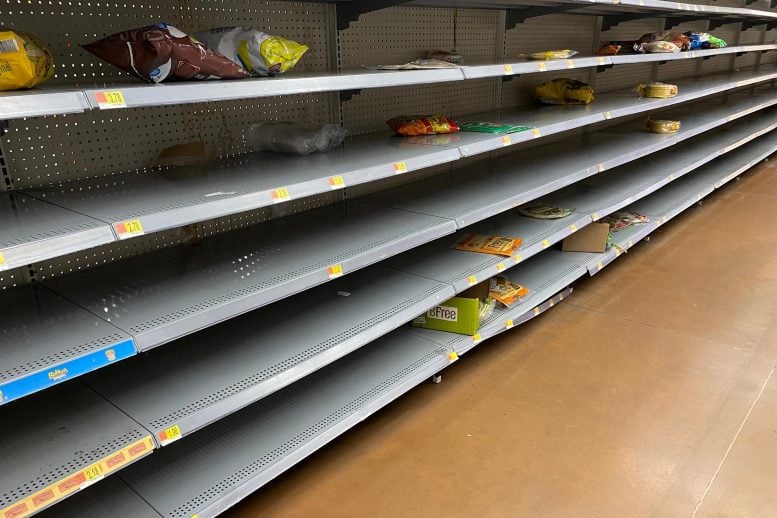
Since the onset of the COVID-19 pandemic, supply chain issues have rattled consumers and the businesses they frequent. From Clorox wipes to semiconductors to computer chips, inventory of many products at big box stores, dealerships and even grocers is low or out of stock. The problem is creating growing concern as the U.S. inches toward Black Friday and the holiday season, the biggest spending period of the year.
Most supply chains were built to provide optimal value for relatively steady and predictable demand, but the pandemic and other factors have contributed to abrupt swings in demand patterns that long and extended supply chains are not designed to accommodate. Gurumurthi Ravishankar, a faculty member and supply chain expert at the Leeds School of Business, explains how supply chain woes started, what it means for consumers, and how long it may take to repair the fractured system.

How did the supply chain become so fractured?
Over the last few decades, supply chains have become increasingly complex. Many links (companies) in the chain – many of which are based overseas – are driven by the desire for lower costs. Supply chains have also become quite lean with little inventory. Even the slightest hiccup anywhere within the chain causes a ripple effect that doesn’t easily subside.
When and how did these problems start?
When the COVID-19 pandemic emerged, people started falling sick and countries started locking down to control the spread of the disease. As a result, the production and delivery of countless materials slowed down or even stopped. This caused more than a ripple in the supply chain, it was a tsunami wave.
The pandemic also caused consumer spending patterns to change, which changed demand patterns (think back to toilet paper and Clorox wipe hoarding). This is classically known as the bullwhip effect in supply chain parlance. Online shopping skyrocketed, which put a lot of pressure on delivery services. Companies like Amazon were seeing buying volumes that resembled pre-Christmas in the middle of May.
How will these continued problems affect prices?
Higher prices are likely to be around for the foreseeable future because of a variety of factors. Shortages and increased demand invariably lead to prices going up, but this typically leads to temporary increases. It’s also expected companies will stock up on inventory to avoid future shortages, which will increase costs as a result.
We’re also seeing more permanent price increases as a byproduct of increased production costs, particularly because of labor woes. Wage rate increases have led to increased overhead, resulting in price increases to offset that cost. The pandemic has added to labor issues: fatalities, risk of falling ill, furloughs, businesses going under and people migrating with remote work or choosing to retire have all impacted the supply chain. In addition, the impact of stimulus checks, childcare credits, eviction moratoriums, decreased spending and migration to lower cost areas of the country adds to the changing financial condition of people, which has an impact on the labor pool.
Is there a solution? How long will it take?
How we “fix” the supply chain depends on what we want the supply chain to do. For example, we fixed the shortage of hand sanitizer fairly quickly as local supply increased and demand went down. However, it takes billions of dollars and many years to build local factories to produce the thousands of products in high demand (like semiconductors).
Conversely, if we continue to rely on goods exclusively produced overseas, shortages will continue and it will take a long time to return to normal supply. Factories overseas must first be able to produce material at a prepandemic pace, and then all the steps of the supply chain must be appropriately staffed in order to bring that product to the U.S.
Worker shortages in the U.S. are not an easy fix: It takes two to four years for gantry crane operators to learn how to properly operate a crane, and truck drivers must obtain a commercial driver’s license and go through training before they can deliver goods across the country. Neither of those jobs are in high demand right now, which only exacerbates the problem.
Never miss a breakthrough: Join the SciTechDaily newsletter.
Follow us on Google and Google News.
2 Comments
Covid was a huge financial problem for the whole world unfortunately.
Shortages, high prices, and empty shelves have become a common sight as the supply chain faces unprecedented challenges. To tackle this issue, businesses can utilize Minimum Advertised Price (MAP) monitoring software like Priceva. With Priceva’s innovative and user-friendly software, businesses can receive real-time information about price fluctuations, allowing them to make informed decisions. Additionally, Priceva enables businesses to achieve multiple targets simultaneously and track the prices of dealers and partners. By utilizing Priceva’s MAP monitoring software, businesses can navigate the complexities of the fractured supply chain and work towards improving availability and affordability for consumers. Learn more about Priceva’s MAP monitoring software at https://priceva.com/map_monitor. Together, we can build a more resilient and efficient supply chain.