
Close Menu
    Facebook X (Twitter) Instagram
    SciTechDaily
    • Biology
    • Chemistry
    • Earth
    • Health
    • Physics
    • Science
    • Space
    • Technology
    Facebook X (Twitter) Pinterest YouTube RSS
    SciTechDaily
    Home»Space»Skywatching Highlights You Don’t Want To Miss: Aldebaran, Betelgeuse, Mars, Saturn and Jupiter
    Space

    Skywatching Highlights You Don’t Want To Miss: Aldebaran, Betelgeuse, Mars, Saturn and Jupiter

    By Preston Dyches, Jet Propulsion LaboratorySeptember 4, 20221 Comment4 Mins Read
    Facebook Twitter Pinterest Telegram LinkedIn WhatsApp Email Reddit
    Share
    Facebook Twitter LinkedIn Pinterest Telegram Email Reddit
    Skywatching Highlights September 2022
    Skywatching highlights September 2022: Mars forms a “red triangle” with Aldebaran and Betelgeuse. On September 9th, Saturn and Jupiter align with the Moon, and on the 11th, the Moon moves closer to Jupiter. The equinox on September 23rd brings nearly equal day and night lengths, signaling a change of seasons.

    What are some skywatching highlights in September 2022?

    Mars is on the move this month, forming a “red triangle” with bright red stars Aldebaran and Betelgeuse. Saturn and Jupiter fly with the Moon on September 9th, and then the Moon slides over closer to Jupiter in the morning sky on the 11th. At the end of the month, September 23rd brings the equinox, meaning day and night are of nearly equal length, and a change of seasons is afoot.

    What’s Up for September 2022? Mars is on the move, prime viewing time for Jupiter, and a clever way to find your bearings on the equinox.

    In September, you’ll find Mars hanging out high in the south on mornings before sunrise. Early in the month, it’s near orange-colored Aldebaran, the star that forms the eye of Taurus the bull. Over the course of the month, Mars will work its way eastward from Aldebaran toward reddish Betelgeuse, creating a sort of “red triangle” in the morning sky. Then the Red Planet will appear to hit the brakes and stop its eastward motion, to hang out in that triangle for the next month or so. (We’ll talk about what’s going on there in next month’s skywatching tips.)

    Red Triangle September 2022
    Mars forms a triangle of reddish objects in September, and into October, as it hangs near bright red stars Aldebaran and Betelgeuse in the morning sky. Credit: NASA/JPL-Caltech

    On the morning of September 11th, before sunrise, you’ll find the Moon just a couple of finger-widths from Jupiter in the sky. This will make for a great viewing opportunity to observe them together through binoculars. Jupiter’s at opposition this month, making it visible all night under clear skies. Plus, it’s around this time when the planet’s at its biggest and brightest for telescope viewing. However, a pair of good binoculars is enough to reveal the giant planet’s four large moons as little starlike points of light next to Jupiter.

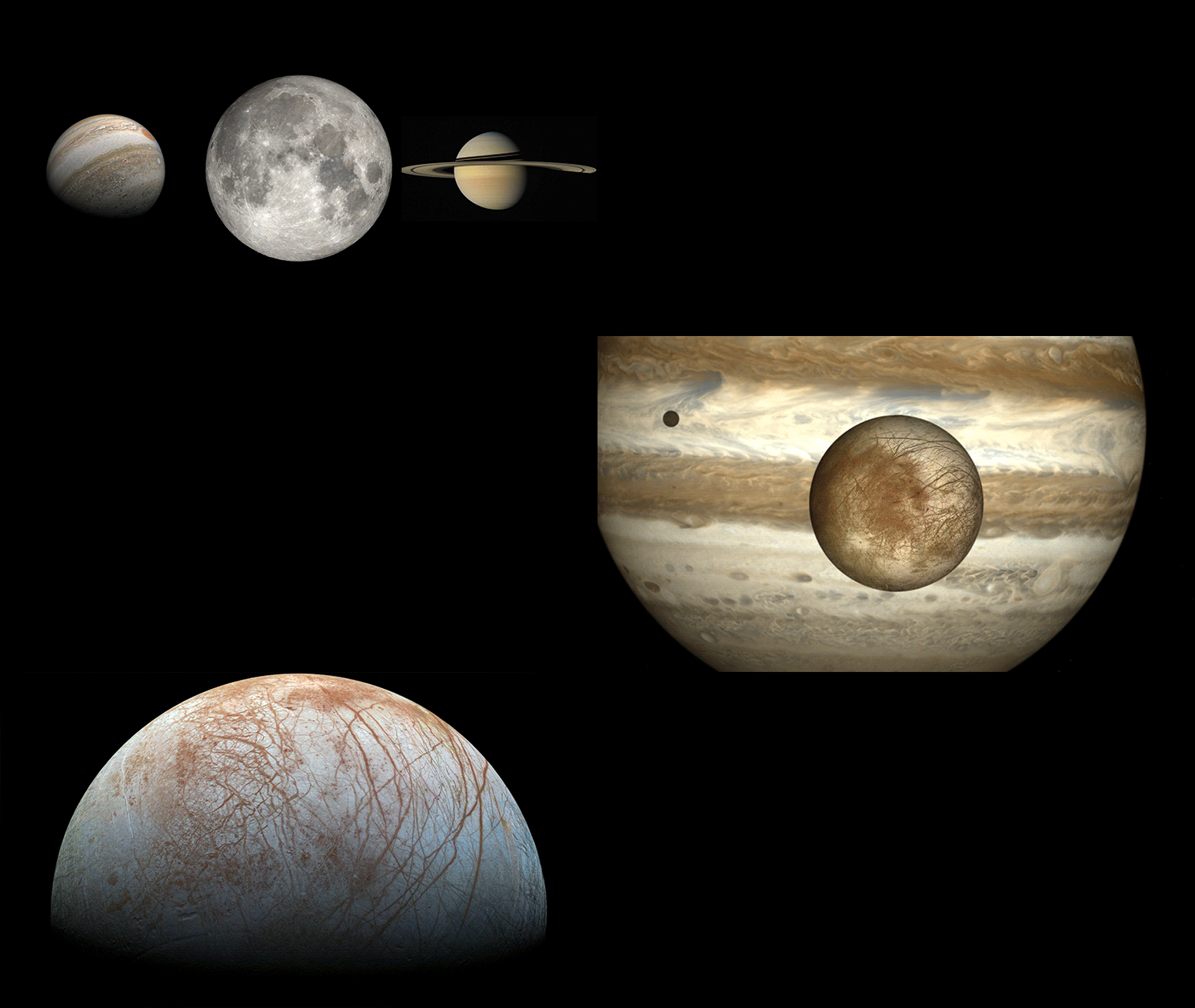
    Also, later this month on the 29th, NASA’s Jupiter-orbiting Juno spacecraft is scheduled to make a special, fast flyby of one of those icy moons, Europa. The spacecraft is slated to pass a little over 200 miles (320 km) above the moon’s surface, returning images and science data.

    In addition, NASA is currently preparing its Europa Clipper spacecraft for launch in 2024. To investigate whether Europa could have conditions suitable for life, it will make dozens of close flybys of the Jovian moon.

    Turning to the evening sky, you’ll have Saturn together with Jupiter as your planetary companions all month long. On the night of September 9th, Jupiter and Saturn escort the Moon across the sky. You’ll see the trio rising in the southeast in the first couple of hours after dark, and gliding westward together over the course of the night. By the end of the month, you’ll observe the pair of planets rising even earlier, appearing in the east soon after it gets dark, with bright Jupiter hanging low in the sky.
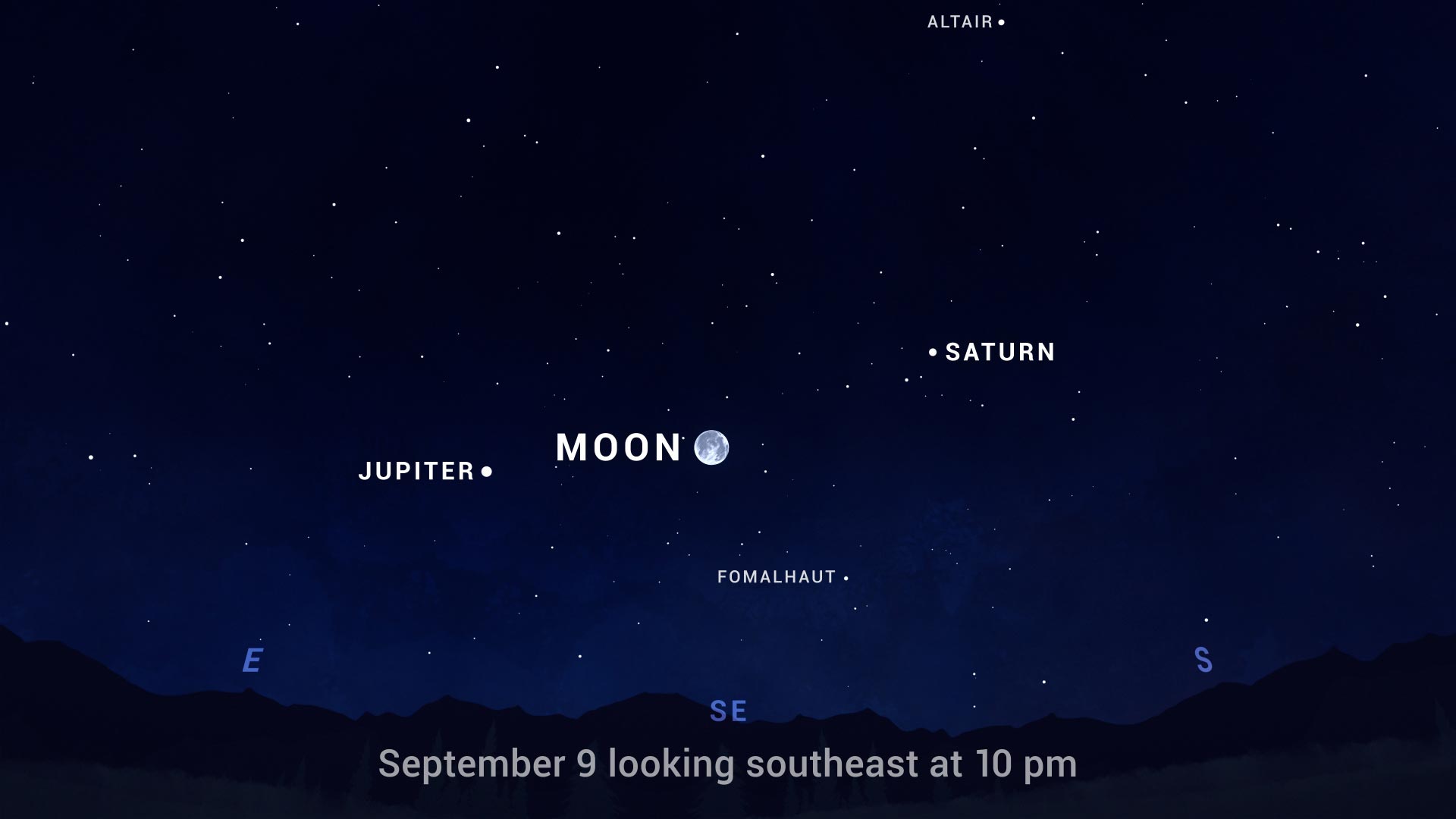
    Moon Jupiter Saturn September 2022
    On the night of September 9, see the nearly full Moon escorted across the sky by Jupiter and Saturn. Credit: NASA/JPL-Caltech

    September 23rd brings the September equinox, which marks the official start of fall in the Northern Hemisphere, and the start of spring in the Southern Hemisphere. The equinoxes occur twice per year when Earth’s tilt with respect to the Sun is the same for both hemispheres. Both north and south receive the same amount of sunlight, and day and night are, briefly, of nearly equal length.
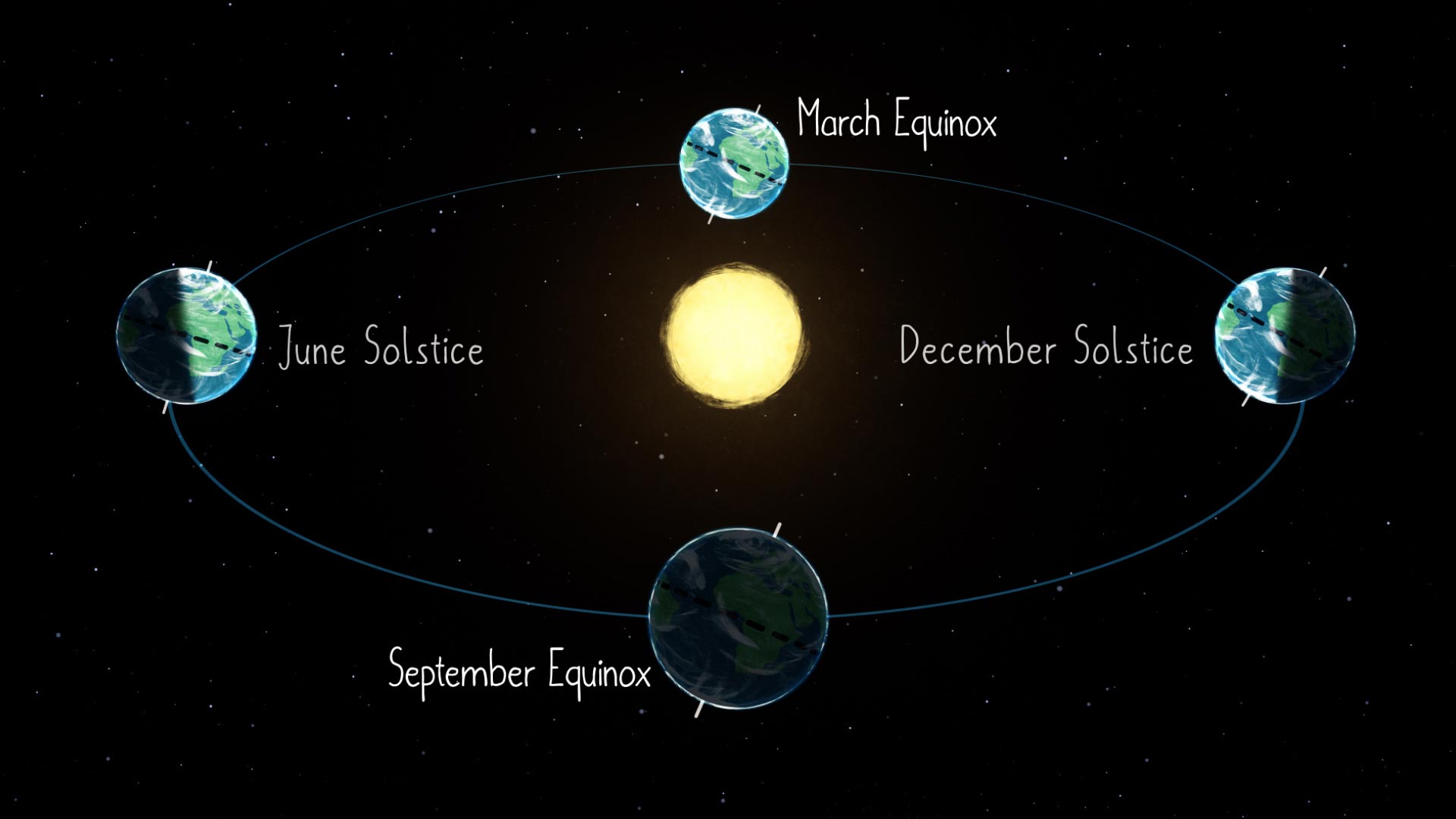
    September Equinox 2022
    Illustration showing how Earth’s tilt leads to the Northern and Southern Hemispheres receiving changing amounts of sunlight over the course of the year. At the equinoxes, neither hemisphere is more tilted toward the Sun, so both hemispheres receive the same amount of sunlight. Credit: NASA/JPL-Caltech

    And, get this: if you take note of exactly where the Sun appears to rise and set on the equinoxes, those points mark the locations of due east and due west, respectively.

    That’s something quite useful to know for skywatchers, whatever hemisphere you happen to live in. So take note of any buildings, tall trees, lampposts, and the like at those places on the horizon. That way you can use them to find your bearings when looking skyward all year long.

    Never miss a breakthrough: Join the SciTechDaily newsletter.
    Follow us on Google and Google News.

    Astronomy Betelgeuse JPL NASA
    Share. Facebook Twitter Pinterest LinkedIn Email Reddit

    Related Articles

    Herschel Views Red Supergiant Star Betelgeuse

    Black Hole Rips Apart a Helium Rich Star

    WISE Views Aging Star Erupting With Dust

    A Closer Look at Titan’s Chemical Production

    Sombrero Galaxy Exhibits Dual Characteristics

    Searching for “Bubbles” in the Milky Way

    NASA’s Spitzer Space Telescope Finds Solid Buckyballs in Space

    NASA’s GRAIL Mission Returns Video From Far Side of the Moon

    NASA’s NuSTAR is One Step Closer to Launching

    1 Comment

    1. Richard Enright on November 23, 2022 6:19 pm

      I’ve noticed lately that Aldebaran has been noticeably brighter than Betelgeuse when it’s supposed to be the other way around. Has anyone else noticed this?

      Reply
    Leave A Reply Cancel Reply

    • Facebook
    • Twitter
    • Pinterest
    • YouTube

    Don't Miss a Discovery

    Subscribe for the Latest in Science & Tech!

    Trending News

    Millions Take These IBS Drugs, But a New Study Finds Serious Risks

    Scientists Unlock Hidden Secrets of 2,300-Year-Old Mummies Using Cutting-Edge CT Scanner

    Bread Might Be Making You Gain Weight Even Without Eating More Calories

    Scientists Discover Massive Magma Reservoir Beneath Tuscany

    Europe’s Most Active Volcano Just Got Stranger – Here’s Why Scientists Are Rethinking It

    Alzheimer’s Symptoms May Start Outside the Brain, Study Finds

    Millions Take This Popular Supplement – Scientists Discover a Concerning Link to Heart Failure

    The Universe Is Expanding Too Fast and Scientists Can’t Explain Why

    Follow SciTechDaily
    • Facebook
    • Twitter
    • YouTube
    • Pinterest
    • Newsletter
    • RSS
    SciTech News
    • Biology News
    • Chemistry News
    • Earth News
    • Health News
    • Physics News
    • Science News
    • Space News
    • Technology News
    Recent Posts
    • Simple Blood Test May Predict Alzheimer’s Years Before Brain Scans Show Signs
    • Scientists Say Adding This Unusual Seafood to Your Diet Could Reverse Signs of Aging
    • U.S. Waste Holds $5.7 Billion Worth of Crop Nutrients
    • Scientists Say a Hidden Structure May Exist Inside Earth’s Core
    • Doctors Surprised by the Power of a Simple Drug Against Colon Cancer
    Copyright © 1998 - 2026 SciTechDaily. All Rights Reserved.
    • Science News
    • About
    • Contact
    • Editorial Board
    • Privacy Policy
    • Terms of Use

    Type above and press Enter to search. Press Esc to cancel.