
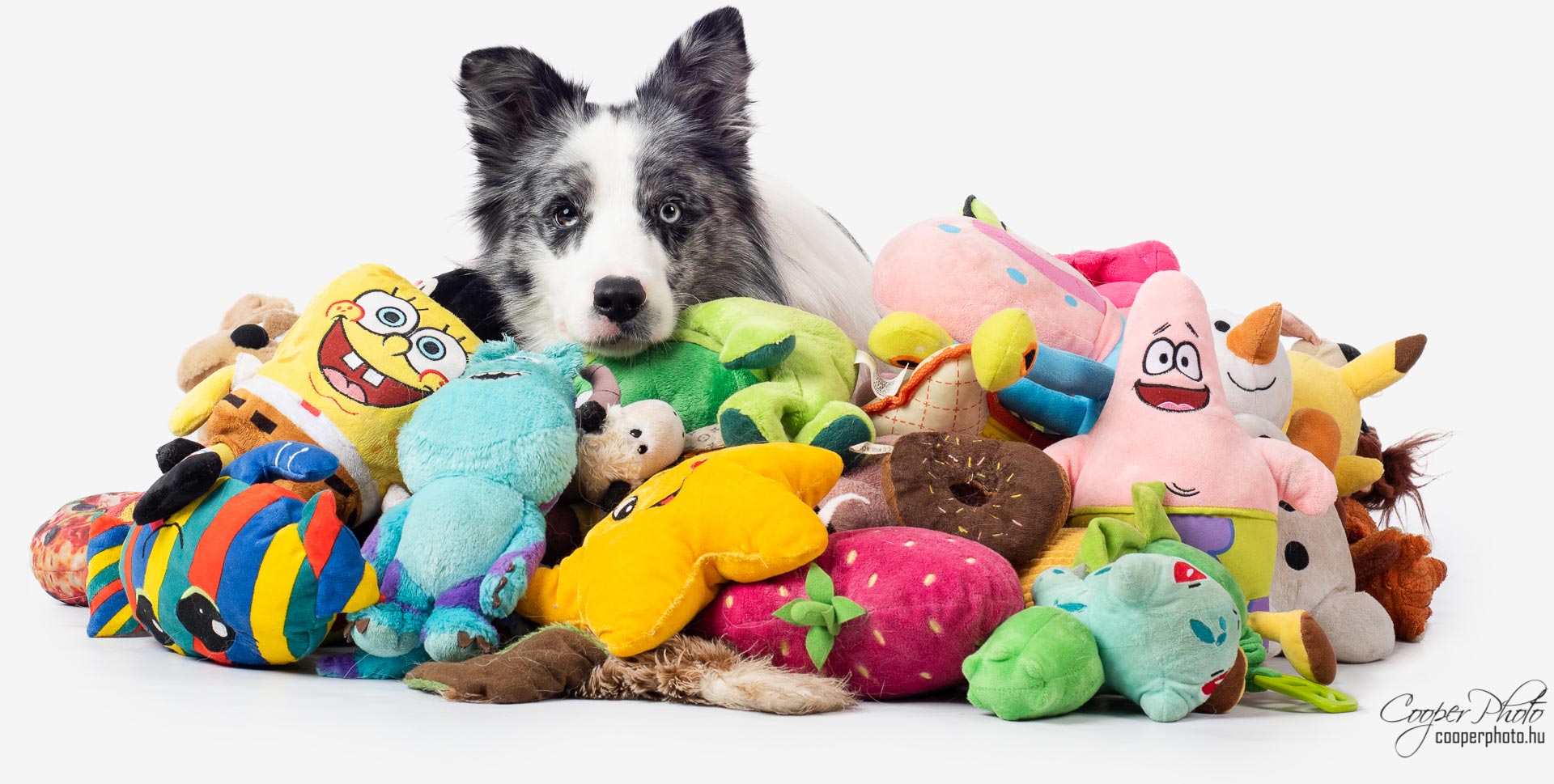
Inside a Dog’s Mind: Dogs Have a “Multi-Modal Mental Image” of Their Familiar Items
Many dog lovers are curious about what goes on in the minds of their furry pals. Fortunately, the answer is now within reach for scientists. Researchers from Eötvös Loránd University in Budapest’s Family Dog Project discovered that dogs have a “multi-modal mental image” of their familiar objects in a new study that was recently published in the journal Animal Cognition. This implies that dogs visualize the many sensory aspects of an item when they think about it. For instance, taking into account how it looks or smells.
Scientists made the assumption that the senses that dogs employ to recognize items, such as their toys, correspond to how those objects are conceptualized in their brains. “If we can understand which senses dogs use while searching for a toy, this may reveal how they think about it” explains Shany Dror, one of the leading researchers of this study. “When dogs use olfaction or sight while searching for a toy, this indicates that they know how that toy smells or looks like.”
In previous studies, the researchers discovered that only a few uniquely gifted dogs can learn the names of objects. “These Gifted Word Learner dogs give us a glimpse into their minds, and we can discover what they think about when we ask them – Where is your Teddy Bear?” explains Dr. Andrea Sommese, the second leading researcher.
In the first experiment, they trained 3 Gifted Word Learner dogs and 10 typical family dogs (i.e., dogs that do not know the name of toys), to fetch a toy associated with a reward. Dogs were rewarded with goodies and praise throughout training for selecting this toy over a few distractor toys.
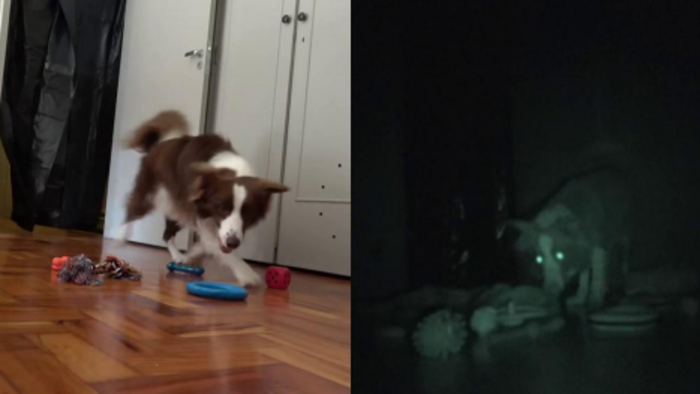
The researchers then observed how the dogs searched for the targeted toy, always placed among 4 others, both when the lights were on and off. All dogs successfully selected the trained toys, both in the light and in the dark. However, it took them longer to find the toys in the dark. Only the Gifted Word Learner dogs participated in the second experiment. Here, the researchers aimed to find out what these dogs think about when they hear the name of their toys.
How do dogs think of toys? Credit: Genius Dog Challenge
“Revealing the senses used by the dogs to search for the named toys gave us the possibility to infer what these dogs imagine when they hear, for example, Teddy Bear explains Dr. Claudia Fugazza, co-author of the study.
Dogs Use Multi-Modal Mental Images to Identify Toys
The Gifted dogs were successful in selecting the toys named by their owners in the light and the dark. This reveals that, when they hear the name of a toy, they recall this object’s different sensory features and they can use this “multisensory mental image” to identify it, also in the dark.
“Dogs have a good sense of smell, but we found that dogs preferred to rely on vision and used their noses only a few times, and almost only when the lights were off,” clarifies Prof. Adam Miklósi, head of the Department of Ethology at ELTE University and co-author of the study. “Dogs sniffed more often and for longer in the dark. They spent 90% more time sniffing when the lights were off, but this was still only 20% of the searching time.”
To conclude, the dogs’ success in finding the toys and the different senses used while searching in the light and the dark reveals that, when dogs play with a toy, even just briefly, they pay attention to its different features and register the information using multiple senses.
This research is part of the Genius Dog Challenge research project that aims to understand the unique talent that Gifted Word Learner dogs have. The researchers encourage dog owners who believe their dogs know multiple toy names, to contact them on the Genius Dog Challenge website.
Reference: “Multisensory mental representation of objects in typical and Gifted Word Learner dogs” by Shany Dror, Andrea Sommese, Ádám Miklósi, Andrea Temesi and Claudia Fugazza, 8 June 2022, Animal Cognition.
DOI: 10.1007/s10071-022-01639-z
Never miss a breakthrough: Join the SciTechDaily newsletter.
Follow us on Google and Google News.