
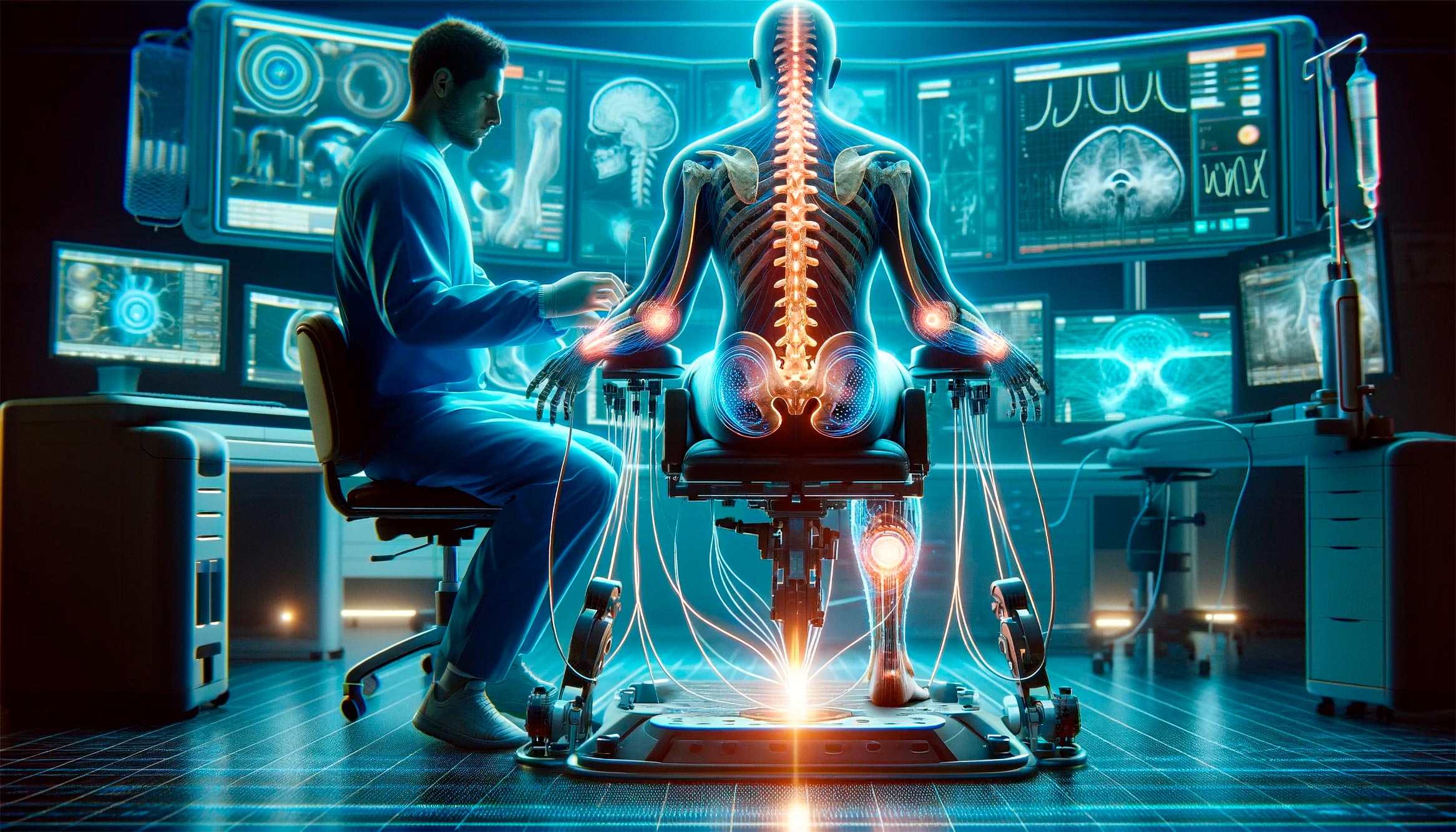
Spinal cord stimulation by University of Pittsburgh researchers effectively reduces phantom limb pain and restores sensation in amputees, marking a significant advance in prosthetic technology.
Spinal cord stimulation can elicit sensation in the missing foot and alleviate phantom limb pain in people with lower limb amputations, University of Pittsburgh School of Medicine rehabilitation scientists report today.
Pressure sensors on the insole of a prosthetic foot triggered electrical pulses that were then delivered to a participants’ spinal cord. Researchers found that this sensory feedback also improved balance and gait stability. The proof-of-concept study was done in collaboration with Carnegie Mellon University and University of Chicago researchers and reported in Nature Biomedical Engineering.
Innovative Use of Existing Technologies
“We are using electrodes and stimulation devices that are already frequently used in the clinic and that physicians know how to implant,” said senior author Lee Fisher, Ph.D., associate professor of physical medicine and rehabilitation at Pitt. “We are leveraging those technologies to produce meaningful improvement in function and reduction of pain. That’s exciting and we’ve been building it for a while.”

Among 1.5 million Americans who live with lower-limb amputation, 8 out of 10 experience some degree of chronic pain perceived as though coming from the missing leg or foot. This phantom limb pain often does not respond to pain medications and dramatically impairs the quality of life. In addition, because even the most technically sophisticated prosthetics are not equipped with sensory feedback functionality, amputees remain prone to balance deficits and falls, which limit their mobility even further.
A Unique Approach to Stimulation
Unlike the typical stimulation system that works by shutting down pain neurons by overriding them with another sensory signal — similar to how rubbing your sore elbow helps relieve the pain — Fisher’s group leveraged the existing spinal cord stimulation technology to restore sensory feedback by replacing the severed connections between sensory neurons in the missing foot and the central nervous system.
To enable researchers to modulate the intensity of sensations in response to varying pressure on a prosthetic foot during walking, a pair of thin electrode strands implanted over the top of the spinal cord in the lower back was connected to a cell phone-sized stimulation device delivering electric pulses of varying amplitude and frequency. The leads were implanted for one to three months and removed after the trial ended, in accordance with the study design.
Unlike previous research done by other groups, Fisher and team were able to exert active control of spinal cord stimulation parameters to control stimulation in real-time while subjects engaged their prosthetic leg to stand or walk.
Significant Clinical Benefits and Future Potential
In addition to clinically meaningful improvement in balance control and gait even in the most challenging conditions, such as standing on a moving platform with eyes closed, participants reported an average 70% reduction in phantom limb pain — a highly meaningful outcome given the lack of clinically available treatment options.
The beauty of this technology lies in its versatility: the pilot study showed that it can work in people with extensive peripheral nerve damage due to chronic conditions, such as diabetes, or in people with traumatic amputations. It also doesn’t require costly custom-made electrodes or uncommon surgical procedures, making it easier to scale up on a national level.
“We are able to produce sensations as long as the spinal cord is intact,” said Fisher. “Our approach has the potential to become an important intervention for lower-limb amputation and, with proper support from industry partners, translated into the clinic in the next five years.”
Reference: “Restoration of sensory feedback from the foot and reduction of phantom limb pain via closed-loop spinal cord stimulation” by Ameya C. Nanivadekar, Rohit Bose, Bailey A. Petersen, Elizaveta V. Okorokova, Devapratim Sarma, Tyler J. Madonna, Beatrice Barra, Juhi Farooqui, Ashley N. Dalrymple, Isaiah Levy, Eric R. Helm, Vincent J. Miele, Michael L. Boninger, Marco Capogrosso, Sliman J. Bensmaia, Douglas J. Weber and Lee E. Fisher, 14 December 2023, Nature Biomedical Engineering.
DOI: 10.1038/s41551-023-01153-8
Other authors of this study are Ameya Nanivadekar, Ph.D., Rohit Bose, B.S., Bailey Petersen, D.P.T., Ph.D., Tyler Madonna, B.S., Beatrice Barra, Ph.D., Isaiah Levy, M.D., Eric Helm, M.D., Vincent Miele, M.D., Michael Boninger, M.D., and Marco Capogrosso, Ph.D., all of Pitt; Devapratim Sarma, Ph.D., Juhi Farooqui, B.S., Ashley Dalrymple, Ph.D., and Douglas Weber, Ph.D., all of Carnegie Mellon University; and Elizaveta Okorokova, Ph.D., and Sliman Bensmaia, Ph.D., of the University of Chicago.
Never miss a breakthrough: Join the SciTechDaily newsletter.
Follow us on Google and Google News.