
Close Menu
    Facebook X (Twitter) Instagram
    SciTechDaily
    • Biology
    • Chemistry
    • Earth
    • Health
    • Physics
    • Science
    • Space
    • Technology
    Facebook X (Twitter) Pinterest YouTube RSS
    SciTechDaily
    Home»Space»Solar Fury Unleashed: Twin X-Class Flares Light Up the Sky
    Space

    Solar Fury Unleashed: Twin X-Class Flares Light Up the Sky

    By NASAMay 9, 20241 Comment2 Mins Read
    Facebook Twitter Pinterest Telegram LinkedIn WhatsApp Email Reddit
    Share
    Facebook Twitter LinkedIn Pinterest Telegram Email Reddit
    Two Strong Solar Flares
    NASA’s Solar Dynamics Observatory captured these images of the solar flares — as seen in the bright flashes in the left image (May 8 flare) and the right image (May 7 flare). The image shows a subset of extreme ultraviolet light that highlights the extremely hot material in flares and which is colorized in orange. Credit: NASA/SDO

    The Sun emitted two intense solar flares, with the first peaking at 9:41 p.m. ET on May 7, 2024, and the second peaking at 1:09 a.m. ET on May 8, 2024. NASA’s Solar Dynamics Observatory, which watches the Sun constantly, captured images of these events.

    Solar flares are intense bursts of energy that can disrupt radio communications, electric power grids, and navigation signals. They also pose risks to spacecraft and astronauts. Both of the recent flares were categorized as X1.0, indicating their significant intensity. The ‘X-class’ label is used for the most intense flares, and the accompanying number describes their strength in more detail.
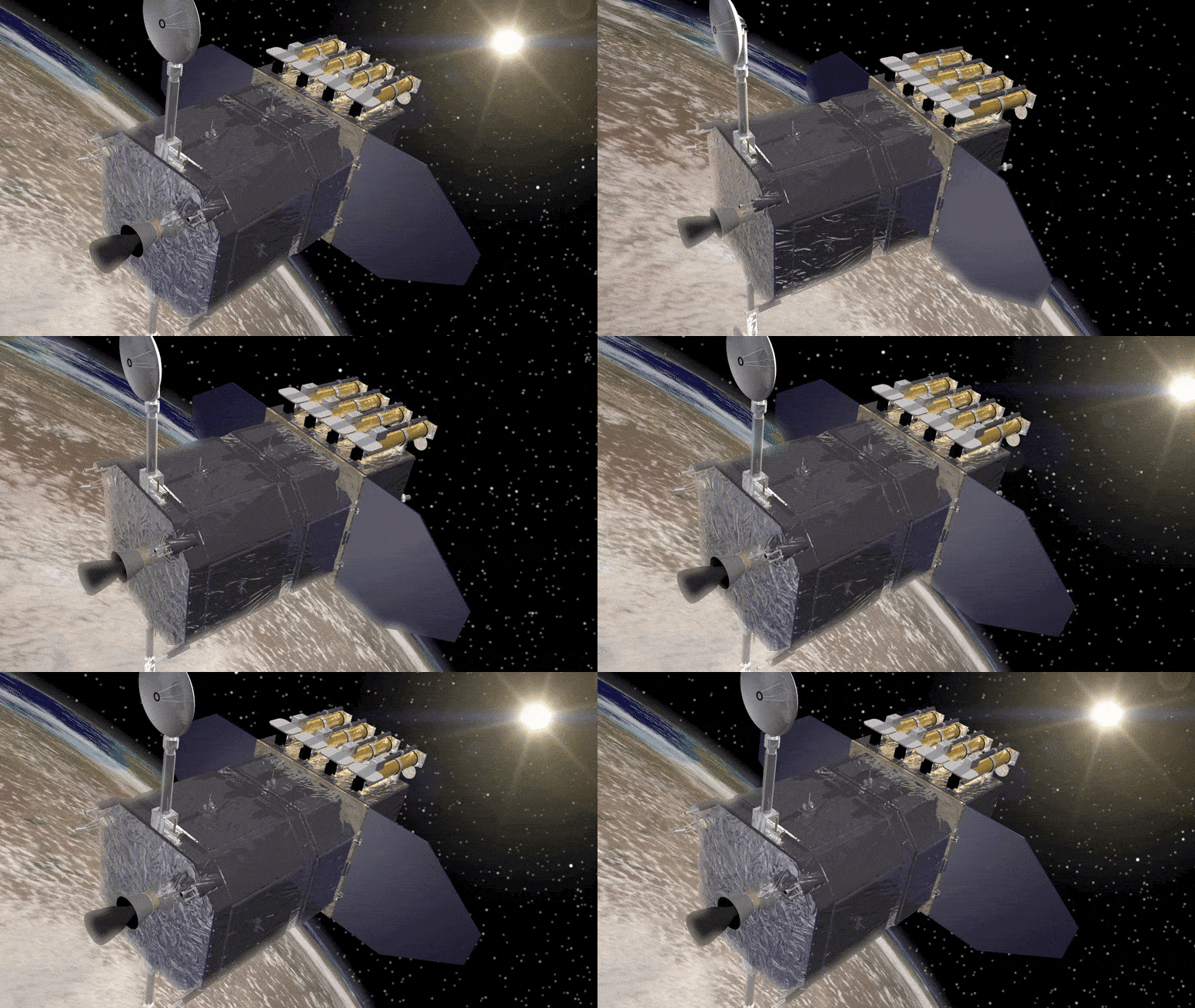
    NASA Solar Dynamics Observatory
    This animation of the Solar Dynamics Observatory shows it above the earth as it faces toward the Sun. SDO is designed to help us understand the Sun’s influence on Earth and Near-Earth space by studying the solar atmosphere on small scales of space and time and in many wavelengths simultaneously. Credit: NASA/Goddard Space Flight Center Conceptual Image Lab

    NASA’s Solar Dynamics Observatory (SDO) is a mission dedicated to observing the Sun and its behavior. Launched on February 11, 2010, SDO is a part of NASA’s Living With a Star (LWS) program, which aims to understand the causes of solar variability and its impacts on Earth. The observatory is equipped with a suite of instruments that provide comprehensive measurements of the solar atmosphere and solar activity.

    SDO’s main goals include understanding the solar cycle, solar flares, and coronal mass ejections, as well as their effects on space weather and Earth’s environment. The observatory provides high-resolution images of the Sun in 13 different wavelengths every 12 seconds, offering unprecedented insights into solar processes. Its data are crucial for improving the ability to forecast space weather events that can affect satellite operations, power grids, and communication systems on Earth.

    Never miss a breakthrough: Join the SciTechDaily newsletter.
    Follow us on Google and Google News.

    Astronomy NASA Solar Dynamics Observatory Solar Flares Sun
    Share. Facebook Twitter Pinterest LinkedIn Email Reddit

    Related Articles

    Solar Fury Erupts: Sun Rings In the New Year With X1.8 Flare

    X1.8 Flare Unleashed: NASA Captures Powerful Solar Eruption

    Sun Unleashes Monumental X9.0 Solar Flare – Most Intense in 7 Years – Captured by NASA Observatory

    Monster X7.1 Solar Flare Unleashed: Intense Blast Captured by NASA’s Solar Dynamics Observatory

    Sun Ignites: Unleashing a Powerful X4.5 Solar Flare

    NASA’s Solar Dynamics Observatory Spots Burst of Light and Energy on the Sun: A B-Class Flare

    NASA’s Solar Dynamics Observatory Views M-Class Solar Flare

    NASA’s SDO Reveals Images of X4.9-Class Solar Flare

    NASA’s Solar Dynamics Observatory Views Two New Solar Flares

    1 Comment

    1. Hottan Inductive on May 9, 2024 6:55 pm

      NOAA classified this as a G4 (severe) geomagnetic storm. Expect potential high-frequency radio blackouts in polar regions, and possible disruption to GPS navigation systems. No need to panic, but be prepared.

      Reply
    Leave A Reply Cancel Reply

    • Facebook
    • Twitter
    • Pinterest
    • YouTube

    Don't Miss a Discovery

    Subscribe for the Latest in Science & Tech!

    Trending News

    Scientists Uncover Potential Brain Risks of Popular Fish Oil Supplements

    Scientists Discover a Surprising Way To Make Bread Healthier and More Nutritious

    After 60 Years, Scientists Uncover Unexpected Brain Effects of Popular Diabetes Drug Metformin

    New Research Uncovers Hidden Side Effects of Popular Weight-Loss Drugs

    Scientists Rethink Extreme Warming After Surprising Ocean Discovery

    Landmark Study Links Never Marrying to Significantly Higher Cancer Risk

    Researchers Discover Unknown Beetle Species Just Steps From Their Lab

    Largest-Ever Study Finds Medicinal Cannabis Ineffective for Anxiety, Depression, PTSD

    Follow SciTechDaily
    • Facebook
    • Twitter
    • YouTube
    • Pinterest
    • Newsletter
    • RSS
    SciTech News
    • Biology News
    • Chemistry News
    • Earth News
    • Health News
    • Physics News
    • Science News
    • Space News
    • Technology News
    Recent Posts
    • Early Warning Signals of Esophageal Cancer May Be Hiding in Plain Sight
    • Researchers Have Discovered a THC-Free Cannabis Compound That May Replace Opioids
    • Common Blood Pressure Drug Shows Surprising Power Against Deadly Antibiotic-Resistant Superbug
    • Students Build Dark Matter Detector and Set New Experimental Limits
    • Scientists Discover Caffeine Can Repair Key Memory Circuits After Sleep Loss
    Copyright © 1998 - 2026 SciTechDaily. All Rights Reserved.
    • Science News
    • About
    • Contact
    • Editorial Board
    • Privacy Policy
    • Terms of Use

    Type above and press Enter to search. Press Esc to cancel.