
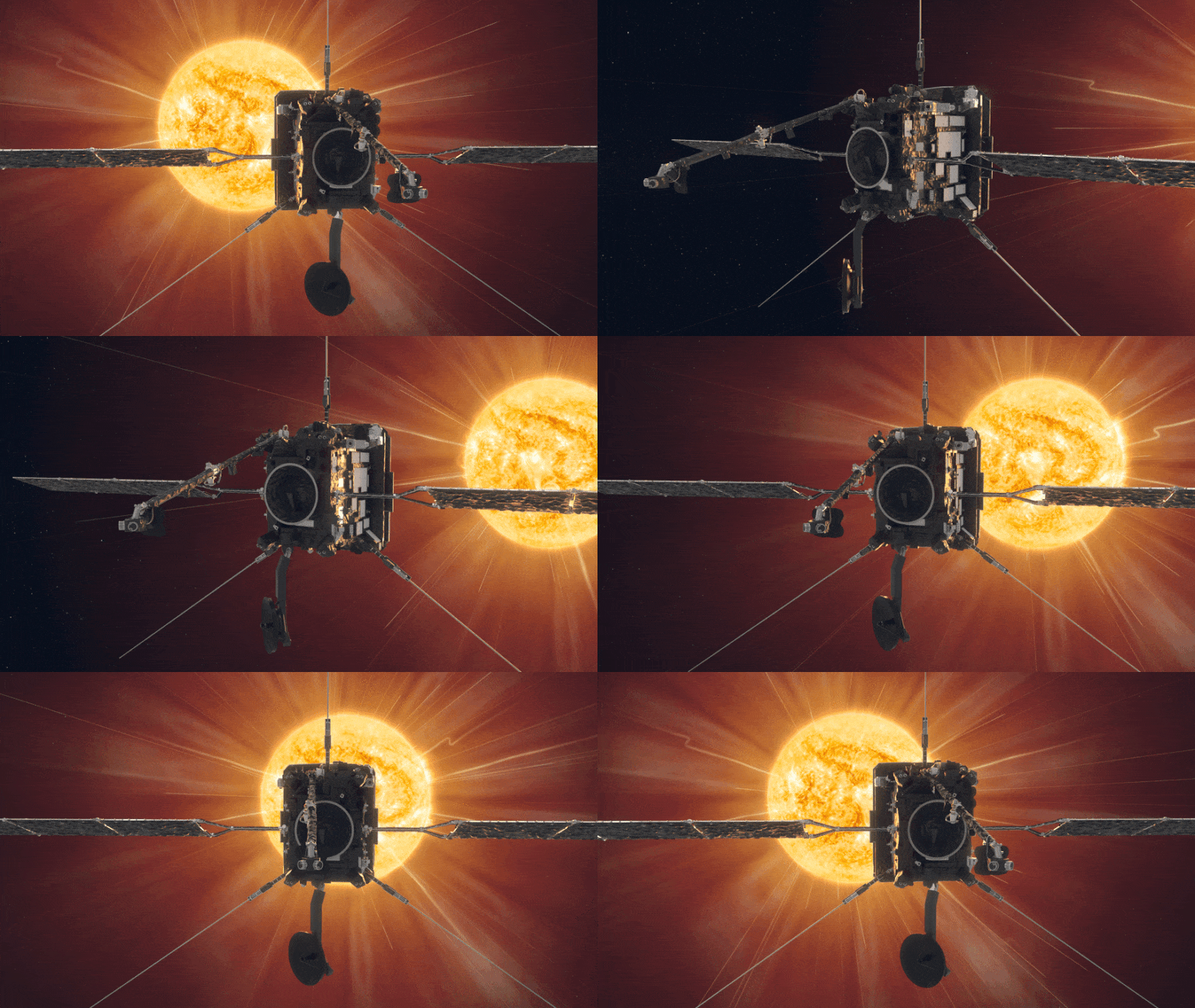
The ESA/NASA Solar Orbiter spacecraft is speeding towards its historic first close pass of the Sun. On March 14, the spacecraft will pass the orbit of Mercury, the scorched inner planet of our Solar System, and on March 26 it will reach closest approach to the Sun.
Yesterday, Solar Orbiter crossed directly between the Earth and the Sun, halfway between our planet and its parent star, and this allows for a unique study of space weather and the Sun-Earth connection.
The Sun releases a constant stream of particles into space. This is known as the solar wind. It carries the Sun’s magnetic field into space, where it can interact with planets to create aurorae and disrupt electrical technology. Magnetic activity on the Sun, often taking place above sunspots, can create gusts in the wind enhancing these effects.
This behavior is known as space weather, and scientists can use today’s Earth-Sun line crossing to study it in a unique way. They will combine Solar Orbiter observations with those of other spacecraft operating nearer the Earth, such as the Hinode and IRIS spacecraft in Earth orbit, and SOHO, stationed 1.5 million kilometers (0.93 million miles) away from Earth. This will allow them to join the dots of any space weather event as it crosses the 150 million kilometers (93 million miles) between the Sun and the Earth.
Solar Orbiter’s remote sensing instruments may also be able to pinpoint the origin of any event on the solar surface. Such ‘linkage science’ is one of the main drivers behind the Solar Orbiter mission. Even if no big event takes place there is still a lot of science that can be performed in analyzing the evolution of the same packet of solar wind as it travels outwards into the Solar System.
Because of its position and relative proximity to Earth, Solar Orbiter has so far been able to stay in almost continual contact, beaming back large quantities of data. The processing is happening quickly too. For example, the magnetometer data is processed and cleaned within roughly 15 minutes of it being recorded. The 15 minutes even includes the three and a half minutes that it takes for the signals to cross space between the spacecraft and the ground station.
On February 10, ESA renamed its upcoming space weather mission from Lagrange to ESA Vigil. Launching sometime in the middle of the decade, the spacecraft will be a solar watchdog, constantly monitoring the Sun for unpredictable magnetic activity so that Earth’s infrastructure, satellites, inhabitants, and space explorers can be protected from these unpredictable events.
Solar Orbiter is currently around 75 million kilometers (47 million miles) away from the Sun. This is the same distance as the spacecraft achieved during its close pass to the Sun on 15 June 2020 but nothing compared to how close it will now get.
“From this point onwards, we are ‘entering the unknown’ as far as Solar Orbiter’s observations of the Sun are concerned,” says Daniel Müller, Solar Orbiter Project Scientist.
On March 26, Solar Orbiter will be less than one-third of the distance from the Sun to the Earth, and it is designed to survive this close for relatively extended periods of time. It will spend from March 14 to April 6 inside the orbit of Mercury. Around perihelion, the name for closest approach to the Sun, Solar Orbiter will bring high resolution telescopes closer than ever before to the Sun.
Together with data and images from Solar Orbiter’s other instruments, these could reveal more information about the miniature flares dubbed campfires that the mission revealed in its first images.
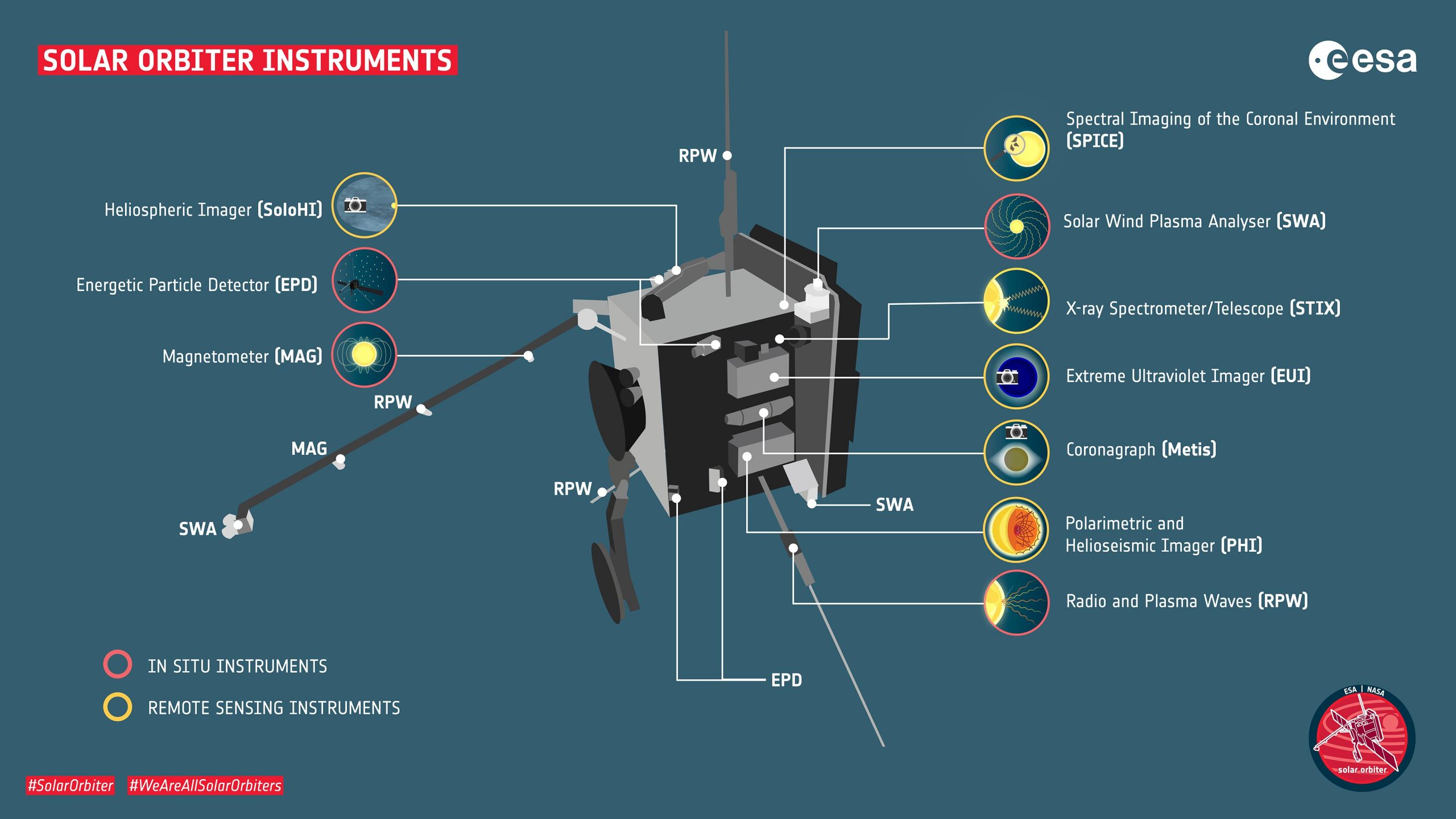
“What I’m most looking forward to is finding out whether all these dynamical features we see in the Extreme Ultraviolet Imager (coined campfires) can make their way into the solar wind or not. There are so many of them!” says Louise Harra, co-Principal Investigator for EUI based at the Physikalisch-Meteorologisches Observatorium Davos/World Radiation Center (PMOD/WRC), Switzerland.
To do this, Solar Orbiter will use its remote sensing instruments, like EUI, to image the Sun, and its in-situ instruments to measure the solar wind as it flows past the spacecraft.
The March 26 perihelion passage is one of the major events in the mission. All ten instruments will be operating simultaneously to gather as much data as possible.
Solar Orbiter is a partnership between ESA and NASA.
Never miss a breakthrough: Join the SciTechDaily newsletter.
Follow us on Google and Google News.
6 Comments
You are mistaken. This is not the first close pass. It already did it once and alot was learned.
If it is arriving at Mercury’s orbit on March 14, and perihelion on the 26th, there’s no way it is halfway between Earth and the Sun on March 8th.
Capt. Stardust 😇😇😇😏do you have clearest to the operational site 🤔 of the probe???? Propulsion is a science. Words in 🎬actions. Zoom on probe😏🛰🌞🌝☀️🌬🌬🌬🌬🌬🌬cooling off
Very Interesting.
Some initail Thoughts.
1. Magnetism to me means alignment of Matter and creation of Polarity. North and South. In the case of the sSun which Rises in the East and sets in the West , te nature of the directioj of the Suns Magnetic Field is not underwtood.
2. In the case of the SUN, I suspect we are are the beginning of the periodic Table in terms of matter-energy spectrum b i.e. Hydrogen and fusion end of the spectrum.
3. As a result of this fusuion reaactor in the sky, where energy is produced and rays
of the sun reaches our planet Earth in around eight miniutes, AND enables photosynthesis and warmth, we have weather on planet earth. The Climate Cycle is the result of other material on the planet Earth like Oceans, etc.
4. Now the Solar Winds must be the Fusion Reactor in the sky (SUN) burning material ( Hydrogen and its isotopes -Plasma ) to produce energy , and releasing some energy as light plus heat forms of Energy to reach Earth.
Views expressed are personal and not binding on anyone.
Anybody notice the face on the sun’s surface? @ 53 seconds you can see it clear as day lol
Further to my earlier post here are some additional thoughts for consideration
1.
How to change coronal solar mass ejections from Risk to opportunity.
Use the same for recharging the batteries we need to power interstellar space travel.
2.
Use the plasma tsunami for benefit rather than hide. Anyway , we will need to master this for the modern fusion reactors we are building
3.
How to use the high speed solar winds {Cosmic rays } for converting the same to energy we can use!
I suspect the Sun is the creator of all the elements and all matter in the universe. There are millions of Suns.
The solar winds provides the earth with the recharge required by the inner iron core of planet earth wirelessly.😊😊😊 The existing magnetic field of the earth redirects the million mile per hour high speed solar eind { Cosmic Rays} to the poles of planet earth. This constantly reinforces the magnetic field of the earth.
Views expressed are personal and not binding on anyone.